
For local peer-to-peer shoe sales, Marketplaceapp is the best shoe selling app available. It combines location-based search, in-app chat, verified seller ratings, and secure payments in one place — without the shipping headaches that slow down casual sellers.
Why it works for footwear specifically:
- Location search and distance filters connect your listing with buyers who can actually meet you this week, not next month.
- In-app chat with photo sharing lets buyers ask about condition, request extra photos, or confirm sizing before committing.
- Verified profiles and seller ratings build the trust that closes deals — especially for first-time buyers who don't know you.
- Secure in-app payments mean you're not chasing Venmo requests or accepting sketchy cash promises.
Pro Tip: Price your shoes somewhat below the average local asking price when you first list to move them faster and build momentum. You'll move them faster, collect a positive rating, and build momentum for future listings.
Table of Contents
- Why local peer-to-peer marketplaces often beat niche platforms for everyday shoes
- When a niche sneaker marketplace is the smarter choice
- What features should you look for in a shoe-selling app?
- How to list shoes that sell fast
- What fees and timelines should you expect?
- Safety and meetup best practices
- How to post your first shoe listing on Marketplaceapp
- What are the return and refund policies for shoe-selling apps?
- Key Takeaways
- Why local commerce still wins
- Ready to list your shoes on Marketplaceapp?
- Useful sources
Why local peer-to-peer marketplaces often beat niche platforms for everyday shoes
Shipping a pair of shoes sounds simple until you're sourcing a box, printing a label, and waiting two weeks for funds to clear. Local sales skip all of that.
The practical advantages stack up quickly:
- Immediate payment. Cash on the spot or instant digital transfer through the app — no payout delays.
- Lower complexity. Everyday sneakers and casual footwear rarely justify the seller fees and authentication wait times that niche platforms charge.
- Bundle potential. You can list shoes alongside other household items and let a buyer grab everything in one pickup. That's something a sneaker-only platform can't offer.
- Simpler dispute resolution. When a buyer inspects the shoes in person before handing over money, condition disputes nearly disappear. There's no "not as described" claim filed three days after delivery.
For a pair of used running shoes or last season's boots, local is almost always the faster, cheaper path.
When a niche sneaker marketplace is the smarter choice
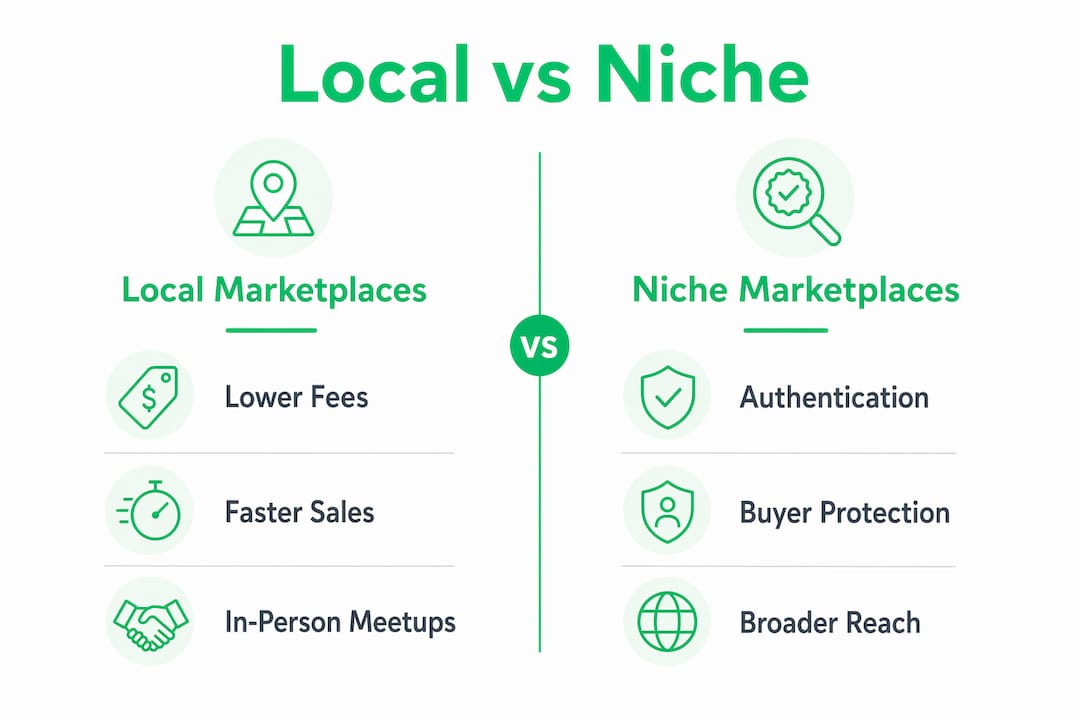
Local apps aren't the right tool for every pair. If you're sitting on limited-edition Jordans, a deadstock collaboration, or anything a collector would pay a premium for, a niche authentication platform changes the math.
Here's when to go that route instead:
- High-value or limited-edition sneakers that need third-party authentication to command top dollar. Platforms built around sneaker authentication give collectors the confidence to pay collector prices.
- Global buyer reach. A rare colorway might have zero interested buyers within 30 miles but dozens across the country.
- Price discovery. Niche platforms publish real-time sale data that tells you exactly what the market will bear.
The trade-offs are real: seller fees run higher, payouts take longer, and you'll need to ship. For a $40 pair of everyday shoes, that math doesn't work. For a $400 pair with a receipt and original box, it often does.
Pro Tip: Before listing locally, check a niche resale platform's recent sold prices for your exact model and size. Use that number as your ceiling, then price slightly below it to attract local buyers fast.
What features should you look for in a shoe-selling app?
Not every marketplace app is built the same. These are the features that actually matter when you're selling footwear locally:
- Location-based search with accurate distance filters so your listing surfaces for buyers who can realistically meet you.
- In-app chat with media sharing — buyers will want extra photos of the soles, the tongue label, and any wear spots.
- Verified profiles and seller ratings that give strangers a reason to trust you.
- Clear fee disclosure upfront: transaction percentage, payment processing cut, and any promoted-listing costs.
- Secure payment options with guidance on safe cash meet-ups when buyers prefer it. Integrated payment tools increase buyer confidence and reduce no-shows.
- Flexible shipping. Even local-first sellers occasionally ship. An app that generates labels and tracking automatically keeps those transactions clean.
- Listing tools built for footwear: size selector, condition presets, multiple photo uploads, and quick-repeat listing for sellers moving several pairs.
Pro Tip: Test the in-app chat before you list. Send yourself a message or check response indicators. A slow or clunky chat is the fastest way to lose a buyer who's ready to buy today.
How to list shoes that sell fast
Good listings don't happen by accident. Follow these steps and your shoes will move in days, not weeks.
- Clean the shoes. Wipe down the uppers, brush the soles, and re-lace if needed. A clean pair photographs better and signals care.
- Stage and shoot. Use natural light and a neutral background. Capture: both sides, the toe box, the heel, the soles, the inside tongue label (size and brand), and the box if you have it.
- Write an honest description. Note the brand, model, size (US men's/women's), condition, and any flaws — scuffs, creasing, sole yellowing. Buyers who know what they're getting don't back out.
- Set size and model keywords in the title. "Nike Air Max 90 Men's Size 11 — Good Condition" beats "Nice Sneakers" every time for search visibility.
- Price competitively. Check local listings for the same model, then price at or slightly below the median.
- Activate local pickup and set meet-up windows. Specify days and a general area. Vague availability kills momentum.
- Respond fast. The first hour after a message is when buyers are most ready to commit.
Photo quality is the single biggest lever. Multiple high-quality photos — including soles, inside labels, and box details — raise buyer confidence and often push the final price higher than single-photo listings.
What fees and timelines should you expect?
Local marketplace fees are generally simpler than niche platform structures. Most apps charge a transaction percentage (often in the single digits), a payment processing fee on top, and optional promoted-listing fees if you want extra visibility. Understanding how platform fees affect margins before you set your price prevents the unpleasant surprise of netting less than expected.
Timeline-wise, a well-priced local shoe listing typically moves relatively quickly, often within a short period. Demand context matters here: according to Amazon's seller guidance, online shoe sales in the U.S. grew over the previous five years and three-quarters of footwear spend occurs online. That means the buyer pool for shoes is large and active.
One caution: slashing your price too fast signals desperation and can attract lowball offers. Drop the price moderately after a week with no interest, rather than drastically reducing it immediately.
Pro Tip: Time your listing for Thursday or Friday. Weekend browsers are the most likely to commit to a same-day or next-day pickup.
Safety and meetup best practices
Local transactions are safe when you treat them like any other meeting with a stranger — with a little common sense.
- Pick a public, well-lit spot. A coffee shop parking lot, a library entrance, or a police station's designated safe-exchange zone all work.
- Bring a friend if the sale is high-value or the buyer's profile is new.
- Check the buyer's profile and message history before sharing your address or exact location.
- Use in-app payment when available. Avoid off-platform payment promises — if someone insists on a wire transfer or gift card, walk away.
- Let the buyer inspect the shoes briefly before payment changes hands. A 60-second check prevents "not as described" complaints later.
Pro Tip: State your no-refund policy clearly in the listing description and confirm it in chat before the meetup. "All sales final, item inspected at pickup" sets expectations and protects you.
How to post your first shoe listing on Marketplaceapp
Here's the exact flow to go from zero to live listing:
- Download the app and create an account. Verify your phone number or email, add a profile photo, and write a short bio that mentions your location and pickup preferences.
- Tap "List Item" and select the Fashion or Footwear category.
- Write your title — include brand, model, size, and condition.
- Upload 6–8 photos covering all angles: sides, toe, heel, soles, tongue label, and box.
- Select condition from the preset options and add any honest notes in the description field.
- Set your price and choose local pickup, shipping, or both.
- Publish. Your listing is now visible to nearby buyers searching local shoe listings.
Once live:
- Enable push notifications so you catch messages the moment they arrive.
- Use in-app chat templates to answer common questions quickly.
- Consider a promoted listing for the first 48 hours to jumpstart visibility. Promoted listings consistently reduce time-to-sale across peer-to-peer platforms.
Pro Tip: Add your pickup neighborhood (not your exact address) to the listing title or description. "Available in [Neighborhood], [City]" helps buyers self-qualify before messaging.
What are the return and refund policies for shoe-selling apps?
Policies vary by platform type. On local peer-to-peer apps like Marketplaceapp, the standard model is all sales final once the buyer inspects and accepts the item in person. Because the buyer sees the shoes before paying, there's no legitimate "not as described" basis for a return.
Niche authentication platforms handle this differently. They typically offer buyer protection that covers items failing authentication or arriving significantly different from the listing. Sellers on those platforms can face returns if authentication fails or the item is misrepresented.
For local sellers, the practical protection is transparency upfront: accurate photos, honest condition notes, and a clear no-refund statement in the listing. That combination makes disputes rare and keeps the transaction clean for both sides.
Key Takeaways
For most casual sellers, a local peer-to-peer app beats niche platforms on speed, simplicity, and total fees — and Marketplaceapp delivers all three in one place.
| Point | Details |
|---|---|
| Best local app | Marketplaceapp offers location search, in-app chat, verified ratings, and secure payments for fast local shoe sales. |
| Photo quality matters | Multiple high-quality photos — soles, labels, box — raise buyer confidence and often push final prices higher. |
| Fee awareness | Understand transaction percentage plus payment processing fees before pricing; local fees are generally simpler than niche platforms. |
| Safety at meetups | Use public locations, verify buyer profiles in-app, and accept secure payments to keep transactions clean. |
| Start listing now | Download Marketplaceapp, set up a verified profile, and post your first shoe listing with 6–8 photos and an honest description. |
Why local commerce still wins
The sneaker resale world gets a lot of attention for its authentication drama and five-figure grails. But the reality for most sellers is a closet full of perfectly good shoes that just need the right local buyer. That's where local-first platforms shine — and why Marketplaceapp's approach of combining verified profiles, in-app chat, and location-based search makes more sense for everyday footwear than any global resale machine.
What gets overlooked is how much the in-person inspection step does for both sides. The buyer gets confidence. The seller avoids returns. The transaction closes in an afternoon instead of a week. That's not a minor convenience — it's a fundamentally different and better experience for casual sellers who just want to clear space and get paid.
Marketplaceapp also lets you list shoes alongside electronics, furniture, or anything else you're moving. One profile, one pickup, one conversation. That flexibility is something no single-category sneaker app can match.
Ready to list your shoes on Marketplaceapp?
Marketplaceapp gives casual sellers the fastest path from "shoes in the closet" to "cash in hand" — without shipping boxes, authentication delays, or confusing fee structures.
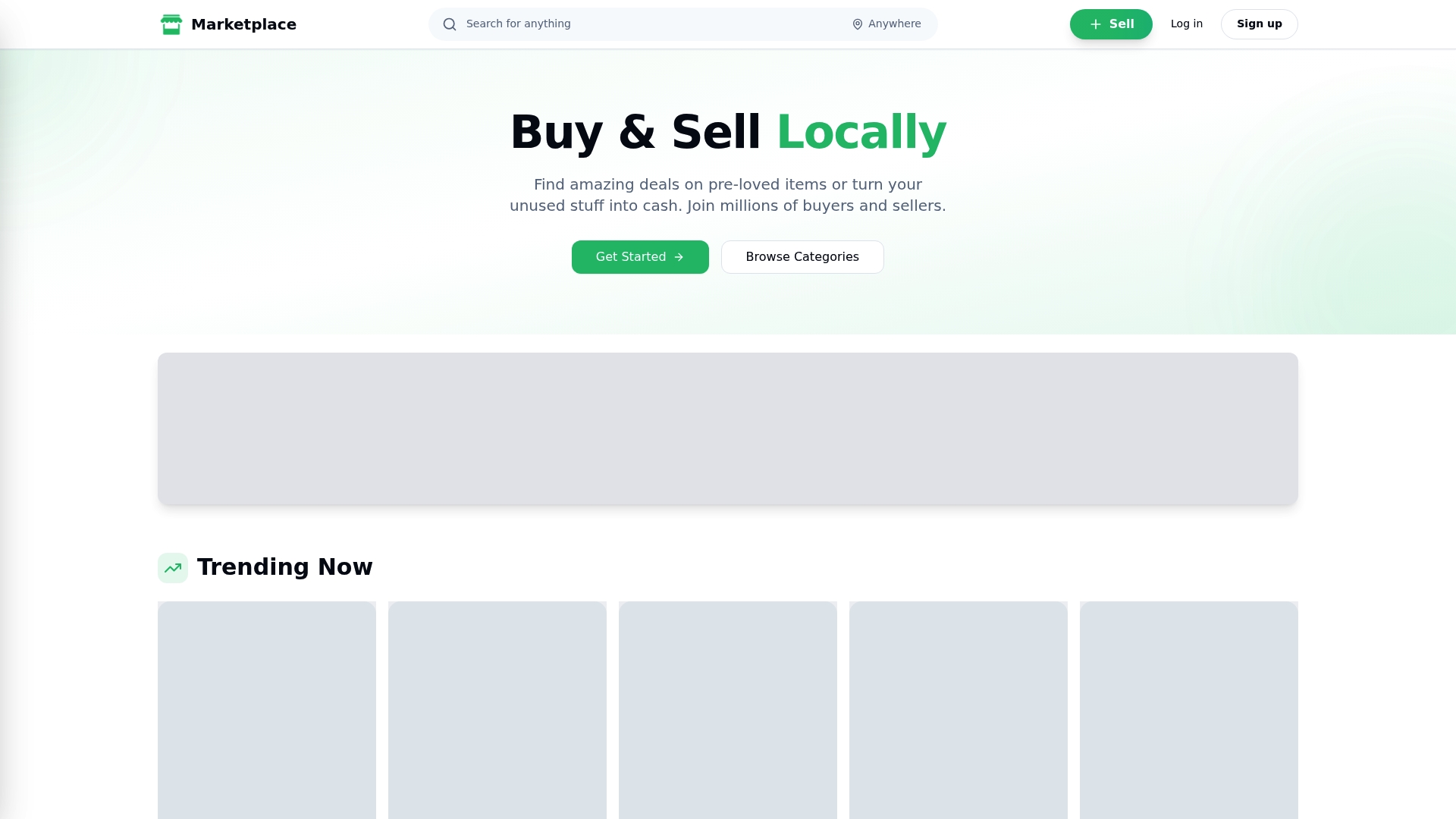
List your shoes today and reach local buyers who are ready to meet this week. Here's what you get from day one:
- Verified seller profiles that build trust with local buyers instantly
- Location-based search so your listing surfaces for buyers nearby
- In-app chat with photo sharing for quick, confident conversations
- Secure payment options and clear fee disclosure before you publish
- Multi-category listings — sell shoes alongside anything else you're clearing out
Download Marketplaceapp, set up your profile in minutes, and post your first shoe listing today.
Useful sources
- Amazon seller guidance — online shoe sales in the U.S.
- CNET — best sneaker and streetwear resale apps
- Moneris — selling shoes online: how, where, and expert tips
- ResellReady — promoted listings and visibility strategies
- ResellReady — platform fees and margin math for resellers
- Simicart — shoe listing photo and description guidance
- Marketplaceapp — platform features, local listings, and seller resources
This article is general information for sellers exploring local marketplace options. Check each platform's current fee and policy pages before listing, as terms change.