
Late spring is the best time to sell personal items locally in the US. Specifically, April through June delivers the strongest buyer demand, the most competitive pricing, and the fastest turnover for peer-to-peer sellers. Within that window, Thursday is the single best day to list. Buyers browse Thursday evenings while planning weekend errands, so a fresh listing hits maximum eyeballs right before purchase decisions get made.
A few things to keep in mind before you list:
- Peak months: April, May, and June consistently draw the most active local buyers nationally
- Best listing day: Thursday listings stay fresh through the weekend buying surge, outperforming Monday or Tuesday posts
- Price impact: Listing during peak seasonal demand can increase your sale price by roughly 1.7%–3.4% compared to off-season listings
- Regional caveat: Local market conditions shift these windows, sometimes by months
- Category matters: Outdoor furniture, sports gear, and garden tools spike in spring; electronics and gaming items peak around the holidays
Table of Contents
- Why timing your local sale affects both price and speed
- How your region changes the optimal selling time
- Personal factors that shape when you should list
- Listing strategies that make your timing work harder
- Marketplaceapp makes it easy to list at exactly the right moment
- Key Takeaways
Why timing your local sale affects both price and speed
Buyer behavior follows predictable seasonal rhythms, and understanding them gives you a real edge. Spring triggers a surge in local buying for a few overlapping reasons: tax refunds land in April, school calendars push families to reorganize and upgrade, and warmer weather simply gets people moving. That combination creates a window where more buyers are actively searching, competition among them pushes prices up, and items move faster.
The weekly cycle matters just as much as the season. Listings that go live on a Monday or Tuesday lose momentum before the weekend. By Friday, they look stale. A Thursday post, on the other hand, catches buyers at exactly the right moment.
Economic conditions add another layer. When local buyers feel financially confident, or when broader economic signals like lower borrowing costs improve household spending, buyer demand rises beyond what the calendar alone would predict. That means a well-timed listing in a strong local economy can outperform a spring listing in a sluggish one.
- Spring tax refunds put discretionary cash in buyers' pockets from mid-March through May
- School-year transitions drive demand for furniture, electronics, and kids' gear in May and August
- Holiday season creates a secondary peak for electronics, toys, and collectibles in November and December
- Summer slowdowns hit some categories hard as families travel and attention shifts away from local browsing
How your region changes the optimal selling time
National averages are a starting point, not a rule. Regional markets vary significantly, and the gap can be months wide. In high-demand, expensive markets like San Jose, the ideal listing window opens as early as February. Sellers in Baltimore or Cleveland typically see their peak closer to May or June.

Climate drives a lot of this. In Sun Belt cities like Phoenix or Miami, outdoor and garden items sell well nearly year-round. In northern markets, those same items have a narrow spring window before summer heat or winter cold shuts demand down. Timing a patio set listing in Minneapolis in March is too early; in Houston, it might be perfect.
Local inventory levels often matter more than the calendar. In undersupplied markets where few similar items are listed, a well-priced item sells quickly in any month. In saturated markets, timing your listing to avoid peak competition from other sellers can be just as important as catching peak buyer demand.
Local events and holidays shift things too. A major community festival, a college move-in weekend, or a regional sports season can spike demand for specific items in specific weeks. Paying attention to your city's calendar is a simple edge most sellers ignore.
Personal factors that shape when you should list
Market timing is only half the equation. Your own readiness determines whether you actually capture the opportunity when it arrives.
Preparation should start well before your intended listing date. That means decluttering, cleaning items, researching comparable prices, and shooting photos in good natural light. Sellers who scramble to list at the last minute often post blurry photos and vague descriptions, which costs them both price and speed.
Your goals matter here too. Fastest sale and highest price often peak in different months. If you need cash quickly, listing slightly before peak season can get you a buyer faster with less competition. If you want top dollar and can wait, holding for the April–June window usually pays off.
- Financial urgency sometimes overrides ideal timing — a good listing any month beats waiting indefinitely
- Item condition affects timing flexibility; a pristine item can command attention off-season, a worn one needs peak demand to move
- Pricing research done in advance lets you list confidently rather than guessing and adjusting repeatedly
- Life events like moving, downsizing, or clearing out a home often dictate timing regardless of market conditions
Pro Tip: Photograph your items on a sunny weekend in March so you're ready to post the moment April buyer traffic picks up. Preparation done early removes the scramble.
Listing strategies that make your timing work harder
Knowing the right window is only useful if your listing is ready to perform when that window opens. A few specific habits separate sellers who move items quickly from those who relist the same post for weeks.
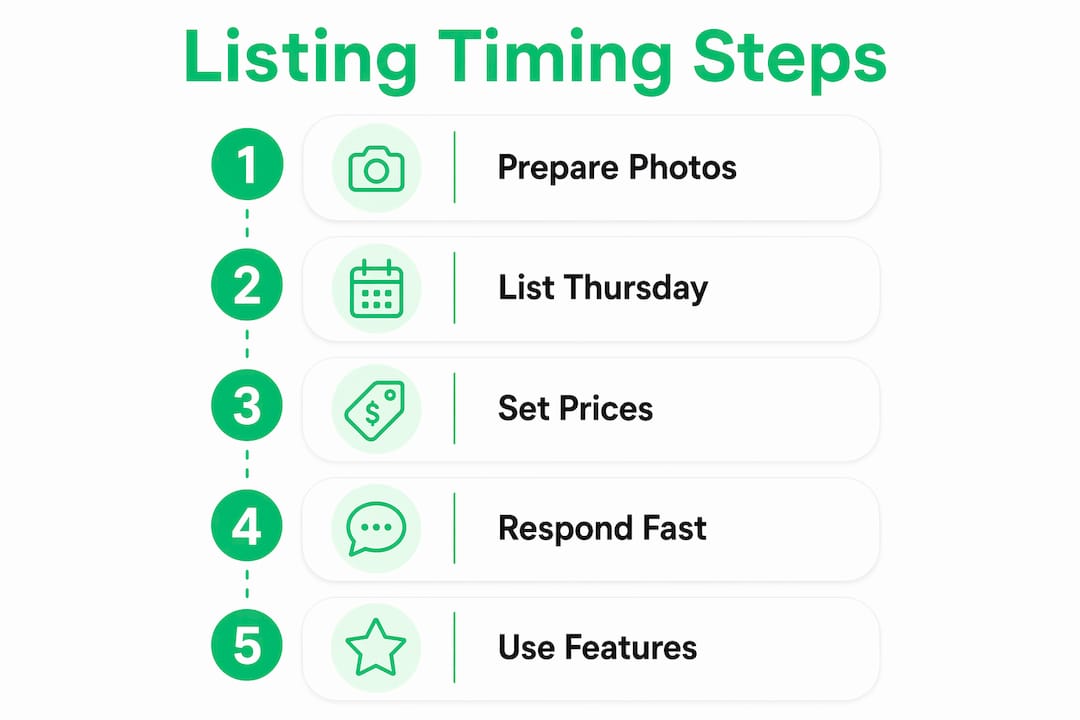
List on Thursdays. The data is consistent: Thursday posts balance freshness with buyer weekend planning better than any other day. Avoid Monday through Wednesday if you can wait.
Photos are your first impression. Natural light, a clean background, and multiple angles do more for buyer confidence than any amount of description text. Shoot outside or near a window; skip the flash.
Price based on local comps, not sentiment. Search your item category on the platform before you list. What are similar items actually selling for nearby? Pricing strategy and item condition often outweigh calendar timing in determining whether a sale closes.
Respond fast. Buyers browsing locally are often comparing two or three listings simultaneously. A slow response hands the sale to whoever replies first.
Use every platform feature available. Push notifications, location-based search, and category tags are not optional extras — they are how buyers find you. A listing buried in the wrong category or missing location data gets skipped regardless of timing.
Marketplaceapp makes it easy to list at exactly the right moment
Knowing when to list is one thing. Having a platform ready to work the moment you do is another.
Marketplaceapp is built for exactly this kind of local, peer-to-peer selling. You get categorized listings across electronics, fashion, home goods, vehicles, and more, all searchable by location so your item reaches buyers in your area rather than strangers across the country. Secure payments and verified seller ratings mean buyers trust the platform, which translates directly into more inquiries and faster closes.
The mobile app's push notifications keep you in the loop the moment a buyer messages, so you never lose a sale to a slow reply. And because Marketplaceapp supports sellers across every category and price point, you can list locally whether you're clearing out a garage or selling a single piece of furniture.
Spring is coming. Get your items photographed, priced, and ready. Then post on a Thursday in April and let the platform do the rest.
Key Takeaways
The single most effective move a local seller can make is listing a well-prepared item on a Thursday during April, May, or June, when buyer demand and pricing both peak nationally.
| Point | Details |
|---|---|
| Peak selling season | April through June delivers the strongest buyer demand and pricing nationally for local sellers. |
| Best listing day | Thursday listings stay fresh through the weekend, maximizing buyer exposure before purchase decisions are made. |
| Price impact | Listing during peak seasonal demand can increase your sale price by approximately 1.7% to 3.4% compared to off-season. |
| Regional variation | Local market peaks can shift by months; San Jose peaks as early as February, while northern markets peak in May or June. |
| Marketplaceapp advantage | Marketplaceapp's location-based search, push notifications, and verified ratings help sellers capture peak-season demand the moment they list. |