
For most U.S. sellers who want fast local pickup, secure in-app payments, and verified buyer ratings, Marketplaceapp is the strongest local-first option available. Beyond that single recommendation, the right platform depends on what you're selling:
- Local classifieds and peer-to-peer apps for furniture, vehicles, and bulky goods
- Social resale apps for everyday clothing, shoes, and home goods
- Niche authenticated marketplaces for sneakers, collectibles, and high-value tech
- Large national marketplaces with local options for maximum reach on general inventory
One thing worth knowing upfront: platforms that collect and remit sales tax on your behalf operate under marketplace facilitator tax rules, which changes your reporting obligations and the real cost of each sale. Seller commissions on low-fee platforms can start near 3.5%, while craft-focused platforms typically combine a small per-listing fee with a transaction charge around 6.5%.
Pro Tip: Before listing anywhere, search completed sales for your item on two or three platforms. The platform with the most recent sold comps in your category is usually the one with the most active buyers for that item type.
Table of Contents
- What are the best eBay alternatives for local selling?
- Which marketplace works best for your item type?
- How do you choose the right marketplace for your item?
- What do sellers typically pay, and how long does a sale take?
- How do you sell locally and stay safe?
- What makes a listing actually sell?
- Why should you list on more than one marketplace?
- Key Takeaways
- What local selling actually looks like from the inside
- Marketplaceapp: built for fast, safe local sales
- Useful sources
What are the best eBay alternatives for local selling?
No single platform replaces eBay across every category. The best choice depends on seller goals: local pickup and bulky items, specialized niches, and maximum reach each favor different marketplace types.

| Category | Best for | Typical seller fees | Local reach | Pickup vs. shipping | Payment protections | Mobile ease | Trust features |
|---|---|---|---|---|---|---|---|
| Local-first classifieds | Furniture, vehicles, large appliances | $0 cash pickup; fees apply for in-app payments | Strong hyperlocal | Pickup-first | Varies; in-app options available | Good | Ratings; some ID verification |
| Social resale apps | Everyday clothing, shoes, home goods | Mid-single to low-double-digit % | National with local filter | Both | In-app payments standard | Excellent | Seller ratings; buyer reviews |
| Niche authenticated marketplaces | Sneakers, collectibles, luxury goods | Varies; authentication fees added | National/global | Primarily shipped | Escrow or platform-held | Good | Authentication; verified IDs |
| Large national marketplaces with local options | General inventory, electronics, books | Commission starting near 3.5% | Massive national | Both | Buyer/seller protections | Good | Ratings; dispute resolution |
Pros and cons at a glance:
- Local classifieds: fastest cash sales, zero platform cut on cash pickups, but no dispute protection if something goes wrong off-app
- Social resale apps: large buyer pools for fashion and home goods, but margins shrink with fees on lower-priced items
- Niche authenticated marketplaces: authentication and verified-ID features increase buyer confidence and closing prices on high-value items, but slower sell-through on everyday goods
- Large national marketplaces: broadest reach, but generalist platforms trade margin for reach while niche sites trade reach for category-fit
Pro Tip: List on a local-first platform first. If the item doesn't move within a week, cross-post to a social resale or national marketplace. You get the fast local sale when it works, and broader exposure when it doesn't.
Which marketplace works best for your item type?
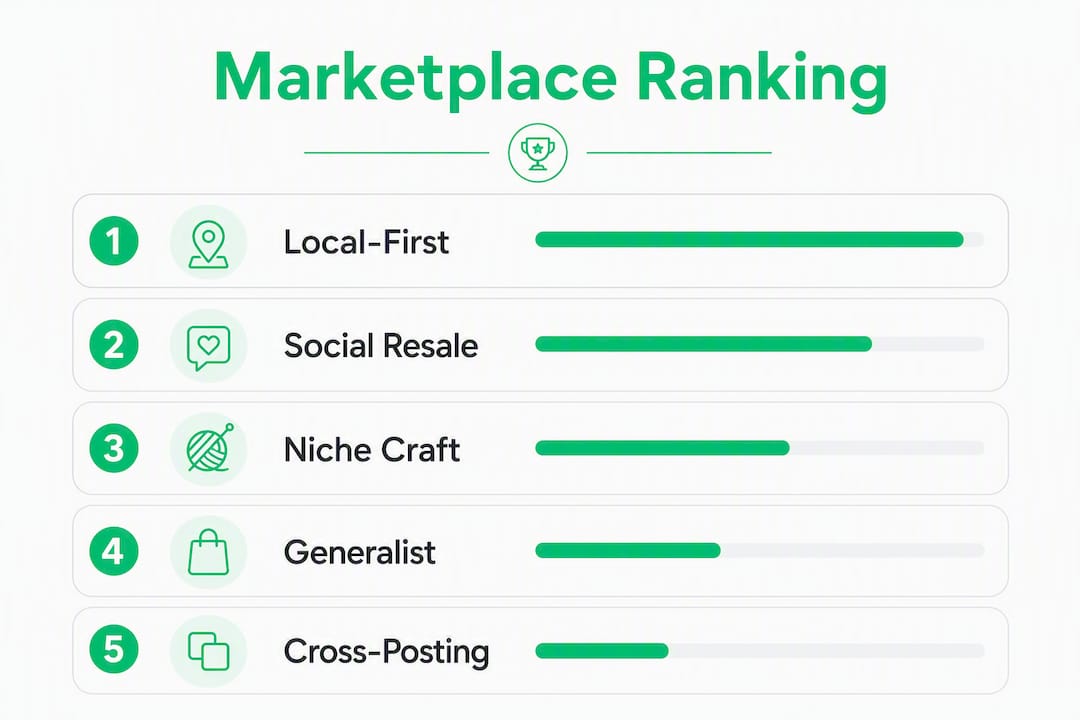
There is no single eBay killer. Successful sellers match inventory to the marketplace category that fits buyer behavior, then diversify.
By item type:
- Furniture and bulky goods: Local-first channels win. Buyers avoid shipping costs and want to inspect condition in person, so same-day or same-week sell-through is realistic. Include exact dimensions and pickup logistics in the first line of your description.
- Everyday clothing and shoes: Social resale apps have the deepest buyer pools for this category. Price competitively and use all available photo slots.
- Vintage fashion and designer items: Niche authenticated platforms command higher prices and fewer disputes. Condition photos and provenance details matter more than speed.
- Sneakers and collectibles: Authentication services are decisive here. Platforms with verified-ID and authentication features typically close at higher prices.
- Tech devices (phones, laptops, gaming gear): Experienced buyers look for IMEI or serial numbers, proof of reset, and unlocked status. List these details explicitly. A Steam Deck listing or AirPods Pro page on Marketplaceapp shows how to display those details cleanly.
By seller profile:
- Declutterer: Start with a local-first app. Fast, low-friction, no shipping required.
- Part-time flipper: Mix local-first for bulky items with a social resale app for fashion and a niche platform for collectibles.
- Hobby seller or prosumer: Build feedback on lower-barrier platforms first, then migrate your best inventory to larger generalist marketplaces once your ratings are established.
How do you choose the right marketplace for your item?
Pick the platform where your item's category has the most active buyers, your margin survives the fee structure, and you're comfortable with the payment and dispute process.
Checklist before you list:
- Item fit: Does this platform have active buyers for this category?
- Fees vs. margin: Can you price competitively after the platform cut?
- Buyer pool size: Is there enough local or national traffic to sell within your timeline?
- Payment protections: Does the platform offer in-app payments with dispute resolution?
- Shipping vs. pickup: Does the platform support your preferred fulfillment method?
- Mobile UX: Can you manage listings, messages, and offers from your phone?
- Dispute support: Does the platform have a clear process if something goes wrong?
- Tax collection exposure: Does the platform collect and remit sales tax under marketplace facilitator rules, or does that fall to you?
Red flags to avoid:
- No in-app payment or escrow option
- No seller or buyer rating system
- Requests to pay or receive money outside the platform
- No clear dispute resolution process
- Platform with a documented pattern of scams or unresolved buyer complaints
What do sellers typically pay, and how long does a sale take?
Fee structures vary widely, and the cheapest route isn't always the safest.
| Sale type | Typical seller cost | Typical timeline |
|---|---|---|
| Cash local pickup (off-app) | no platform fee | Same day to 3 days |
| In-app local pickup | Low single-digit % processing fee | 1–7 days |
| Social resale app (shipped) | Mid-single to low-double-digit % | 3 days |
| Niche authenticated marketplace | Varies; authentication fee added | 1–3 weeks |
| Large national marketplace | Commission starting near 3.5% | 1–3 weeks |
Sample calculation for a $100 item:
- Cash pickup: $100 net (no platform fee, no protections)
- Low-fee national marketplace at 3.5%: ~$96.50 net before payment processing
- Social resale app at 10%: ~$90 net
- Niche authenticated platform with authentication fee: $80–$88 net depending on category
Cash local pickups avoid platform transaction fees entirely, but carry higher risk and zero dispute protection. In-app payments cost a small percentage and give you recourse if something goes wrong. For most sellers, that tradeoff is worth it.
Craft-focused platforms typically combine a small per-listing fee with a transaction charge around 6.5%, while some multi-category marketplaces start seller commissions near 3.5%.
How do you sell locally and stay safe?
Sell locally safely by using verified in-app chat, meeting in a public place, accepting in-app or certified payments, and recording the transaction.
Step-by-step for a safe local sale:
- Agree on a meeting place through in-app messaging only. Never share personal contact details before the sale.
- Choose a well-lit public location with security cameras, such as a police station parking lot or a busy retail area.
- Bring a friend when selling high-value items.
- Confirm payment before handing over the item. In-app payments, Zelle, or Venmo with a confirmed transaction screen all leave a record.
- Inspect the item together with the buyer.
- Complete a simple bill of sale and mark the item sold in the app immediately.
Bill of sale template (copy and fill in):
Pro Tip: Never hand over the item before you see a cleared payment notification. A screenshot of a pending transfer is not the same as a completed one.
What makes a listing actually sell?
Better photos and honest condition notes sell faster than any other single change you can make.
- Write a headline that includes the brand, model, and condition in the first five words
- Use at least five photos: overall condition, any flaws, measurements, serial number or IMEI, and original packaging if available
- State condition honestly: "light scratches on back, fully functional" outperforms vague "good condition"
- Set a clear price with your floor noted ("firm" or "or best offer")
- Specify pickup terms: available days, general neighborhood, and whether you'll ship
- For used items, price at 40–70% of the current new retail price depending on condition and demand
Check recently sold listings on your target platform before setting a price. Asking price means nothing; sold price tells you what buyers actually paid.
Why should you list on more than one marketplace?
Treat marketplaces as complementary channels, not single replacements. Category-fit, buyer demographics, and timing vary enough across platforms that cross-listing consistently increases sell-through and helps you discover the real market price for your item.
A low-overhead cross-listing process:
- Pick two platforms: one local-first for fast pickup, one broader for price discovery
- Use a simple spreadsheet to track: platform, listing date, views, offers, sale date, net proceeds
- Stagger your listings by a day or two to test which platform gets traction first
- Once an item sells, mark it sold on all platforms immediately
Starting on lower-barrier or niche platforms also builds your seller feedback faster than jumping straight onto large generalist sites, which matters when buyers are deciding whether to trust you.
Pro Tip: Keep your tracking sheet to six columns maximum: platform, date listed, views, offers received, sale date, net proceeds. Anything more becomes a chore you'll abandon after the first week.
Key Takeaways
For local peer-to-peer selling in the U.S., matching your item to the right marketplace category matters more than picking any single platform.
| Point | Details |
|---|---|
| Match item to category | Furniture and bulky goods sell fastest on local-first channels; fashion and collectibles suit niche or social resale apps. |
| Know your real net | After fees, a $100 item nets roughly $90–$96.50 depending on platform; cash pickups net $100 but carry no protections. |
| Safety requires a record | Always use in-app payments or a traceable method, meet in public, and complete a bill of sale for every local transaction. |
| Cross-list to find price | Two platforms beats one; start local for speed, add a broader marketplace for price discovery and backup reach. |
| Marketplaceapp for local-first | Marketplaceapp combines secure in-app payments, verified seller ratings, and location-based search for fast, safe local sales. |
What local selling actually looks like from the inside
The conventional wisdom says "just list everywhere and see what sticks." That advice sounds practical, but it misses the real problem: most sellers waste time on platforms that were never built for their item type. A sofa listed on a shipped-only marketplace will sit for weeks. The same sofa on a local-first platform with location-based search moves in days, sometimes hours.
What actually matters is the combination of category-fit and trust infrastructure. Buyers for high-value items, whether a gaming console or a designer bag, need verification before they'll commit. Platforms that offer verified IDs, authentication, and in-app payment escrow close those sales faster and at better prices. That's not a coincidence; it's buyer psychology. Remove the risk, and buyers stop negotiating on price.
The other thing most guides understate: your seller reputation is a portable asset. Build it on lower-barrier platforms first, accumulate genuine ratings, then bring that credibility to larger marketplaces. Jumping straight to the biggest platform with zero reviews is the slowest possible start.
Marketplaceapp: built for fast, safe local sales
Marketplaceapp gives local sellers something the big generalist platforms don't prioritize: a mobile-native experience designed specifically for peer-to-peer local transactions, with secure in-app payments, verified seller ratings, and location-based search built in from the start.
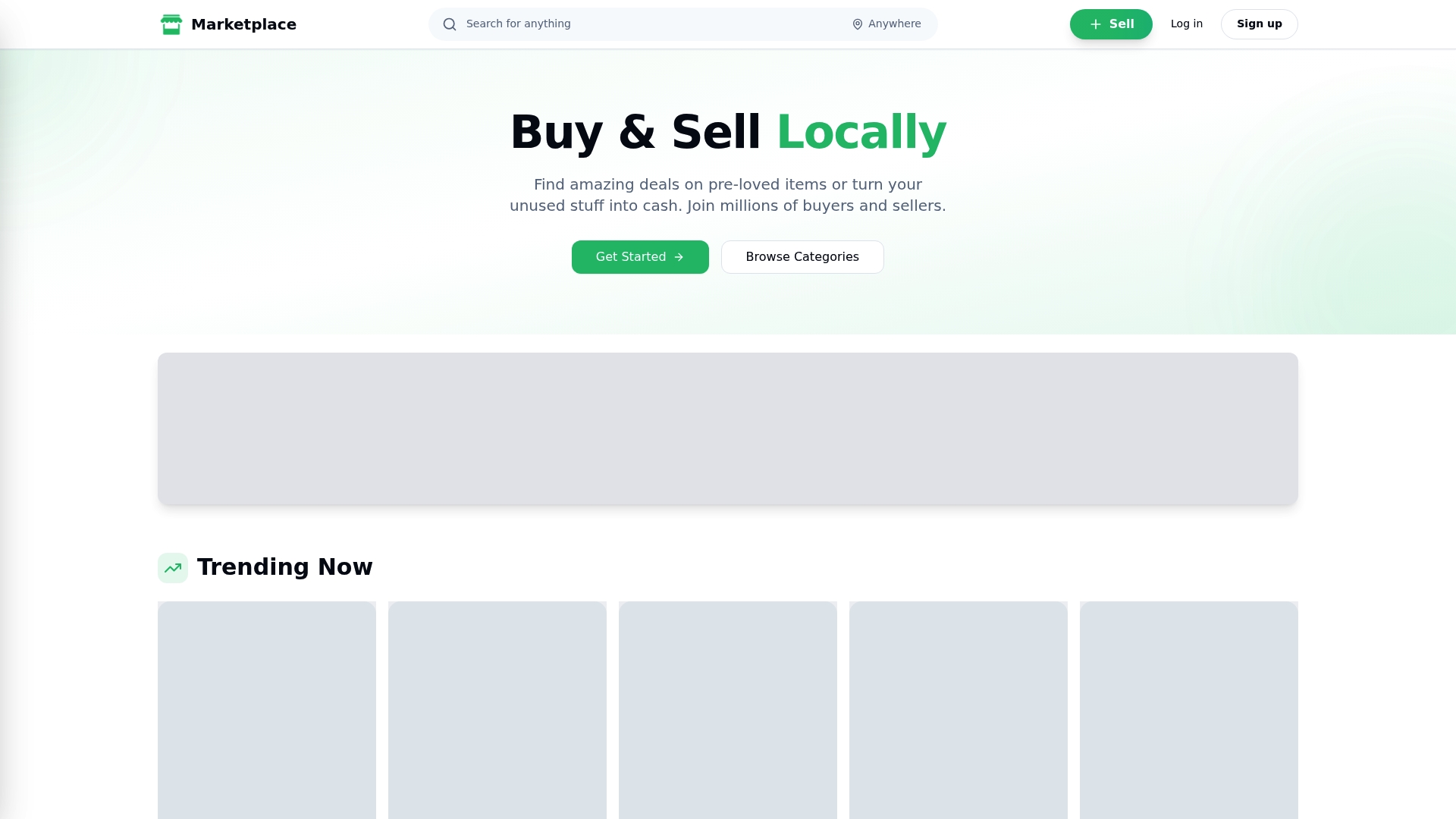
Where other platforms treat local pickup as an afterthought, Marketplaceapp centers it. Listings are categorized across electronics, fashion, vehicles, pets, home and garden, and more, so buyers searching locally find the right items fast. Sellers get push notifications for offers, instant in-app chat, and a clear transaction record for every sale.
- Secure in-app payments with dispute support
- Verified seller ratings that build trust from your first listing
- Location-based search so local buyers find you first
Start selling on Marketplaceapp and list your first item today.
Useful sources
- 6 Alternatives to eBay for Retailers (Sellbrite) — overview of retailer-focused alternatives and fee structures
- eBay Alternatives for Sellers: 40+ Sites (LitCommerce) — broad roundup of platform options with fee and category notes
- 11 Best eBay Alternatives in 2026 (SaleHoo) — category-by-category recommendations including local-first channels for bulky items
- Marketplace Facilitator Tax: What Every Reseller Must Know (ResellReady) — U.S. tax obligations for marketplace sellers and platform collection rules