
The two fastest ways to sell clothes locally are walking into an in-person buyback shop and posting a well-priced listing on MarketplaceAnywhere. Both can put cash in your hand the same day, but only if your items meet two conditions: they're clean and in good condition, and they match what buyers actually want right now. Resale chains like Plato's Closet and Daisy Exchange buy on the spot with no appointment needed. MarketplaceAnywhere's location-based search connects you to nearby buyers who can pick up within hours.
A few numbers worth knowing before you go: stores commonly offer a trade bonus when you accept store credit instead of cash. Walk-in appraisals at most buyback shops take 15–30 minutes for a small batch. On MarketplaceAnywhere, instant chat and verified buyer ratings cut the back-and-forth that stalls most local sales.
Your three next steps:
- Gather your best 10–20 items that are clean, on-trend, and in-season.
- Decide: buyback shop for instant cash on a small batch, or a local listing for higher-value or niche pieces.
- Follow the safety checklist before any meetup (public place, platform-verified payment, share your location with someone you trust).
Table of Contents
- Where should you sell clothes locally for the fastest cash?
- How do you prep clothes so shops and buyers actually accept them?
- How should you price clothes to sell quickly for cash?
- What do resale shops and local buyers actually want?
- How do you create a listing on Marketplaceapp that actually sells fast?
- How long does each channel take, and what will you actually get paid?
- What safety rules should you follow for local meetups and payments?
- Key Takeaways
- Why local selling works better than most people expect
- Marketplaceapp makes it easier to sell clothes nearby
Where should you sell clothes locally for the fastest cash?
Not every local channel works the same way. Speed, payout, and effort vary a lot depending on which route you pick.
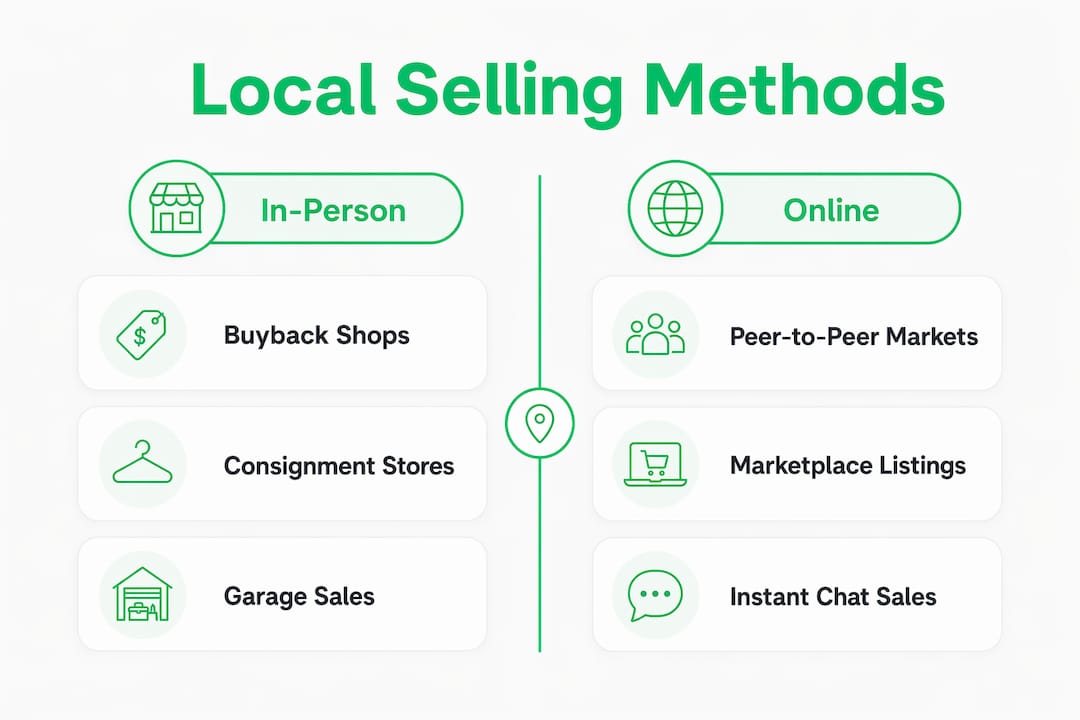
In-person buyback and resale shops
You walk in, they appraise your items on the spot, and you leave with cash. No shipping, no waiting for a buyer to respond. The tradeoff is that stores set the price, and their offers reflect current stock levels, not just item quality. A rejection often means the store is already overstocked on that item, not that your jacket isn't worth selling.
Consignment stores
You drop items off, the store prices and sells them, then pays you a percentage after the sale. Consignment can take weeks or months to pay out. Good option if you're not in a rush and want a higher cut on nicer pieces, but it's the wrong move when you need cash today.
Local peer-to-peer marketplace listings
Posting on a platform like MarketplaceAnywhere puts you directly in front of nearby buyers. You set the price, negotiate, and arrange a local pickup. Turnaround ranges from a few hours to a few days depending on how you price and how active local demand is. This channel works especially well for higher-value or niche items that a buyback shop might undervalue.
Garage sales, yard sales, and flea markets
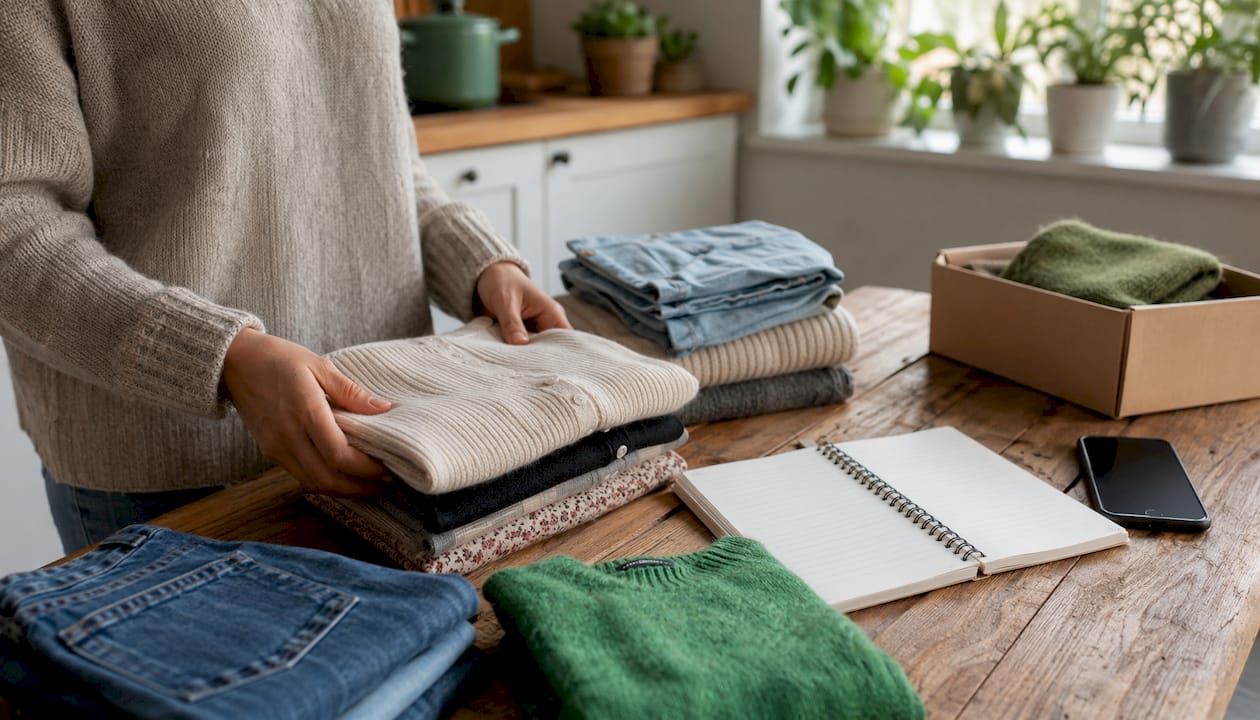
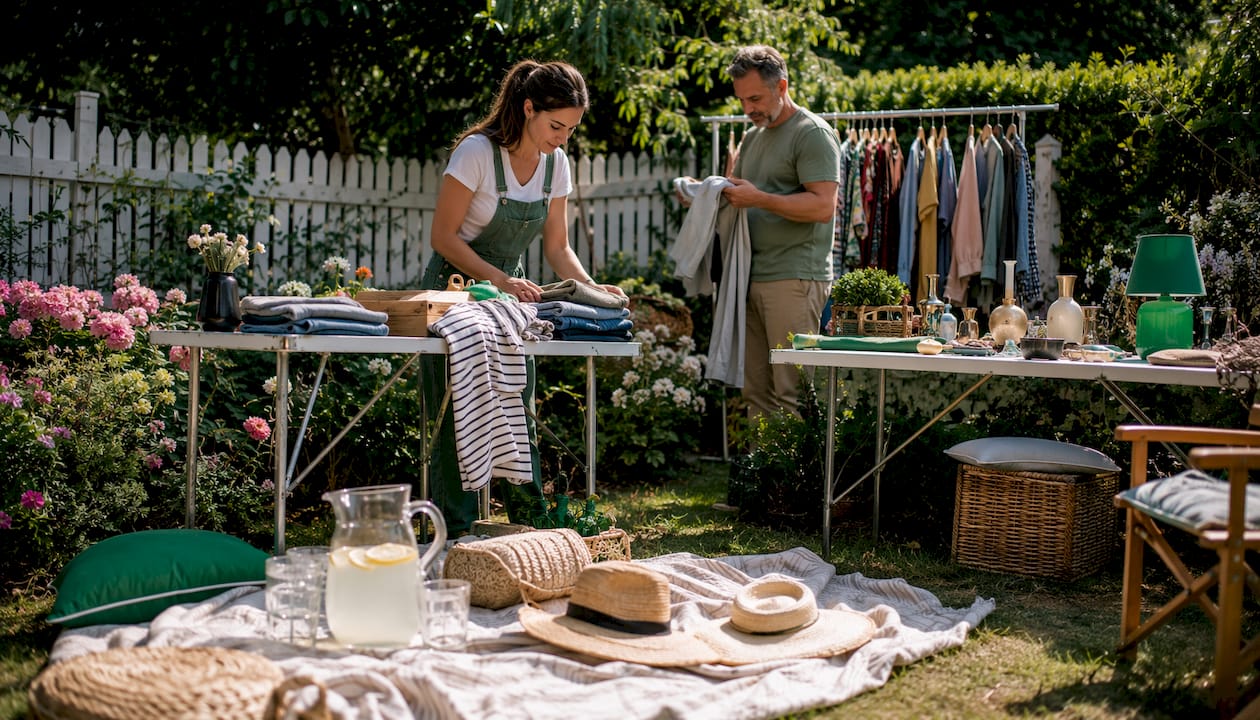
Fast to set up, zero listing fees, and you can move a lot of volume in a weekend. The downside is lower prices and the physical work of organizing and staffing a sale. Community pop-up events like Just Between Friends are a strong variation on this model, particularly for kids' and family clothing where local demand is high and buyers show up ready to spend.
| Channel | Speed to cash | Typical payout timing | Effort level | Best item types |
|---|---|---|---|---|
| Buyback shop | Same day | Immediate, on the spot | Low | Trendy, in-season, name brand |
| Consignment | Slow | Weeks to months after sale | Low (drop-off) | Higher-end, timeless pieces |
| Local marketplace | Hours to days | On meetup/pickup | Medium | Mid-to-high value, niche items |
| Garage/yard sale | Same day or weekend | Day of sale | High | High volume, low-value items |
How do you prep clothes so shops and buyers actually accept them?
Condition matters more than brand for most local resale buyers. A freshly laundered, stain-free item from a mid-tier brand will outsell a designer piece that smells musty or has a loose button. Resale experts are consistent on this point: presentation is the deciding factor.
Here's the prep sequence that moves items from "maybe" to "yes":
- Launder or steam every item. No exceptions. Odors are the single most common rejection reason.
- De-pill sweaters and fleece. A fabric shaver takes two minutes and makes a $15 sweater look like a $40 one.
- Repair small holes and replace missing buttons. A visible repair beats a visible flaw every time.
- Check zippers, snaps, and hardware. Broken closures are an automatic reject at most shops.
- Fold or hang neatly for in-person appraisals. Crumpled items signal neglect before the appraiser even looks at the fabric.
- Photograph on a neutral background in natural light for any online listing. One close-up of any flaw, one full-length shot, one detail shot of the label or hardware.
- Sort by season and trend before you leave the house. Pre-sorting by season and trend reduces rejections and shortens your time at the counter.
- Separate into three piles: sell today, consign later, donate.
For in-person drop-offs, pack items in a garment bag or clean tote. Bring a simple inventory list if you have more than 10 items. It speeds the appraisal and shows you're organized.
Pro Tip: Bring only your best 10–20 items that meet condition and seasonality criteria. A focused batch gets processed faster and has a higher acceptance rate than a giant bag of mixed-quality pieces.
How should you price clothes to sell quickly for cash?
Pricing is where most sellers leave money on the table or kill the sale entirely. The math is simple once you know how stores think.
Buyback shops typically price items at roughly one-third of original retail, then offer sellers 25–50% of that in cash (or more in store credit). So a jacket that retailed for $120 might be priced at $40 in-store, with a cash offer somewhere in the $10–$20 range. That's not a rip-off; it's the margin the store needs to stay open. Knowing this helps you decide whether a buyback shop is worth your time for a given item.
For a MarketplaceAnywhere listing, start at 40–60% of retail for trending brands in great condition. Drop to 20–30% for commodity items or anything that's been sitting in your closet for years. Price to sell, not to maximize. A $35 item that sells today beats a $50 item that sits for three weeks.
Tactics that move items faster:
- Add urgency to your listing title: "Like-new Levi's 501 — can meet today" outperforms "Jeans for sale."
- Set a price-drop timeline in your head: if no response in 48 hours, drop 10–15%.
- For in-person meetups, decide your floor price before you go. A small same-day discount ("I'll take $X if you can meet this afternoon") closes deals that would otherwise drag out.
- On the store credit question: accepting store credit makes sense when the trade bonus is 25%–50% and you plan to buy from that store anyway. Otherwise, take the cash.
Pro Tip: List with "or best offer" on MarketplaceAnywhere. It signals flexibility without anchoring buyers to a price they won't meet. You still control the floor.
What do resale shops and local buyers actually want?
Condition beats brand, but trend fit beats both. A shop that's already stocked with denim doesn't need your perfect pair of jeans this week. Stores use internal demand databases and season checks to decide what to buy, so a "no" is often about their inventory, not your item.
What moves fastest in local channels:
- Seasonal outerwear (coats, parkas, rain jackets) when the season is approaching, not ending.
- Activewear and athleisure from recognizable brands in good condition.
- Popular denim in current cuts (straight leg, wide leg, barrel fit).
- Trending streetwear. Presentation and hype matter here; check out streetwear resale best practices if you're selling in that category.
- Name-brand sneakers with minimal sole wear.
- Accessories: belts, scarves, and bags in clean condition.
Common rejection triggers:
- Stains, even small ones. Shops won't take the risk.
- Lingering odors (smoke, mildew, heavy perfume).
- Out-of-season items brought in at the wrong time.
- Damaged hardware: broken zippers, cracked buckles, missing buttons.
- Heavy pilling or fabric wear that can't be fixed.
| Item | Likely outcome |
|---|---|
| Like-new denim in a current cut | Strong accept |
| Seasonal coat, clean, current style | Strong accept |
| Name-brand sneakers, minimal wear | Strong accept |
| Worn-out graphic tees | Likely reject |
| Badly stained items | Automatic reject |
| Dated, out-of-style pieces | Likely reject |
How do you create a listing on Marketplaceapp that actually sells fast?
A good listing on MarketplaceAnywhere takes about 10 minutes and dramatically increases your chances of a same-day response. Here's the exact workflow:
- Choose the right category. Fashion > Women's / Men's / Kids' > the specific type (tops, bottoms, outerwear). Miscategorized listings get buried.
- Write a short, specific title. Brand + item type + size + condition. "Patagonia fleece pullover, size M, like new" beats "nice jacket."
- Take 5–8 photos. One full-length shot, one close-up of the label, one of any flaw (be honest), and one on a hanger or flat lay on a neutral background. Natural light only.
- Write a concise description. Condition, measurements (chest, length, inseam), any flaws, and whether you're open to offers. Three to five sentences is enough.
- Set a competitive price with "or best offer" if you're flexible.
- Set your pickup radius so only nearby buyers see the listing. This is what makes it a genuinely local sale.
Once the listing is live, enable instant chat so buyers can reach you immediately. Mark the item as "available now" to signal you're ready to transact. If you need to move something fast, Marketplaceapp's boosted listing option puts your item in front of more local buyers quickly.
For payments, use cash or the platform's verified payment options. Confirm the buyer's rating before agreeing to a meetup. A buyer with no ratings or a very low score is worth a second look before you commit.
Pro Tip: Screenshot your listing before you go to the meetup. If a buyer claims the item "looked different in the photos," you have the record. It also helps if you need to relist quickly.
How long does each channel take, and what will you actually get paid?
Realistic timelines matter. Here's what to expect:
- Buyback shops: Walk in, wait 15–30 minutes for a small batch, leave with cash. Same-day, every time, as long as items are accepted. Calling ahead before a large drop-off reduces wait time and increases the chance the store processes everything that day.
- MarketplaceAnywhere: First response often comes within hours on a well-priced listing. Meetup and cash exchange can happen the same day. Slower items may take 2–5 days.
- Consignment stores: Expect weeks to months before payment. Payout is typically a percentage of the final sale price, which is higher than a buyback offer but delayed.
- Garage/yard sales and community pop-ups: Same-day cash, but you're doing the work. Community consignment events like Just Between Friends are especially efficient for children's and family items, where local demand is high and buyers arrive ready to buy.
On payout shape: buyback shops pay a flat cash amount per item, immediately. Consignment pays a percentage after the sale, weeks later. MarketplaceAnywhere pays whatever you negotiate, collected at pickup.
The store credit trade-off is real. Stores offer 25%–50% more value in store credit than cash. If you're a regular buyer at that store, that bonus is essentially free money. If you just need liquidity, skip it and take the cash.
For designer or near-new authenticated items, specialty channels can yield significantly higher payouts, but they require extra documentation and longer waits. Speed-first sellers should stick to buyback shops and local marketplace listings.
What safety rules should you follow for local meetups and payments?
Local selling is safe when you follow a short checklist. Most problems happen when sellers skip one of these steps.
Meetup safety:
- Meet in a public, well-lit location. Police station parking lots and retail store entrances during business hours are the gold standard.
- Bring a friend for higher-value transactions.
- Share your meetup location and the buyer's username with someone you trust before you leave.
- Don't meet at your home or invite buyers inside.
Payment safety:
- Cash is the simplest and safest option for in-person sales. Inspect bills before handing over the item.
- Platform-verified payments through Marketplaceapp are the next best option. Avoid personal payment apps with strangers unless the buyer's identity is confirmed through the platform.
- Never accept a check or money order from someone you don't know.
Messaging and communication:
- Keep all messages inside the Marketplaceapp platform. Don't move to personal texts or email before the transaction is complete.
- Confirm item details, price, and pickup window in writing before you leave home. It prevents "I thought it was $X" conversations at the meetup.
- Avoid sharing your home address, full name, or personal phone number in early messages.
Buyer/seller ratings: Check the buyer's rating on Marketplaceapp before confirming a meetup. A profile with no reviews or a pattern of low ratings is a signal worth taking seriously. You're never obligated to complete a sale.
Key Takeaways
The fastest way to sell clothes locally for cash is combining a focused, well-prepped batch at a buyback shop with a competitive MarketplaceAnywhere listing for higher-value items.
| Point | Details |
|---|---|
| Pick your channel by urgency | Buyback shops pay same-day cash; local marketplace listings can close in hours for well-priced items. |
| Condition beats brand | Clean, odor-free, in-season items get accepted faster than designer pieces with flaws or off-season timing. |
| Store credit trade-off | Stores offer 25%–50% more value in store credit than cash; take it only if you plan to buy from that store. |
| Call ahead for large batches | Calling before a big drop-off reduces wait time and improves same-day processing odds. |
| Marketplaceapp speeds local sales | Location-based search, instant chat, and verified ratings on Marketplaceapp connect you to nearby buyers fast. |
Why local selling works better than most people expect
The conventional wisdom says online national platforms are the way to go for resale. List it, ship it, collect your money. But that model has a real cost: packaging, shipping fees, waiting a week for payment, and the risk of returns. For everyday clothing, the math often doesn't favor it.
Local selling cuts all of that out. A buyback shop visit takes 30 minutes and leaves you with cash. A MarketplaceAnywhere listing can close the same afternoon. The friction people associate with local selling, the back-and-forth, the no-shows, the low offers, is mostly a prep and pricing problem, not a channel problem. Items that are clean, priced right, and listed with clear photos move fast. The sellers who complain about local selling are usually the ones who showed up to a buyback shop with a bag of mixed-condition, off-season items and expected top dollar.
There's also something the national platforms can't replicate: the buyer who lives three blocks away and can pick up in an hour. That speed is genuinely valuable, and it's what makes local selling the right first move for anyone who wants cash today rather than a check next week.
Marketplaceapp makes it easier to sell clothes nearby
Selling secondhand clothes locally doesn't have to mean low offers and long waits. Marketplaceapp connects you directly to buyers in your area through location-based search, so your listing reaches people who can actually pick up today, not next week.
The platform's instant chat means buyers can ask questions and confirm a meetup in minutes. Verified seller ratings reduce no-shows. Secure payment options protect both sides of the transaction. And if you need to move something fast, boosted listings put your item in front of more local buyers without any extra hassle.
List your first item on Marketplaceapp today. It takes under 10 minutes, and your item could be sold before the end of the day.
Useful sources and further reading
- Sell To Plato's Closet — Buyback store policy, walk-in process, and condition requirements for accepted items.
- How It Works: Sell Used Clothes for Women — Clothes Mentor — Store credit vs. cash trade-off details and internal demand-based pricing explained.
- Where to Sell Used Clothes: 18 Best Places for Cash — The Penny Hoarder — Broad roundup of local and online channels with consignment timing notes.
- Sell Clothes — Buffalo Exchange — Drop-off scheduling guidance and tips for large cleanouts.
- Just Between Friends Gainesville — Community pop-up consignment event model for kids' and family items.
- Daisy Exchange — Regional buyback chain example with same-day cash policy and acceptance criteria.
- Marketplace — Buy & Sell Locally — MarketplaceAnywhere platform features: location-based search, instant chat, verified ratings, and secure payments.
- North Shore Exchange Sidewalk Sale — Community sidewalk sale model with designer and everyday fashion categories.