
Verifying item authenticity on a peer-to-peer marketplace comes down to one principle: never rely on a single check. The most effective approach combines visual inspection, serial number lookups, QR code validation, and platform-based trust signals before any money changes hands. Services like Legit Check provide annotated image proof and expert reasoning that can support payment disputes when a deal goes wrong. VerifyDoc confirms that genuine document authenticity requires both verified origin and unaltered integrity, best confirmed through layered checks combining digital signatures, QR codes, and certificates of authenticity. On Marketplaceapp's MarketplaceAnywhere platform, built-in features like secure payments and verified seller ratings add another layer to that process.
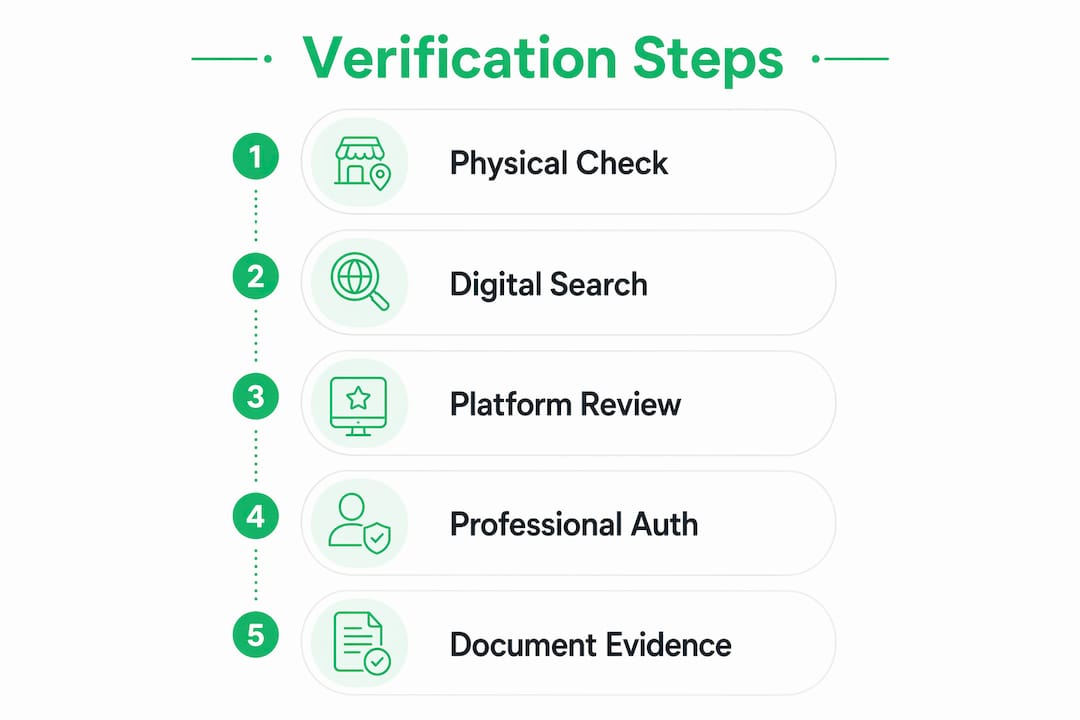
Key methods to start with:
- Visual inspection: Compare the item against manufacturer photos, checking logos, stitching, font, and finish quality
- Serial number check: Look up the number against brand databases or stolen property registries
- QR code and certificate validation: Scan any included QR code and confirm it resolves to the issuer's official domain
- Expert authentication: Submit photos to a service like Legit Check for annotated, dispute-ready verification
- Platform trust signals: Check the seller's verified rating and transaction history on MarketplaceAnywhere before engaging
Table of Contents
- How to verify item authenticity step by step
- Red flags that signal a suspicious item or seller
- How MarketplaceAnywhere features support safe verification
- Legal protections and buyer rights you should know
- How long does the verification process actually take?
- Why no single check is ever enough
- Key Takeaways
How to verify item authenticity step by step
A structured workflow protects you far better than a gut feeling. Work through these steps in order, and stop only when every layer checks out.
- Step 1 — Independent visual check: Before contacting the seller, compare every photo against official product images. Look at logo placement, label fonts, hardware finish, and packaging details. Inconsistencies at this stage often end the process early.
- Step 2 — Provenance and documentation review: Ask the seller for receipts, warranty cards, or a certificate of authenticity. Cross-reference any document details against what the brand's official website lists for that product line.
- Step 3 — Serial number lookup: Locate the serial number on the item or its packaging and check serial numbers against stolen property databases. For bikes, the Bike Index is a reliable free resource. For Apple devices, Apple's own coverage checker confirms whether a serial number is genuine and under warranty.
- Step 4 — QR code and digital certificate verification: Scan any QR code included with the item or its documentation. According to VerifyDoc's verification guide, you should check the correct domain, confirm the authenticity status displayed, and match the document details to the physical item. A mismatch anywhere is a hard stop.
- Step 5 — Reverse image search: Run the listing photos through Google Images or TinEye. Reverse image search quickly reveals reused or stolen pictures, often ending verification before you spend a dollar on a professional service.
- Step 6 — Secure platform communication: Use MarketplaceAnywhere's built-in messaging to request additional photos or a video call. Keep all communication on-platform so there is a documented record.
- Step 7 — Professional authentication (when stakes are high): For luxury goods, collectibles, or high-value electronics, submit photos to a service like Legit Check or Real Authentication. Both provide annotated images and a written determination usable in payment disputes.
Pro Tip: Layering at least three independent checks, one physical, one digital, and one platform-based, creates a chain of evidence that is far harder to fake than any single verification.
Red flags that signal a suspicious item or seller
Most fraud is detectable before you meet in person, if you know what to look for.
- Reused or stolen listing photos: A reverse image search that returns the same photo on multiple unrelated listings is a clear sign the seller does not actually have the item.
- QR codes pointing to wrong or dead domains: Phishing schemes frequently exploit fake QR codes that lead to look-alike domains with slight misspellings. If the URL does not match the brand's official domain exactly, treat it as compromised.
- Pricing that seems too good: A luxury watch or limited-edition sneaker listed at 40% below market value is almost never a bargain. It is usually a counterfeit or a stolen item.
- Refusal to verify through the platform: Sellers who push communication off-platform, to personal email or a third-party payment app, are removing the paper trail that protects you.
- No serial number or missing documentation: Legitimate sellers of branded goods can almost always produce a serial number. Reluctance to share one is a red flag worth taking seriously.
- Pressure to decide fast: Artificial urgency ("I have three other buyers") is a classic tactic to prevent you from completing your checks.
How MarketplaceAnywhere features support safe verification
Marketplaceapp built MarketplaceAnywhere around the reality that trust has to be earned at every step of a local transaction, not assumed. The platform's secure payments and verified seller ratings give buyers a baseline of confidence before the first message is sent.
- Verified seller ratings: A seller's transaction history and ratings are visible on their profile. A strong rating across multiple categories, say electronics and fashion, is a meaningful trust signal.
- Direct on-platform messaging: Keeping all communication inside MarketplaceAnywhere creates a documented record. If a dispute arises, that record supports your case with the payment processor.
- Categorized listings: Browsing by category, whether Apple AirPods Pro in electronics or a luxury watch in fashion, lets you filter by seller reputation and listing completeness before you invest time in verification.
- Location-based search and push notifications: These tools let you find nearby sellers quickly, which matters because an in-person inspection is still the most reliable final check for physical items.
- Mobile instant chat: Real-time messaging lets you request additional photos or a live video walkthrough without leaving the app, keeping the verification process fast and on-record.
Legal protections and buyer rights you should know
In the United States, the Federal Trade Commission's mail and phone order rules extend to online purchases, requiring sellers to ship items as described or offer a refund. For peer-to-peer transactions specifically, your strongest protection usually comes from your payment method. Credit card chargebacks under the Fair Credit Billing Act cover "not as described" claims, which includes counterfeit goods. Debit cards and peer-to-peer payment apps offer weaker or no protection, which is why using a platform with secure payment processing matters.
Selling a counterfeit item, even unknowingly, can carry civil liability under the Lanham Act. Buyers who discover a counterfeit after purchase should document everything, including the listing, all messages, and any authentication results, before filing a dispute. That documentation is exactly what services like Legit Check are designed to produce.
How long does the verification process actually take?
The timeline depends on how many layers you apply and whether you need professional authentication.
A basic item authenticity check, covering visual inspection, a reverse image search, and a serial number lookup, typically takes 15–30 minutes. Adding QR code and domain verification adds another 10 minutes at most. For most everyday used items on MarketplaceAnywhere, that is enough.
Professional authentication services run longer. Real Authentication offers a standard turnaround within a day, with a rush option available during specified hours. Legit Check timelines vary by service tier. Budget at least a full day when a third-party expert is part of your process, and factor that into any negotiation timeline with the seller.
Why no single check is ever enough
The conventional wisdom in peer-to-peer marketplaces is that a good photo and a fair price are enough to judge a deal. They are not, and the fraud data from US consumer protection agencies bears that out year after year.

No single method reliably confirms authenticity on its own. A convincing counterfeit can pass a visual check. A stolen item can have a clean serial number if the theft was never reported. A fake certificate can carry a QR code that resolves to a plausible-looking domain. Each check closes one gap; only the combination closes most of them.
Security experts are equally clear on the document side: never trust links printed on documents. Always navigate to the issuer's official website manually. That single habit eliminates a large category of phishing risk that catches even experienced buyers off guard.
The practical upside of layering checks is not just fraud prevention. It also gives you documented evidence if a dispute reaches your credit card issuer or a small claims court. A chain of verification steps, timestamped messages, annotated authentication images, and serial number records, is far more persuasive than "it looked fake to me."
Key Takeaways
Verifying item authenticity on a peer-to-peer marketplace requires layering physical, digital, and platform-based checks, because no single method is reliable on its own.
| Point | Details |
|---|---|
| Layer multiple checks | Combine visual inspection, serial number lookup, QR validation, and expert review for strongest evidence. |
| QR codes need domain verification | Confirm the QR code resolves to the issuer's exact official domain; misspelled URLs signal fraud. |
| Professional authentication takes about 12 hours | Budget at least one day when using a third-party service for high-value items. |
| Platform features reduce risk | Verified seller ratings and on-platform messaging on MarketplaceAnywhere create a documented, dispute-ready record. |
| Payment method determines your protection | Credit card chargebacks cover counterfeit claims; peer-to-peer payment apps typically do not. |