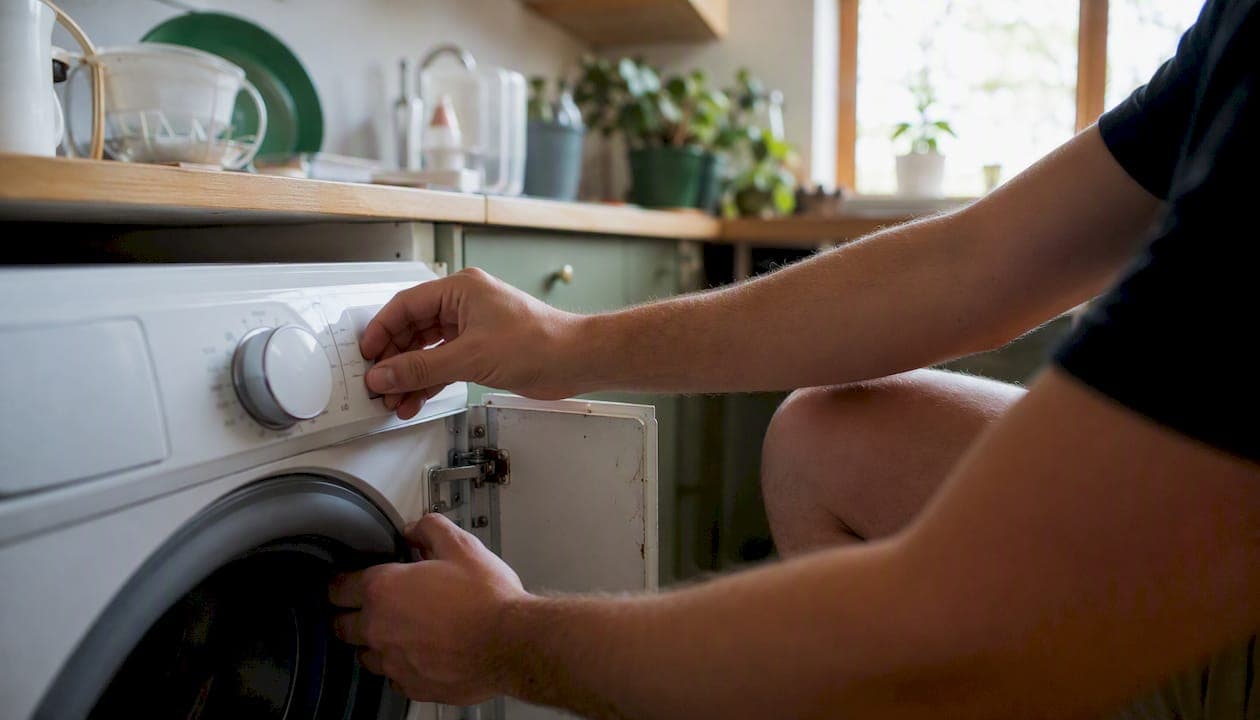
Buying used appliances is a genuinely smart move for budget-conscious homeowners and renters — but only when you know what to inspect, where to buy, and which models to avoid. The single condition that separates a great deal from an expensive mistake: buy from a dealer or refurbisher who has tested the unit and offers at least a short warranty. Skip that step, and you're rolling the dice on a machine you can't return.
Two quick rules before you read further:
- Low-risk: Dealer-tested, warranted unit with confirmed parts availability. Consumer Reports found buyers can save up to 75% off retail at used-appliance stores, and many of those stores include short-term guarantees.
- High-risk: Private seller, no demonstration, no serial number, and no replacement parts available for the model.
Resources like AHAM, the CPSC recall database, and MarketplaceAnywhere's verified-listing tools all exist to help you close the information gap between you and the seller. This guide shows you exactly how to use them.
Key Takeaways
Buying used appliances saves real money, but only when inspection, parts availability, and warranty coverage are confirmed before you pay.
| Point | Details |
|---|---|
| Inspect before every purchase | Run the appliance through a cycle, check the serial plate, and look for rust, odors, and bearing play before committing. |
| Prefer dealer-tested units with warranties | Dealers who test inventory and offer 30–90 day guarantees reduce post-sale risk significantly compared to private sales. |
| Verify parts availability first | Search the model on RepairClinic before buying; scarce or discontinued parts make any used appliance a high-risk purchase. |
| Price for repair risk | Factor delivery and a $75–$100 repair reserve into your offer; the sticker price is never the true cost of ownership. |
| Check CPSC recalls before transport | Search the CPSC database by model number before moving the appliance; recalled units can present fire or shock hazards. |
| Use Marketplaceapp for local listings | Verified seller ratings, in-app messaging, and location-based search make Marketplaceapp a lower-risk channel for finding secondhand appliances nearby. |
Table of Contents
- Where should you buy used appliances?
- What savings and lifespan should you realistically expect?
- How do you inspect a used appliance before buying?
- What warranties and return policies should you demand?
- Delivery, installation, and safety checks you can't skip
- How do you price a used appliance and negotiate effectively?
- Which appliances are worth buying used, and which should you avoid?
- What should you do in the first 90 days after buying?
- How does MarketplaceAnywhere reduce risk when you buy secondhand appliances?
- The inspection-first rule is the only rule that actually matters
- Find vetted local used-appliance listings on Marketplaceapp
- Sources
Where should you buy used appliances?
Your source determines your risk level more than almost any other factor. There are four main channels, and they are not equally safe.
Dedicated used-appliance dealers and refurbishers
These are the gold standard for secondhand appliances. A good dealer plugs in every unit, runs a cycle or two, and replaces obvious wear parts before putting it on the floor. Many offer 30–90 day warranties covering parts and labor, which is a meaningful safety net. Consumer Reports specifically recommends buying from dedicated stores or repair shops over anonymous listings because that short warranty materially reduces your post-sale risk.
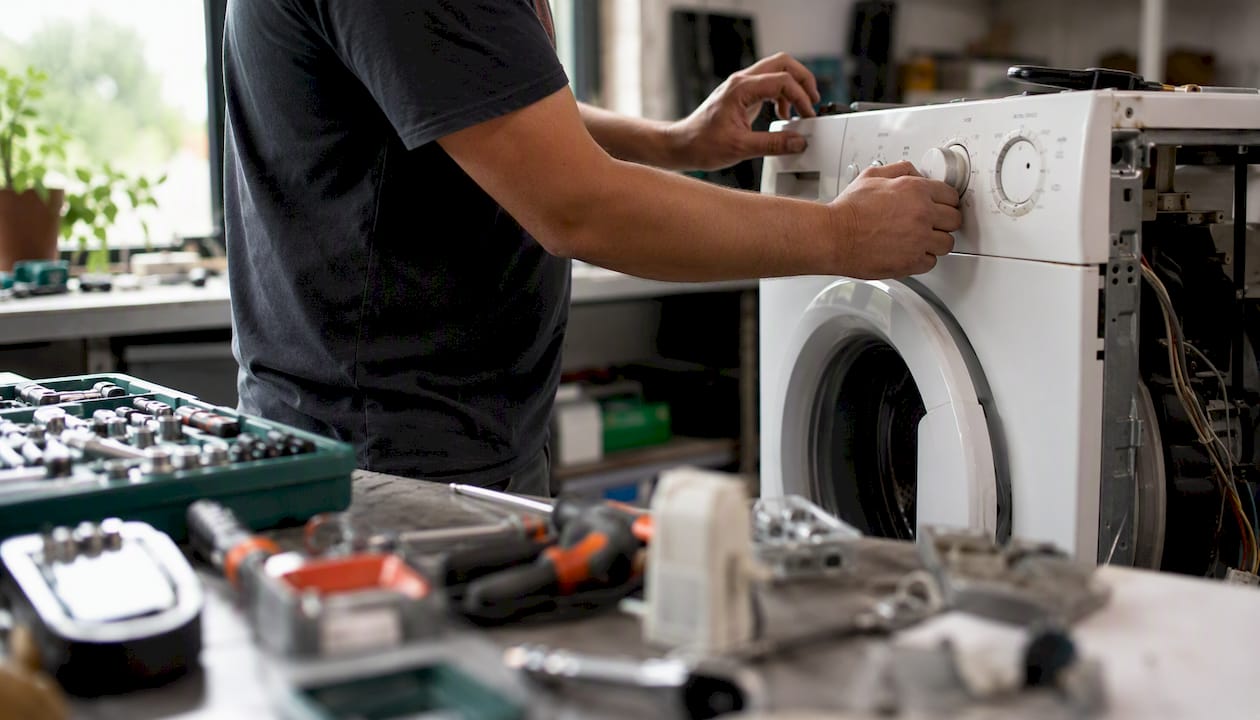
The tradeoff: prices run higher than private sales, and local pickup or delivery may be limited depending on the shop.
What to ask a dealer:
- What did you test, and what did you replace?
- What does the warranty cover, and is it parts-and-labor or parts-only?
- Can I see the unit run a full cycle before I pay?
Private sellers (peer-to-peer)
The lowest prices live here. A private seller on a local classifieds platform will often price an appliance at a fraction of what a dealer charges, and there's room to negotiate. The downside is real: no testing guarantee, no return policy, and a higher chance of misrepresented condition.
Safety tips for private-seller transactions:
- Meet at the seller's home so you can plug in and test the appliance in place.
- Bring a flashlight and check for rust, water damage, and burnt smells.
- Never pay before you've seen it run.
- Use a platform with verified seller ratings and in-app messaging so your conversation is documented.
For guidance on which local selling apps offer the strongest buyer-safety features, it's worth reviewing platforms that prioritize verified profiles and in-person pickup coordination.
Scratch-and-dent and floor models
This category sits between new and used in a useful way. These units are technically new or nearly new, often with cosmetic damage only, and they sometimes retain the remaining manufacturer warranty. HowStuffWorks notes that scratch-and-dent merchandise can carry discounts of 40–60% in some retail cases while keeping that coverage intact. A dented side panel on a refrigerator that sits against a wall is irrelevant to function.
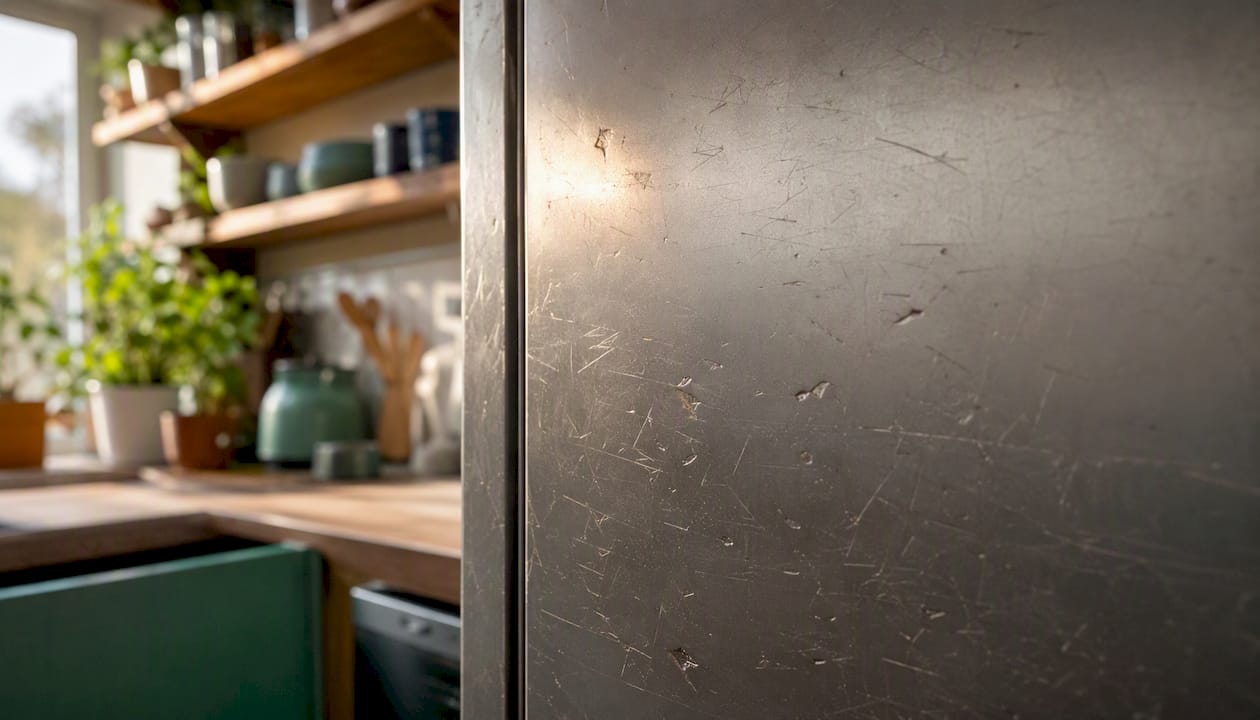
Floor models from appliance retailers are similar: they've been handled and displayed, but they haven't been used in a home. Ask the retailer whether the manufacturer warranty transfers and get that answer in writing.
Pro Tip: When buying a floor model, ask the store manager for the original box and documentation. Retailers often have them in the back, and having the manual and warranty card makes future service calls much smoother.
What savings and lifespan should you realistically expect?
The headline number from Consumer Reports is striking: up to 75% off retail at used-appliance stores. Neither figure accounts for delivery or near-term repairs, which is where buyers often get surprised.
A simple example: a washer listed at $250 sounds like a deal against a $700 new model. Add $75 for local delivery, and budget $100 as a repair reserve for the first year (a realistic figure for a machine of unknown service history), and your true cost is $425. Still a solid saving, but not the $450 gap the sticker price implied.
Savings reality check: The used price is the starting number, not the final cost. Factor delivery and a repair reserve before comparing to new.
AHAM publishes industry guidance on typical appliance life expectancy. Washers and dryers generally run 10–13 years; refrigerators, 14–17 years; dishwashers, 9–10 years. An appliance that's already 8 years old isn't necessarily a bad buy, but it has fewer remaining years of useful life, and that should be reflected in the price you offer.
tariffs](https://budgetlab.yale.edu/research/where-we-stand-fiscal-economic-and-distributional-effects-all-us-tariffs-enacted-2025-through-april). This shift makes the used market relatively more attractive for budget buyers right now.
Environmental upside: Buying secondhand keeps a working appliance out of the landfill and avoids the energy and materials cost of manufacturing a new one. For renters and homeowners who care about that calculus, it's a genuine secondary benefit.
How do you inspect a used appliance before buying?
A short, systematic inspection will catch most imminent failures. Voltage Appliance Repair's 5-minute inspection guide identifies model lookup, compressor behavior, drum play, heating-element continuity, and dishwasher interlock checks as the highest-value quick diagnostics. Here's how to run through them:
- Look up the model number first. Find the serial plate (usually inside the door frame or on the back panel), write down the model and serial number, and search them online before you commit. You're looking for widespread complaints, discontinued parts, and any open recalls.
- Check the manufacturing date. The serial number typically encodes the production date. Appliances approaching 15 years old carry higher repair risk because parts become scarce and labor costs can exceed the unit's remaining value.
- Visual inspection. Look for rust on the drum, cabinet, or water lines. Check door seals for cracks or mold. Smell the interior for burnt odors. Any of those is a negotiating point or a reason to walk.
- Power it on and run it. For a refrigerator, listen for the compressor cycling on smoothly without grinding. For a washer, spin the drum by hand to feel for bearing play, then run a short cycle and listen for banging. For a dryer, run it on heat and confirm the element fires within a minute or two.
- Appliance-specific checks:
- Refrigerator: Compressor should start without hesitation; door seals should hold a piece of paper with light resistance.
- Washer: Drum should spin without wobble; check under the machine for rust or old water stains.
- Dryer: Heating element continuity can be checked with a multimeter; lint trap housing should be clean and unobstructed.
- Gas range: All burners should ignite within 4 seconds; check for gas smell after shutting off.
- Dishwasher: Door interlock should click firmly; spray arms should spin freely with no cracks.
- Microwave: Turntable should rotate without grinding; run it for 60 seconds with a cup of water and confirm it heats.
- Red flags that should end the conversation: Seller refuses to plug it in, no serial plate, evidence of water damage inside the cabinet, or a gas appliance that smells after the burner is off.
Pro Tip: If you're serious about a unit but can't run a full cycle on-site, hire a local appliance technician for a paid pre-purchase inspection. A one-hour service call from a shop like Omega Force Appliance Repair typically costs $75–$100 and can reveal worn bearings, marginal compressors, or electrical issues that aren't visible to the eye. That's cheap insurance on a $300–$500 purchase.
Knowing repair costs before you buy gives you real negotiating leverage. A washer bearing replacement runs $150–$250 in parts and labor. A refrigerator compressor replacement can hit $400–$600. If the inspection reveals either issue, you either walk or price it into your offer.
What warranties and return policies should you demand?
Dealer warranties vary, but a 30–90 day guarantee covering parts and labor is a reasonable baseline to expect from a reputable used-appliance store. Some shops, like Glen Burnie Used Appliances, advertise exactly that range and test their inventory specifically to reduce service calls. A private seller, by contrast, can offer nothing enforceable beyond a receipt.
What to require in writing before you pay:
- The exact warranty period (start date, end date)
- What is covered: parts only, or parts and labor?
- Who performs warranty service: the seller, or a third-party shop?
- The return policy if the unit fails within the first week
Parts availability is a separate check you should do before you even negotiate price. Search the model number on RepairClinic or a manufacturer parts page. If the control board, compressor, or drum bearing for that model shows "discontinued" or "backordered indefinitely," that unit is a risky buy regardless of how well it runs today. Scarce parts also tank resale value if you ever want to sell appliances locally later.
Pro Tip: Get any short-term guarantee in writing, even if it's just a text message or email from the seller confirming the terms. On a peer-to-peer platform, use in-app messaging for this exchange so the record is tied to the transaction.
Delivery, installation, and safety checks you can't skip
Getting a used appliance home safely costs more than the listing price suggests. Budget $50–$150 for local delivery from a dealer, depending on distance and whether stairs are involved. Private-seller pickups usually require renting a truck or hiring a moving service, which can run $100–$200 for a half-day.
Installation complexity varies sharply by appliance type:
- Gas ranges: Require a licensed plumber or gas technician to connect the supply line. Never DIY a gas hookup. After connection, test every joint with soapy water and check for bubbles before lighting any burner.
- Built-in refrigerators and over-the-range microwaves: Often require cabinet modifications or electrical work. Hire a licensed electrician if the existing outlet doesn't match the appliance's requirements.
- Standard electric appliances: Most plug-and-play, but confirm the outlet voltage matches (240V for dryers and ranges, 120V for most others) and check that the circuit is properly grounded.
Safety first: The CPSC recall database is free and takes under two minutes to search. Check it before you transport the appliance, not after. A recalled unit with a fire or shock hazard is dangerous to move and illegal to sell in some states.
Recalled appliances can present fire or shock hazards, and the CPSC database is updated continuously. Search by brand name or model number. If the unit appears in the database, walk away unless the recall remedy (a free repair or replacement part) has already been applied and you have documentation proving it.
How do you price a used appliance and negotiate effectively?
Start with the math, not the asking price. A fair offer for a used appliance accounts for three things: the unit's age and condition, the cost of likely near-term repairs, and delivery.
Simple pricing framework:
- Find the current new retail price for the same or equivalent model.
- Subtract 40–50% for a dealer-refurbished unit with warranty, or 50–65% for a private-sale unit in good condition.
- Subtract the cost of any issues you found during inspection (or a $75–$100 repair reserve if you found nothing obvious).
- Subtract your delivery cost.
That number is your opening offer.
Negotiation tactics that work:
- Cite specific inspection findings. "The door seal is cracked and will need replacing" is a concrete reason for a lower price, not a vague complaint.
- Cash or Zelle often moves a private seller. It's faster and avoids card fees, though a credit card purchase gives you chargeback protection if the seller misrepresented the item.
- If you're buying multiple items from the same dealer, ask for a bundle discount. Dealers would rather move two units at a slight discount than sell one at full price.
- Use local garage sale apps to compare recent sold prices for the same model in your area before you negotiate.
Red flags during negotiation: The seller won't demonstrate the unit running, gives vague answers about repair history ("it just needs a little work"), or can't provide the model and serial number. Any of those should make you pause.
Which appliances are worth buying used, and which should you avoid?
Not all secondhand appliances carry the same risk. The category and the model's service history matter more than the brand name.
Generally safe used buys:
- Stand-alone refrigerators (not built-in or counter-depth custom models)
- Basic top-load washers and dryers without complex electronic controls
- Chest freezers
- Gas or electric ranges without smart-home features
- Floor models and scratch-and-dent units with remaining manufacturer warranty
Buy with caution or avoid:
- Built-in refrigerators: expensive to install, custom dimensions, and parts are often model-specific and costly
- Smart appliances with discontinued software or proprietary control boards
- Gas cooktops with complex ignition systems and no service history
- Any appliance older than 12–15 years where parts availability is uncertain
- Units with no serial plate or an obscured model number
The HowStuffWorks guide specifically highlights stand-alone refrigerators, washers, dryers, and freezers as the best used-appliance categories for budget buyers, largely because parts are widely available and the repair ecosystem is mature.
| Category | Risk level | Warranty typically available? | Parts availability |
|---|---|---|---|
| Stand-alone refrigerator | Low | Yes, from dealers | Wide |
| Basic washer/dryer | Low | Yes, from dealers | Wide |
| Chest freezer | Low | Sometimes | Wide |
| Gas range (standard) | Medium | Sometimes | Moderate |
| Built-in refrigerator | High | Rarely | Limited |
| Smart appliance (discontinued) | High | No | Scarce |
What should you do in the first 90 days after buying?
The first few weeks of use reveal problems that didn't show up during a short inspection. Here's what to do immediately after the appliance is installed:
- Keep all paperwork. Receipt, warranty document, and any written guarantee from the seller. Store them together, physically or in a folder on your phone.
- Register the model if possible. Some manufacturers allow registration of used appliances. It won't give you a new warranty, but it puts you on the recall notification list.
- Log the serial number and model. Write it somewhere you'll find it: a note on your phone, a label inside a cabinet door. You'll need it for any future service call.
- Inspect after the first two weeks. Check under the washer for water, behind the refrigerator for ice or condensation, and around the dryer vent for lint buildup.
- Clean filters and check seals. Refrigerator door gaskets, dryer lint traps, and dishwasher filters should all be cleaned before first use and checked again after two weeks.
Pro Tip: If the appliance came from a private seller with no warranty, book a technician inspection within the first 30 days. A professional from a service like Omega Force Appliance Repair can catch marginal issues, like a compressor running hot or a bearing showing early wear, before they become full failures. Catching a $150 repair early beats a $500 emergency call later.
How does MarketplaceAnywhere reduce risk when you buy secondhand appliances?
Buying through a platform with built-in trust signals changes the risk profile of a peer-to-peer transaction. MarketplaceAnywhere's local-first model means you're typically dealing with someone nearby, which makes in-person inspection before payment the default rather than the exception.
Platform features that matter when buying secondhand appliances:
- Verified seller ratings: A seller's transaction history is visible before you commit. Multiple completed sales with positive feedback is a meaningful signal.
- In-app messaging: All communication stays on the platform, which creates a documented record of any claims the seller makes about condition, age, or warranty.
- Location-based search: Finding listings within a few miles means you can arrange an in-person test before paying, and you avoid the added risk of shipping a large appliance.
- Secure payment tools: Using the platform's payment features rather than cash or wire transfer gives you a record of the transaction and, in some cases, dispute options.
Actionable steps for buying appliances on MarketplaceAnywhere:
- Request a photo of the serial plate before agreeing to view the unit. This lets you run a recall check and parts search before you spend time traveling.
- Ask the seller, via in-app message, to confirm the appliance powers on and runs. That message becomes documentation if a dispute arises.
- Use in-app messaging to confirm any short-term guarantee the seller offers, even informally.
Pro Tip: Before you meet, search the model number on the CPSC recall database and RepairClinic using the serial plate photo the seller sends. Two minutes of research before the visit can save you from transporting a recalled unit.
For a broader look at which local reselling apps offer the strongest buyer protections and verified-seller features, MarketplaceAnywhere consistently stands out for its combination of location-based search and in-app communication tools.
The inspection-first rule is the only rule that actually matters
The conventional advice on buying used appliances focuses heavily on where to buy. Dealers vs. private sellers, apps vs. classifieds. That framing isn't wrong, but it misses the more important point: the source matters far less than whether you actually inspect the unit before you pay.
A dealer with a 90-day warranty is a better default than a private seller, yes. But a private seller who lets you run a full wash cycle, shows you the serial plate, and confirms parts availability on RepairClinic is a safer transaction than a dealer who hands you a vague "tested and working" sticker and won't let you run it. The warranty is a safety net, not a substitute for your own eyes and ears.
What most guides understate is how much leverage a short inspection gives you. A drum with bearing play, a compressor that hesitates, a door seal with visible mold: each one is either a reason to walk or a reason to pay less. Sellers who know you know what you're looking at tend to price honestly. Sellers who expect an uninformed buyer tend not to.
Apply that same logic before you buy. If the inspection reveals a likely $400 compressor replacement on a $350 refrigerator, the math doesn't work regardless of how good the deal looks on paper.
Find vetted local used-appliance listings on Marketplaceapp
The fastest way to apply everything in this guide is to start with listings where the seller's history is already visible and in-person inspection is built into the process.
Marketplaceapp connects you with local sellers in your area, so you can filter for nearby listings, message sellers directly to request serial plate photos and condition details, and arrange an in-person test before you hand over a dollar. Verified seller ratings show you who has completed transactions reliably, and in-app messaging keeps every claim the seller makes on record.
Three steps to buy used appliances safely on Marketplaceapp:
- Search your category and filter by location to find listings within driving distance.
- Message the seller to request a serial plate photo, then run a quick CPSC recall check and RepairClinic parts search before you visit.
- Arrange an in-person test, confirm any short-term guarantee via in-app message, and pay through the platform's secure payment tools.
Browse local appliance listings on Marketplaceapp and start your search with sellers who have verified ratings and documented transaction histories.
Sources
These are the resources worth bookmarking before you buy any used appliance:
- Should You Buy a Used Appliance? - Consumer Reports
- Buying a Used Appliance: What to Inspect in 5 Minutes · Voltage Appliance Repair Blog
- Recalls - U.S. Consumer Product Safety Commission
- AHAM (Association of Home Appliance Manufacturers)
- 5 Appliances You Should Consider Buying Used | HowStuffWorks