Sustainable secondhand shopping only delivers on its promise when three things line up: the purchase replaces a new item you would have otherwise bought, the piece is durable enough to survive years of use, and you actually keep it in rotation instead of flipping it again in a few months. Research on resale behavior shows that thrifting can just as easily fuel overconsumption as curb it. The checklist and evidence below explain why, and how to shop in a way that actually counts.
TL;DR:
- Buying secondhand can reduce manufacturing emissions only if it genuinely replaces new purchases, not when it adds to overall consumption through rebound buying.
- The secondhand apparel market is rapidly growing, reaching 177 billion dollars in 2022 and projected to nearly double by 2027, making behavior shifts impactful at scale.
- Donated clothes often have a low resale rate, with fewer than 30% resold in some markets, so donations should be limited to items truly fit for resale to avoid waste.
- Focusing on durable, natural fibers and quality construction increases the likelihood that secondhand garments will last and be repairable over time.
- Local in-person transactions reduce shipping emissions, allow better condition inspection, and help ensure items are genuinely kept in rotation.
Table of Contents
- What Makes Secondhand Shopping Environmentally Beneficial
- Where Secondhand Falls Short: Rebound Effects and the Donation Gap
- Your Thrift-Shopping Checklist for Quality Finds
- Choosing Pieces That Actually Last
- Cleaning and Storing Secondhand Finds Properly
- What the Research Actually Says About Resale
- Marketplace's Take on Local Secondhand Shopping
- Buy and Sell Locally Without the Shipping Footprint
- Sources
- FAQ
What Makes Secondhand Shopping Environmentally Beneficial
The environmental case for buying used rests on one simple mechanism: every garment, appliance, or piece of furniture that gets reused is one less item pulled through a factory, dye house, and shipping container. Manufacturing new clothing accounts for the bulk of a garment's lifetime carbon footprint, so extending a product's life through resale sidesteps that footprint entirely rather than just delaying it. Secondhand 101 frames this as the core sustainability gain of secondhand markets: reuse reduces material extraction and waste only when it actually substitutes for a new purchase, not when it simply adds another item to the pile.
The math gets more interesting when you look at scale. The secondhand apparel market has grown fast enough that even modest shifts in behavior move real volume:
- The global resale market reached $177 billion in 2022 and is projected to roughly double by 2027.
- Extending a garment's active life by even nine months can meaningfully cut its per-wear carbon, water, and waste footprint.
- Buying secondhand appliances, furniture, and electronics avoids the manufacturing emissions of new production almost entirely, not just partially.
Pro Tip: *Before buying anything new, check local secondhand listings first.
Where Secondhand Falls Short: Rebound Effects and the Donation Gap
Here's the uncomfortable finding: buying secondhand does not automatically shrink your footprint. A nationally representative study published in Scientific Reports found a strong positive correlation (r = 0.58, p < 0.01) between how much people buy secondhand and how much new clothing they buy. Heavy thrifters, in other words, often buy more clothing overall and hold onto pieces for shorter stretches, a pattern researchers link to moral licensing. Buying "ethically" in one purchase can quietly grant permission to overconsume elsewhere.
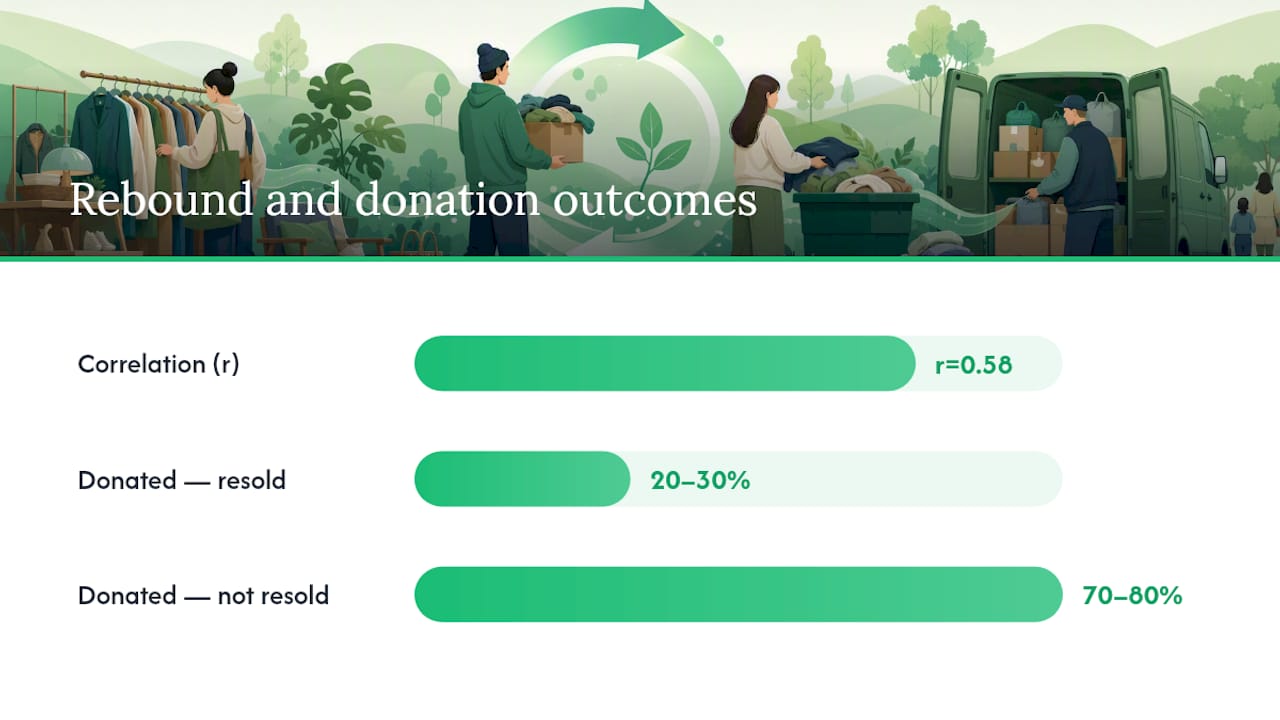
The other weak link is what happens after you donate. Reporting from British Vogue notes that in some markets, fewer than 20 to 30% of donated clothes are actually resold in the store that received them. The rest gets downcycled into rags and insulation, exported in bulk to used clothing markets in the Global South, or landfilled outright when local processing systems can't keep up.
Two things to watch for:
- Rebound buying: treating thrift finds as "free" purchases that don't count against your consumption habits.
- The donation illusion: assuming a bag dropped at a donation bin is guaranteed a second life.
The fix isn't complicated. Buy secondhand to replace something, not to add to a pile, and donate only items genuinely wearable enough that a stranger would choose them.
Your Thrift-Shopping Checklist for Quality Finds
Sustainable secondhand shopping works best as a slow, deliberate habit rather than a bargain hunt. Use this sequence whether you're at a physical store or scrolling a marketplace app.
- Search with intent. Filter by size, category, and condition before browsing, so you're not tempted by things you weren't looking for.
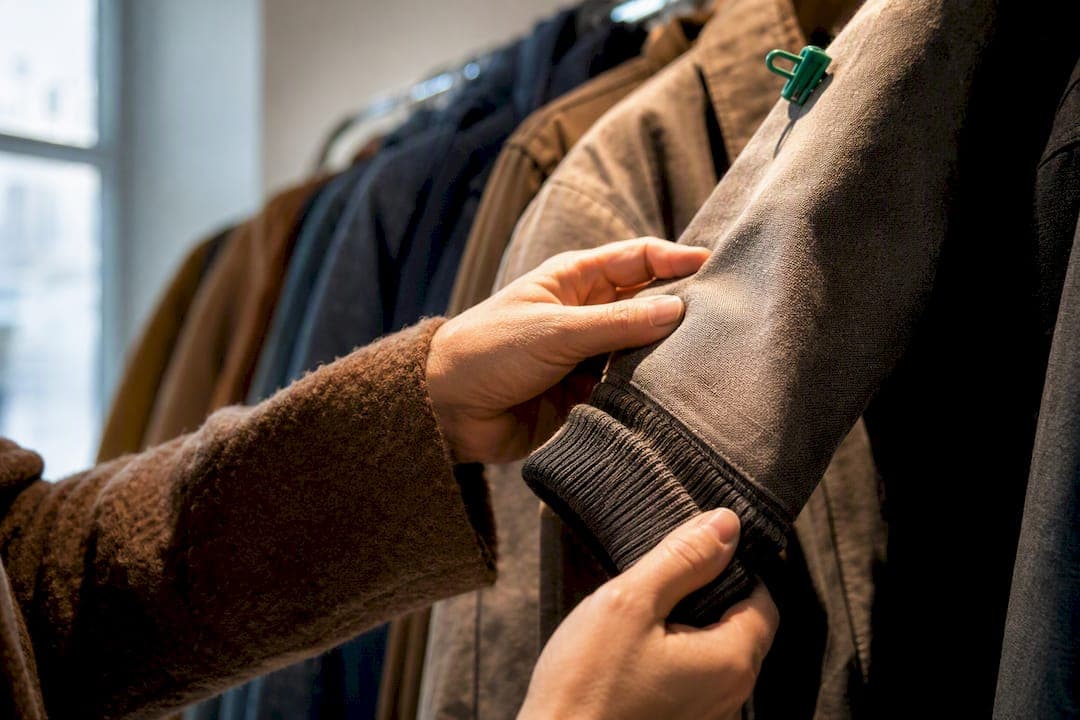
- Inspect seams and stitching first. Loose threads at stress points (armpits, crotch, shoulder seams) predict how long a piece survives a washing machine.
- Check zippers and closures. Work every zipper and button before buying. A stuck zipper is rarely worth the repair.
- Smell and examine fabric closely. Mildew odors, deep-set stains, and sun-faded patches are signs an item's usable life is nearly over.
- On marketplace apps, review seller history and ratings. A seller with a consistent track record is far less likely to misrepresent condition.
- Ask for close-up photos of labels and seams when composition or construction isn't listed. Sellers who show inside seams are almost always more trustworthy about condition.
- Confirm the return policy before checkout, especially for anything you can't try on first.
Pro Tip: Give yourself a 30 to 90 day waiting rule for anything that wasn't on your list. If you still want it a month later, buy it. If you forgot about it, you just avoided a haul you'd regret.
Choosing Pieces That Actually Last
Durability starts with fabric. Natural fibers like cotton, wool, linen, and leather hold their shape and take mending far better than synthetic blends, which tend to pill, thin out, and lose elasticity after repeated washing. Construction matters just as much as material: check for reinforced seams, French seams, or bar tacks at stress points, since these details separate garments built to survive years from ones built to survive a season.
Repairability is worth weighing before you buy, not after something rips. A missing button or a loose hem is a five-minute fix. A broken zipper on a cheap synthetic jacket often costs more to repair than the jacket is worth. Research on secondhand clothing sustainability points to quality and repairability, not trendiness, as the stronger predictor of whether an item stays in circulation.
- Prioritize classic silhouettes over trend-driven cuts, since timeless shapes stay wearable across seasons.
- Favor natural fibers and simple, sturdy construction overcomplicated synthetic blends.
- Treat a minor flaw as a mending project, not a dealbreaker, if the base fabric is solid.
Cleaning and Storing Secondhand Finds Properly
A secondhand item needs a full cleaning cycle before it joins your regular rotation, no exceptions.
- Wash first, always. Machine-wash cottons and synthetics on a gentle cycle; steam or spot-clean delicate fabrics that can't handle a full wash.
- Send structured or delicate pieces to a professional cleaner. Wool coats, leather goods, and anything with intricate lining are worth the small cost to avoid ruining them at home.
- Air out anything with a lingering odor before washing, since some smells set into fibers permanently once heat is applied.
- Store with cedar blocks or lavender sachets, not mothballs, to deter pests without the harsh chemical smell.
For electronics, appliances, and furniture, skip the DIY cleaning guesswork on anything with wiring or upholstery and follow EPA guidance on safe donation and recycling channels if an item turns out to be beyond saving.
What the Research Actually Says About Resale
The data on secondhand shopping is more mixed than most thrift-positive messaging lets on, and it's worth seeing side by side.
| Finding | What it shows | Practical takeaway |
|---|---|---|
| Rebound effect in resale buyers | Positive correlation (r = 0.58) between secondhand and new purchases among frequent thrifters | Track total items acquired, not just where they came from |
| Low resale rate for donations | Fewer than 20 to 30% of donated clothing gets resold in some markets | Donate only genuinely wearable pieces; sell valuable items directly instead |
| Five-garment benchmark | Some climate researchers propose roughly five new garments per year to align with climate targets | Apply the same moderation to secondhand adds, not just new ones |
| Reduction beats substitution | Experts argue that cutting total consumption matters more than switching where you buy | Ask "do I need this" before "is this secondhand" |
Yale researchers put it plainly: swapping the point of purchase from new to used doesn't solve overconsumption if the volume keeps climbing. The most reliable sustainability gains come from combining reduction, reuse, and repair, not leaning on resale alone.
Marketplace's Take on Local Secondhand Shopping
We built our guides on decluttering and safe transactions because local, in-person secondhand exchanges cut out the shipping emissions that come with long-distance resale platforms. Buying nearby also lets you inspect an item before you commit, which solves the condition-guessing problem that drives so many returns. Our advice: declutter what you'll actually let go of, and buy pieces you intend to keep.
— Marketplace
Buy and Sell Locally Without the Shipping Footprint
If you've been comparing thrift stores, consignment shops, and shipping-heavy resale apps, local peer-to-peer trading solves a problem none of them fully address: you can see the item, meet the seller, and skip the box and packing tape entirely. This platform is built around exactly that kind of transaction.
Listings are organized by category, from fashion to appliances to furniture, with seller ratings that let you gauge trustworthy sellers before you message them. Secure payment options and direct in-app chat mean you can ask about fabric composition or check a zipper's condition before you drive across town. Local pickup also means zero shipping emissions and the chance to catch flaws in person that photos never show.
If you're ready to put the checklist above into practice, browse local listings on Marketplace and start buying pieces you'll actually keep.
Sources
- Secondhand fashion consumers exhibit fast fashion behaviors despite sustainability narratives | Scientific Reports
- Is second-hand shopping sustainable? | British Vogue
- Secondhand 101
- Electronics donation and recycling | EPA
FAQ
Is thrifting the most ethical way to shop?
Thrifting is one of the more ethical shopping habits available, but only when it replaces new purchases rather than adding to your total consumption. Buying secondhand without cutting new purchases just adds volume, which research links to rebound effects rather than genuine reduction.
Why does Gen Z like thrifting?
Younger shoppers gravitate toward thrifting for a mix of affordability, unique style, and stated environmental values, though studies show high engagement with resale doesn't always translate into lower overall consumption. The habit is genuine, but the sustainability payoff depends on whether it displaces new buying.
Is it ethical to shop at charity or donation-based thrift stores?
Yes, generally, since these purchases directly fund a nonprofit's mission and keep usable goods in circulation. The ethical wrinkle isn't the shopping side, it's the donation side: much of what gets dropped off never actually resells and ends up exported or discarded.
Is it hygienic to buy secondhand clothes?
Secondhand clothing is safe to wear once properly washed; a full machine-wash or professional cleaning cycle removes the vast majority of residue and allergens before you wear it. Items with persistent odors, staining, or visible wear beyond repair are the exceptions worth skipping.
How can I avoid buying fake or counterfeit secondhand items?
Ask sellers for close-up photos of labels, stitching, and hardware, and compare them against known brand details before buying anything higher-value. Sellers with consistent ratings and transaction history on platforms like Marketplace are far less likely to misrepresent an item's authenticity or condition.