Most used bikes sell for 40 to 60% of their original retail price between one and three years old, with that number sliding down to 15 to 30% once a bike passes eight years. Condition, drivetrain wear, and where you sell it move that range more than anything else. A $1,200 hybrid in solid shape at two years old should realistically land near half that retail price.
TL;DR:
- Used bikes typically sell for 40 to 60 percent of their original retail price within the first three years, and only 15 to 30 percent after eight years.
- Upgrades like new wheels or dropper posts only recover about 30 to 50 percent of their cost at resale, and heavily customized bikes sell for less.
- Accurate valuation depends on researching sold listings, inspecting drivetrain wear, and verifying service records, especially for e-bikes' batteries.
- Listing in early spring or late summer captures the highest demand, and pricing slightly above your target allows room for negotiation without dropping below your minimum.
- Transparent listings with recent service receipts, clear photos, and full disclosure of issues sell faster and closer to asking prices.
Table of Contents
- Used Bike Price Ranges by Type, Age, and Condition
- How to Determine a Used Bike's Value
- Where to Check Used Bike Prices
- When to Sell and How to Negotiate
- What Buyers and Sellers Should Each Check
- Marketplace's Take on Pricing Mistakes
- List, Price, and Sell Your Bike With Marketplace
- Sources
Used Bike Price Ranges by Type, Age, and Condition
Depreciation on bikes follows a curve, not a straight line. A new bike loses 20 to 30% of its value the moment it leaves the shop floor, then the drop-off flattens out for the next few years before accelerating again once components start wearing out. That first hit catches a lot of sellers off guard when they list a bike they bought "just last year."
Here's how the percent-of-RRP bands typically break down:
| Age | Typical % of Original Retail Price |
|---|---|
| Under 1 year | 40 to 60% |
| 1–2 years | 40 to 60% |
| 2–3 years | 40 to 60% |
| 3–5 years | 40 to 60% |
| between one and three years | 15 to 30% |
| once a bike passes eight years | 15–30% |
Translate that into dollars and the spread by category gets wide fast. A commuter or hybrid bike that retailed around $500 to $800 new usually resells for $200 to $450 depending on age. Road bikes hold value a bit better among enthusiasts, so a $2,500 carbon frame two years old often still fetches $1,200 to $1,500. Mountain bikes and gravel bikes track similarly, though suspension wear and tire condition swing the number more than on a road bike. E-bikes are their own animal entirely because battery health drives most of the resale value, and a $3,000 e-bike with a degraded battery can lose half its remaining value overnight.
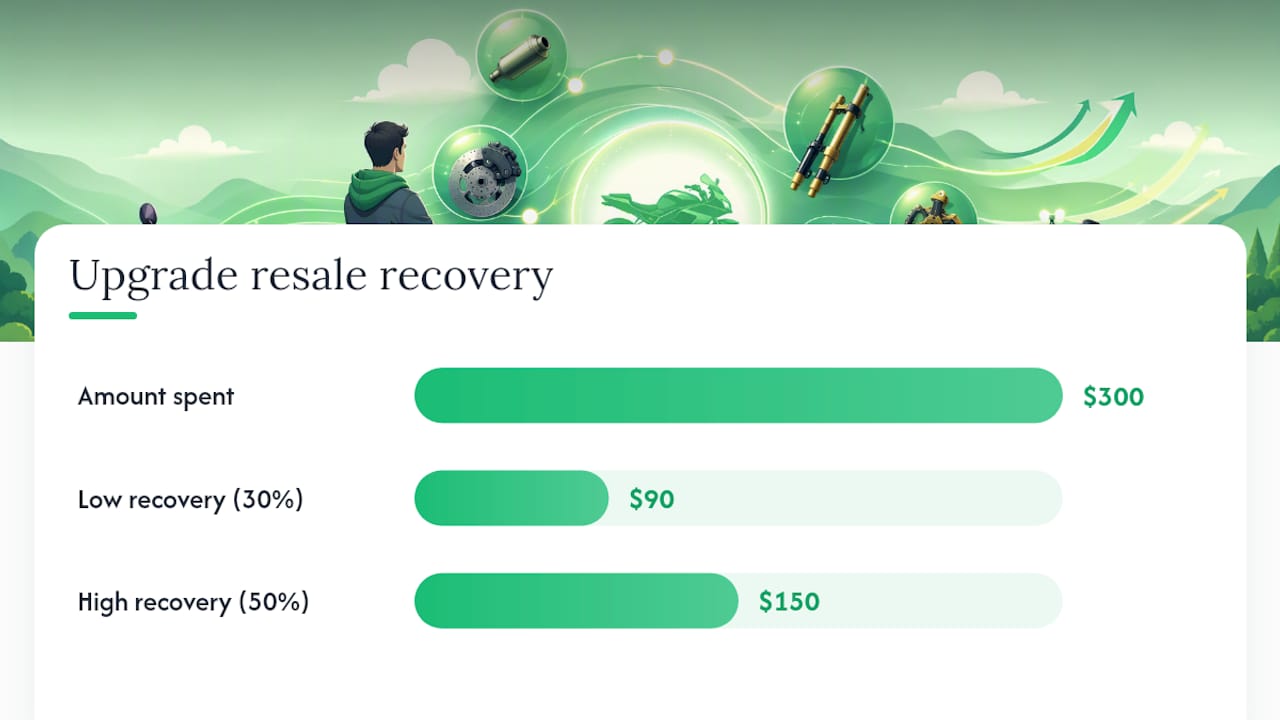
One thing sellers consistently get wrong: upgrades don't pay you back. Spend $300 on a new wheelset or dropper post and expect to recover maybe $90 to $150 of that at resale, since most upgrades return roughly 30 to 50 cents per dollar spent. Highly personalized builds shrink your buyer pool too. What excites you might just look "weird" to the next owner.
How to Determine a Used Bike's Value
Setting a fair number takes about 20 minutes if you work through it in order.
- Search sold and delisted listings for the exact make, model, year, and spec, not just active asking prices, since sold data is the most reliable price anchor available.
- Inspect the drivetrain for chain stretch, cassette wear, and derailleur alignment. These wear items get expensive fast.
- Check the frame for cracks, dents, or repainted sections that might be hiding damage.
- Look at tire tread and brake pad thickness, then price in a replacement if either is near the end of its life.
- Get a rough service quote for anything that needs work, and subtract that estimate from your target price.
- Confirm the service history. A bike with recent tune-up receipts and original components is worth more than a bare-bones listing with no paperwork.
- For e-bikes, ask for battery diagnostics and charge-cycle counts before you settle on a number.
Pro Tip: A $150 chain-and-cassette replacement quote is a better negotiating tool than any online percentage rule. Bring the number, not the opinion.
Documentation matters more than people expect. A bike with a folder of service receipts and its original stock parts intact will consistently sell nearer the top of its price band, while a heavily customized bike or one with zero paper trail tends to sit and linger.
Where to Check Used Bike Prices
Not every price you see online reflects what a bike actually sold for, and that gap trips up a lot of first-time sellers.
- Live marketplace listings show asking prices, which run higher than what buyers actually pay.
- Sold or delisted listings show realized prices, which is what you should benchmark against.
- Private, peer-to-peer sales typically net the seller the most money since there's no middleman taking a cut.
- Bike shops and consignment sellers pay less because they're absorbing the risk, storage, and time of reselling, though certified used bikes with return policies and inspection records command a premium with buyers who want that safety net.
- Local shop trade-in offers commonly run well below what the same bike would fetch in a private sale, since the retailer is pricing in resale risk.
Match on year, spec level, and condition tier when you're comparing listings. A "same model" from three years apart with a different groupset isn't a real comparable.
When to Sell and How to Negotiate
Timing shifts your price ceiling more than most sellers realize.
- List in early spring when riding season demand peaks and buyers are shopping actively.
- Watch for a smaller bump in September as commuters gear up before fall.
- Decide upfront whether you want a quick sale or the top of your price range. Quick sales mean pricing near the bottom of your comparable range and expecting an offer within days.
- If you want top dollar, price slightly above your target and leave room to negotiate down without going below your floor.
- As a buyer, use a documented defect (worn cassette, cracked saddle) and a real repair quote to justify a lower offer instead of just asking for a discount.
Pro Tip: Buyers who show up with an actual repair shop quote get taken more seriously than buyers who just say "that seems high."
What Buyers and Sellers Should Each Check
Sellers protect their asking price with three things: recent service receipts, clean well-lit photos, and an honest description of every scratch or issue. Skip any of those and buyers assume the worst, which drags your offers down before negotiation even starts.
Buyers protect their money with a different checklist:
- Measure chain stretch with a simple checker tool before agreeing to a price.
- Verify the serial number matches the listing and isn't flagged as stolen.
- Always test-ride before paying, even for a "barely used" bike.
- On e-bikes, ask to see the battery health reading in the companion app, not just a verbal assurance.
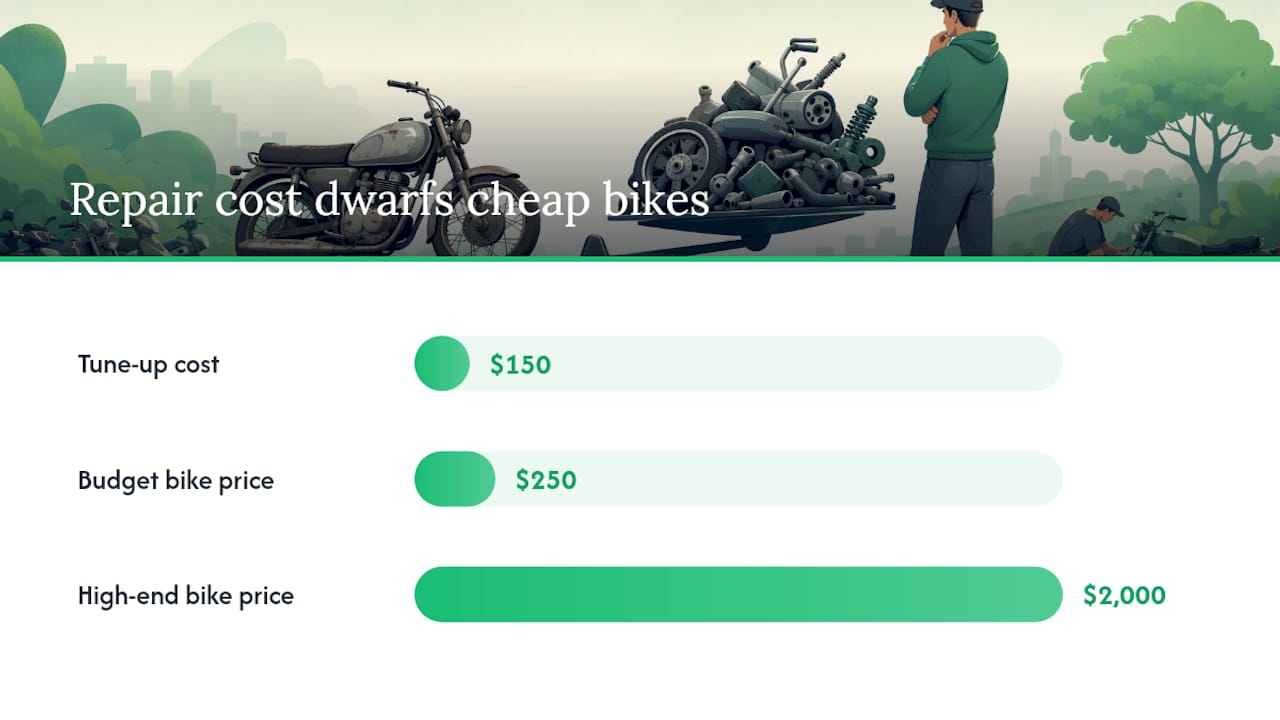
Repair costs hit budget bikes hardest. A $150 tune-up on a $250 bike can kill the deal entirely, while that same $150 barely dents the price on a $2,000 bike. Know which tier you're in before you argue over $20.
Marketplace's Take on Pricing Mistakes
The three mistakes we see most often on local listings: overpricing based on what the owner paid rather than what buyers are actually paying, blurry or dark photos that make a bike look neglected, and vague descriptions that dodge mentioning known issues. Each one is an easy fix. Price against sold comparables, shoot photos in daylight, and disclose the wear upfront.
Listings with service records and clear photos consistently move faster and hold closer to the top of their price range. Buyers reward transparency, even when the transparency includes a flaw. A disclosed scratch reads as honest. A hidden one reads as a red flag once it's discovered in person.
— Marketplace
List, Price, and Sell Your Bike With Marketplace
Marketplaceapp gives you what a private sale actually needs to hit the top of its price range: live local listings so you can see what comparable bikes are asking right now, verified seller ratings that build buyer trust before the first message, and secure in-app payments so neither side is stuck trusting a stranger with cash.
Getting started takes a few minutes. Snap clear photos in daylight, pull your service history together, and check a handful of sold listings for your exact model and year before you set your number. From there, list it on Marketplace and let local buyers come to you instead of chasing offers across three different apps. If you're buying, the same local listings let you compare real asking prices side by side before you ever agree to meet.
Sources
- How Much Is My Bike Worth? UK Used Bike Values Explained (2026) | Cyclesite
- Used Bikes For Sale | Road, Mountain, Gravel & E-Bikes | The Pro's Closet