
On a peer-to-peer marketplace, "as is" means the buyer accepts the item in its current condition, flaws included, and the seller disclaims any implied promise that it works or fits a particular purpose. It's not a magic phrase that erases every obligation, though. Fraud laws, honest-description requirements, and platform "not as described" rules still apply, and this article covers as-is sales for private and local marketplace transactions only, not real estate.
TL;DR:
- "As is" disclaimers prevent implied warranties but do not shield sellers from fraud or intentional concealment of defects.
- The risk of loss usually transfers to the buyer when the item is available for pickup, making documentation of handoff essential.
- Buyers should conduct in-person inspections, request videos or photos, and document conditions before completing payment for higher-value items.
- Sellers should include clear "as is" statements, photograph known flaws, and keep all communication and payments within the platform to avoid disputes.
- Using platform tools like secure payments, verified ratings, and in-app messaging significantly reduces the likelihood of post-sale conflicts.
Table of Contents
- What "As Is" Means Legally for Private, Peer-to-Peer Sales
- What "As Is" Does Not Let a Seller Do
- How Buyers Protect Themselves When a Listing Says "As Is"
- How Sellers Can Use "As Is" Safely and Avoid Disputes
- Where Platform Rules and Dispute Resolution Fit In
- Why Clear As-Is Language Builds Trust, Not Just Legal Cover
- List Your Next As-Is Item With More Protection Built In
- Where to Verify These Legal Basics
- Sources
- FAQ
What "As Is" Means Legally for Private, Peer-to-Peer Sales
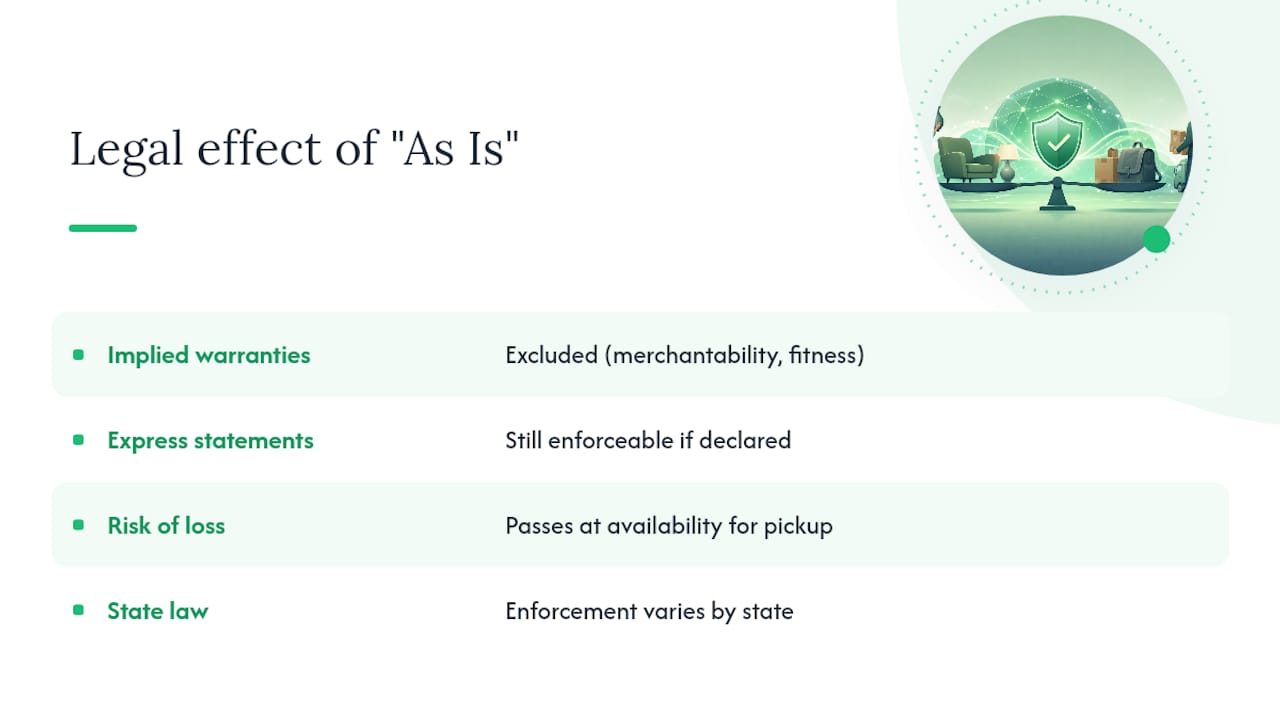
An "as is" label works because of a specific legal mechanism, not a vague understanding between two strangers meeting in a parking lot. Under the Uniform Commercial Code, as-is language excludes implied warranties, including the implied warranty of merchantability (that a product works for its ordinary purpose) and the implied warranty of fitness (that it suits a specific purpose the buyer mentioned). Say a used blender is listed "as is" and it dies after three smoothies. Normally you might have a case that it wasn't merchantable. The as-is disclaimer heads that off, as long as the seller stated it clearly.
There's a difference between implied warranties and express ones, and this trips people up constantly. If a seller writes "this laptop works perfectly," that's an express statement about condition, and it can still be enforced even inside an as-is listing. As-is protects sellers from unstated assumptions, not from their own claims.
Risk of loss matters too. Under UCC §2-509, risk typically passes to the buyer once the seller makes the item available for pickup, not necessarily when money changes hands. That timing detail becomes important if a couch gets rained on between listing and pickup. State laws vary on how strictly they enforce as-is language, so what holds up in one state might get more buyer-friendly scrutiny in another.
What "As Is" Does Not Let a Seller Do
An as-is tag is not a shield against dishonesty. A seller who knows a phone's battery swells and hides it, or who claims a car "runs great" while knowing the transmission slips, is still exposed to fraud claims. As-is language excludes implied warranties but doesn't protect against fraud or intentional concealment, and that distinction is where most real disputes actually live.
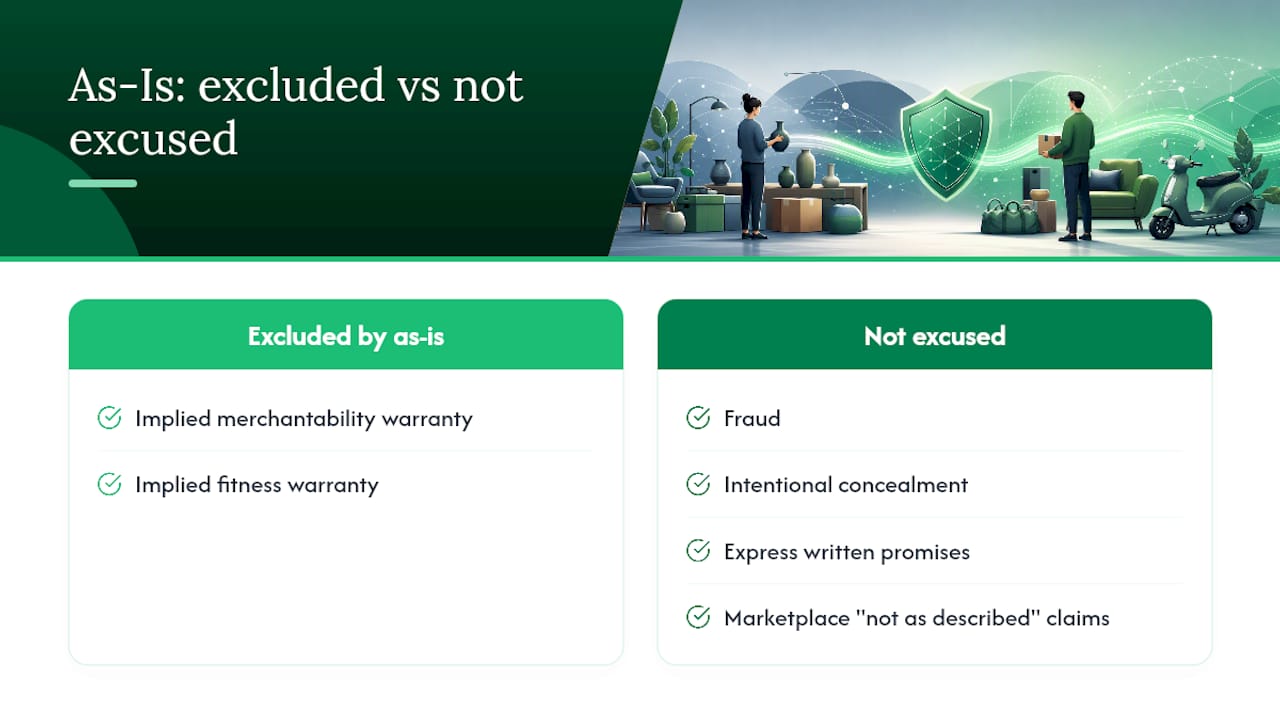
Marketplace policies add another layer. Most platforms run a "not as described" claims process that operates independently of whatever words appeared in the listing. A buyer can win that claim even when the item said "as is," if what arrived clearly doesn't match the photos or description.
Certain categories carry extra rules that as-is language can't override. The FTC's Used Car Rule requires specific window-sticker disclosures on vehicles sold by dealers, and safety recalls or defects on regulated products can create obligations regardless of listing language. Manufacturer warranties that are still active, plus any specific promises the seller made in writing, also survive an as-is disclaimer.
How Buyers Protect Themselves When a Listing Says "As Is"
An as-is tag shifts risk toward you as the buyer, which means your homework has to happen before you pay, not after.
- Inspect in person before money moves. Power on electronics and let them run for several minutes, not seconds. Sit on furniture, check joints and cushions for water damage or pests. Test-drive a vehicle and check the odometer against the title. Check clothing seams and fabric under good light for stains a phone photo might hide.
- Ask pointed questions and request close-ups. "Does it turn on" gets a yes-or-no. "Can you send a video of it running for two minutes" gets you evidence. Sellers unwilling to provide extra photos or video are telling you something.
- Get a written bill of sale. Include the agreed as-is language, the item's condition as both parties understand it, the price, and the date. A written bill of sale that records the as-is terms gives both sides a reference point if a disagreement surfaces later.
- Use the marketplace's payment and messaging tools. Keep the conversation on-platform. It creates a timestamped record if you ever need to file a dispute.
- Budget for a professional inspection on big-ticket items. Vehicle inspections typically run $125 to $300, with lower costs for appliances or major electronics. That fee is cheap insurance against a five-figure mistake.
- Document the handoff. Note the pickup time in writing, since that's usually when risk of loss shifts to you, and take photos of the item at the moment you take possession.
Pro Tip: Before you hand over cash for a used TV or laptop, check our step-by-step pickup checklist so you're not guessing what "working condition" actually covers.
How Sellers Can Use "As Is" Safely and Avoid Disputes
A vague "as is, no returns" line in a listing does less work than sellers think. The goal is a listing specific enough that no buyer can later claim they didn't know what they were getting.
- Write a conspicuous as-is statement directly in the listing, something like: "Sold as is. Buyer has inspected or waives inspection. No warranty expressed or implied." Repeat similar language on the bill of sale.
- Photograph every known flaw, the scratch on the dresser, the cracked phone case, the worn tire, and mention it in the description. Disclosure is your best protection against a fraud claim later.
- Keep all communication inside the marketplace's chat rather than moving to text messages, which are harder to produce if a dispute arises.
- Use the platform's built-in payment system instead of cash or peer-to-peer apps that offer no transaction record.
- Get a signature or digital confirmation at pickup confirming the buyer inspected the item and accepted its condition.
- Price the item to reflect its actual condition. A cracked screen priced like new invites disputes; a discount that matches the flaw rarely does.
Pro Tip: If you're unsure whether your listing describes an item accurately enough, run through our authenticity verification guide before you hit publish.
Keep documentation even after the sale closes. If a buyer files a dispute weeks later, your photos, messages, and signed bill of sale are what settle it.
Where Platform Rules and Dispute Resolution Fit In
Marketplace policy sits on top of everything discussed so far, and it can override a private as-is agreement when an item is materially misrepresented. Most platforms treat a "not as described" complaint as its own category, separate from whatever the listing said about condition.
When a platform investigates a dispute, it typically looks for:
- Original listing photos and description text
- On-platform message history between buyer and seller
- Proof of payment through the platform's system
- Photos taken at pickup or delivery showing the item's actual condition
Growing regulatory attention on marketplace accountability, including product safety initiatives aimed at online platforms, means dispute channels are becoming more consequential, not less. Staying on-platform for messages and payment isn't just convenient. It's the difference between having evidence and having nothing when a deal goes sideways. Features like verified seller ratings, secure in-app payments, and location-based meetups exist specifically to reduce the ambiguity that fuels most as-is disputes.
Why Clear As-Is Language Builds Trust, Not Just Legal Cover
We've seen enough transactions to know that vague listings cause more disputes than dishonest sellers do. A buyer who feels blind sided by a hidden flaw doesn't care whether the seller technically complied with the UCC. They care that nobody told them.
The platform's secure payment system, verified seller ratings, and in-app chat exist to make that gap smaller. Clear disclosure paired with those tools cuts disputes before they start, because both sides have documentation instead of memory. Follow the buyer and seller steps above every time, and "as is" stops being a liability and starts being exactly what it should be: an honest starting point for a fair deal.
— Marketplace
List Your Next As-Is Item With More Protection Built In
Selling something "as is" shouldn't mean crossing your fingers and hoping the buyer doesn't come back with complaints. The marketplace platform gives both sides tools to make that handoff cleaner: secure in-app payments that create a transaction record, verified seller ratings that let buyers gauge trustworthiness before they show up, direct in-app chat that keeps negotiation and disclosures in one searchable place, and location-based search that connects buyers and sellers close enough for real in-person inspection instead of blind shipment.
Those features do the quiet work of preventing disputes, not just resolving them after the fact. A documented chat thread, a payment record, and photos taken at pickup are exactly what you'd want on hand if a "not as described" claim ever surfaces. If you've got an item gathering dust and you're ready to write an honest, well-documented as-is listing, browse categories and list your item on Marketplaceapp today.
Where to Verify These Legal Basics
- Wex Legal Dictionary: "As Is" — Cornell Law School's plain-language definition of as-is sales and implied warranty disclaimers.
- UCC §2-509: Risk of Loss — the federal commercial code provision governing when risk transfers between buyer and seller.
- LegalClarity: As-Is Sales Contracts — a breakdown of what as-is protects sellers from and what it doesn't.
- Product Safety Australia — background on how regulators are pressing online marketplaces toward stronger safety standards.
Sources
- as is | Wex | US Law | LII
- UCC § 2-509 – Risk of loss in absence of breach | LII / Legal Information Institute
- As Is Sales Contract: What It Means for Buyers and Sellers - LegalClarity
- Product Safety Australia
FAQ
Does "As Is" Mean I Have No Recourse If Something Breaks?
Not necessarily. As-is disclaims implied warranties, but it doesn't protect a seller who knowingly hid a defect or lied about the item's condition, which remains actionable as fraud. You may also have recourse through the marketplace's own "not as described" claims process.
Can a Seller Still Be Sued Over an As-Is Item?
Yes, if the sale involved fraud, intentional concealment, or a false express statement about the item's condition. As-is only removes implied warranties like merchantability, not honesty requirements.
When Does Risk of Loss Transfer in a Private As-Is Sale?
In most private transactions, risk passes to the buyer once the seller makes the item available for pickup, not necessarily at payment. That's why documenting the exact pickup time and condition matters for both sides.
Should I Pay for an Inspection on a Used Car Sold As Is?
For high-value items like vehicles, a professional inspection is worth the cost, typically $125 to $300. It's a small expense compared to discovering a major mechanical problem after the sale closes.
Does the marketplace platform help if an as-is deal goes wrong?
The platform's on-platform payments, verified seller ratings, and in-app chat history give both buyers and sellers documentation to reference if a dispute comes up. Keeping the entire transaction inside the app, rather than moving to cash or texts, is the single best way to protect yourself either way.