
Choose Buy Nothing when your goal is community reuse and getting an item out of your house fast; choose to sell when you need cash or the item carries real resale value. One caveat worth knowing before you post anywhere: Buy Nothing groups forbid buying, selling, or bartering inside the community, so mixing the two models in one post gets flagged fast. The rest comes down to what you're actually optimizing for.
TL;DR:
- Gifting through Buy Nothing is ideal when speed and community connection outweigh monetary gain, but it offers no cash compensation and involves logistics challenges.
- Selling is preferable when an item has significant resale value, requires control over pricing, or needs to be liquidated quickly, especially for high-value or bulk items.
- The Buy Nothing rule strictly prohibits buying, selling, or bartering within the group, and violations are typically punished with post removal or banning.
- When estimating whether to gift or sell, consider your time investment, safety precautions, and how fast you need to clear the item, especially for items under $25.
- For high-value items or estate cleanouts, listing on Marketplace provides faster sales, verified buyer safety, and local visibility, often yielding better returns.
Table of Contents
- Buy Nothing vs. Selling: Weighing the Real Trade-Offs
- The Ethics Behind Gifting and Why Reselling Is Frowned On
- What to Actually Weigh Before You Post Anything
- Buy Nothing Rules You Need to Follow
- When Selling Is Clearly the Smarter Move
- Marketplace's Take on Gifting vs. Selling
- Ready to Sell? Here's What Marketplace Gets Right
- Sources
Buy Nothing vs. Selling: Weighing the Real Trade-Offs
Gifting and selling solve different problems, and pretending otherwise is how people end up frustrated with both. Buy Nothing works well when speed and social good matter more than money. Selling works when the item has value you can't afford to give away.
Buy Nothing's upside:
- Zero price haggling. You post, someone claims it, done.
- Keeps usable goods out of landfills, which is the whole point of the Buy Nothing Project's existence.
- Builds actual neighborhood ties. You're not a faceless seller. You're the person down the street who gave someone a crib.
Buy Nothing's downside:
- No money changes hands, ever. That couch you'd hoped to get $150 for nets you nothing.
- Pickup logistics can turn into a small ordeal. No-shows, rescheduled times, and people who claim an item then vanish are common frustrations, as one former member detailed in Business Insider after quitting the practice.
- Some members take freebies purely to resell them, which most groups treat as a violation of trust.
Selling's upside:
- You control the price and can negotiate up, not just down to zero.
- Cash return, sometimes significant for electronics, furniture, or collectibles.
- Wider buyer pool than a single neighborhood group.
Selling's downside:
- Photos, descriptions, price research, and message replies all take real time.
- Meeting strangers for cash exchanges carries safety considerations you don't face handing something to a verified group member.
- Lowball offers and haggling can eat into the time savings you thought selling would give you.
The Ethics Behind Gifting and Why Reselling Is Frowned On
The Buy Nothing Project reports more than 14 million members across over 50 countries, with significant annual waste-diversion estimated in the hundreds of thousands of metric tons. That scale isn't accidental. The model works because everyone takes turns being giver and receiver, which builds what the project's founders describe as a form of mutual aid rather than charity.
That reciprocity is exactly why flipping gifted items feels like a betrayal to most groups. Someone gives away a lamp expecting it to light another family's living room, not fund a stranger's resale side hustle. Groups self-police this constantly, watching for repeat requesters who seem to be stockpiling rather than using items themselves.

There are gray areas, though. If you receive a dresser, refinish it over six months, and later decide to sell your own furnished apartment's contents, that's different from grabbing a stack of free items and reposting them for profit the same week. The project's own guidance leans toward disclosure: if you plan to resell something you're requesting, say so upfront and let the giver decide.
What to Actually Weigh Before You Post Anything
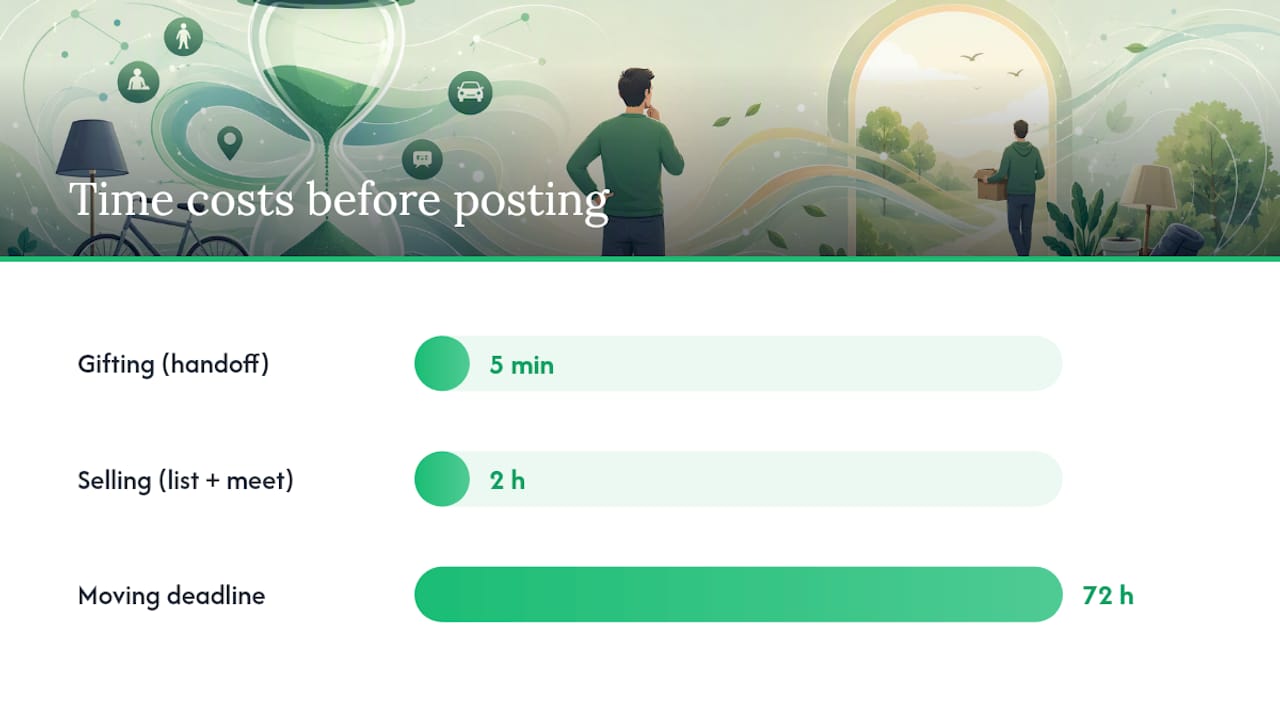
Time is the variable most people underestimate. Gifting usually takes one post and one handoff. Selling means photographing the item, writing a description, answering questions, and coordinating a meetup, often across several days.
Here's a rough way to decide:
- Estimate your hourly time cost. If listing, photographing, and messaging will eat two hours for an item worth $20, gifting it away in five minutes might be the smarter trade.
- Check safety basics first. Meet in public, well-lit spots for cash sales, bring a friend for higher-value items, and never share your home address with a stranger.
- Run simple math. Price minus platform fees minus your time value tells you whether selling actually beats the convenience of gifting.
- Ask how fast you need it gone. If you're moving in three days, Buy Nothing's speed usually wins over selling's slower negotiation cycle.
Pro Tip: If an item would sell for less than $25 after fees, gifting it usually makes more sense than the hours you'd spend managing a listing, unless you genuinely enjoy the back and forth of negotiating.
Buy Nothing Rules You Need to Follow
The official Buy Nothing Project guidelines are blunt: no buying, no selling, no bartering, and no requests involving money, ever, inside the group. Break that rule and admins typically remove the post, sometimes the poster too.
A few etiquette basics keep you in good standing:
- Post clear photos and honest condition notes. Nobody wants to show up for a "working" blender that hasn't run in years.
- Coordinate pickup times you'll actually keep. Flaking is the fastest way to get a bad reputation in a small group.
- If you intend to resell something you're requesting, say so in the post. Let the giver choose.
- If you notice someone repeatedly requesting similar items with no apparent personal use, that's often a flipper pattern, and most groups welcome a quiet report to admins.
When Selling Is Clearly the Smarter Move
Some situations tilt firmly toward selling, no ethical hand wringing required. Estate cleanouts, downsizing moves, and high value electronics or furniture all fall into this bucket. Financial guidance on gifting versus selling points out that selling preserves liquidity, which matters most when you actually need the money rather than just the space.
- Set a realistic price. Research what similar items actually sold for recently, not what you wish they were worth.
- Take honest photos in good light. Clear photography and accurate condition notes consistently move listings faster than vague descriptions.
- Meet safely. Public locations, daylight hours, and a phone charged and in hand.
- Keep paperwork for big-ticket items. Vehicles, appliances under warranty, and anything with a title need a signed bill of sale.
- Have a fallback. If it doesn't sell in two weeks, donation, recycling, or curb pickup beats letting it clutter your garage indefinitely.
For niche categories like collectibles, resale channels built for that audience, such as alternatives collectors use for cards, often outperform a general local listing.
Marketplace's Take on Gifting vs. Selling
Buy Nothing groups do real good. Diverting waste and strengthening neighborhood trust are outcomes worth protecting, and we'd never argue otherwise. But selling isn't a lesser choice when you need the cash or the item's value justifies the effort. Marketplace exists for that second scenario, helping sellers list quickly and safely without pretending gifting is somehow morally superior in every case.
— Marketplace
Ready to Sell? Here's What Marketplace Gets Right
If you've decided an item's value justifies the effort, Marketplace gets it in front of local buyers faster than posting and hoping. You get verified seller ratings, secure payment handling, and instant messaging so you're not trading phone numbers with strangers before you're ready.
The mobile app adds location-based search and push notifications, meaning nearby buyers see your listing the moment it goes live instead of scrolling past it hours later. For high-value items like electronics or furniture from an estate cleanout, that speed translates directly into better offers before interest cools. Auction specialists like Insta-Auction's guide to household items worth auctioning can help with rarer pieces, but for everyday local sales, a categorized listing usually gets you paid faster.
Ready to turn something you no longer need into cash instead of a group post? Create your listing on Marketplace and set your price in minutes.
Sources
- Buy Nothing Project — Guidelines
- Why I stopped using Buy Nothing groups to get free stuff — Business Insider
- Sell or gift: financial differences and when to choose which — The McFarland Group