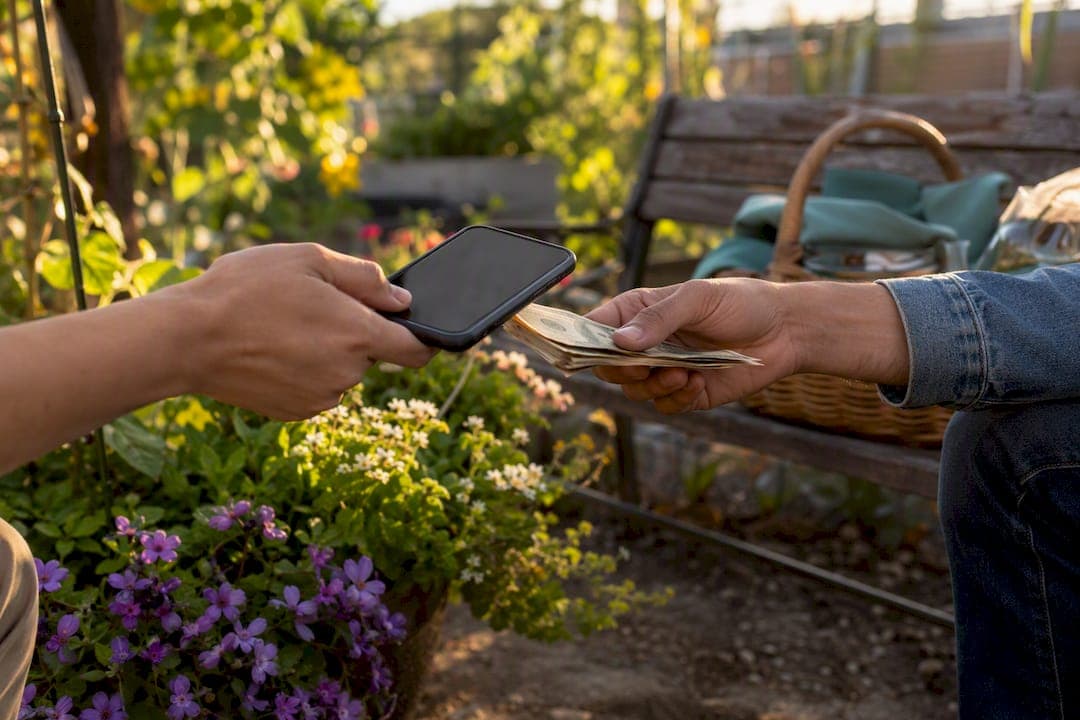
For most sellers, a local peer-to-peer marketplace pays the most. Buyback services and trade-in kiosks pay less but hand you money in minutes instead of days. According to MyDeviceValue, independent buyback channels alone often beat carrier trade-in credit by a significant margin, and that gap widens further once you factor in what a private local sale can bring compared to any institutional buyer.
Here's how the main routes stack up by goal:
- Maximize cash: A local peer-to-peer marketplace like Marketplace, where you set the price and negotiate directly.
- Fastest payout: Kiosks such as ecoATM, which pay on the spot but at the lowest end of the price range.
- Easiest for broken devices: Buyback brokers like ItsWorthMore or Swappa's trade-in partners, which still take damaged units.
- Best for large or bulky items: Local pickup through a peer-to-peer listing, since nobody wants to ship a 65-inch TV.
Key Takeaways
Selling locally and pricing based on recent comps typically nets more cash than any trade-in or kiosk option, especially for higher-value devices.
| Point | Details |
|---|---|
| Peer-to-peer pays most | Local marketplace sales often beat trade-in credit by 20% to 40% for the same device. |
| Kiosks trade cash for speed | Instant payout comes at the lowest price point of any selling route. |
| Condition and carrier status drive price | A clean IMEI and 85%+ battery health noticeably raise buyer interest and offers. |
| Timing affects value | Listing before a new model launch protects more resale value than listing after. |
| Marketplace fits cash-first sellers | Verified ratings and secure payments let sellers keep full price control without added risk. |
Where Can You Verify Prices and Learn More?
- MyDeviceValue — compares live buyback prices across vendors.
- ItemValueChecker — directional resale ranges by model and condition.
- Wired's refurbished buying guide — what certification means when buying used.
Table of Contents
- How Do Selling Routes Compare on Price and Speed?
- What Are the Real Tradeoffs of Each Selling Route?
- How Much Is Your Used Electronic Actually Worth?
- How Do You Sell a Device for the Best Price?
- Get the Most for Your Used Electronics Locally
- Sources
How Do Selling Routes Compare on Price and Speed?
Every selling route trades something for something else. Kiosks give you cash before you leave the parking lot, but that speed costs you real money. Peer-to-peer sales pay better because you're cutting out the middleman, but you do the work of listing, answering messages, and meeting a buyer.
| Factor | Peer-to-Peer (Marketplace, Swappa) | Buyback Brokers (ItsWorthMore) | Trade-In (Amazon, Best Buy) | Kiosk (ecoATM) |
|---|---|---|---|---|
| Payout type | Cash | Cash | Store credit (usually) | Cash |
| Typical payout level | Generally highest | Mid-range | Lower | Typically lowest |
| Convenience/speed | Slower, more effort | Fast, mail-in | Fast, in-store | Instant |
| Fees & shipping | Usually none locally | Sometimes shipping-covered | None | None |
| Seller control over price | Full control | Quote-based, take it or leave it | Fixed offer | Fixed offer |
| Security/buyer protection | Varies by platform | Vendor-dependent | Retailer-backed | Automated, low dispute options |
| Device types accepted | Nearly anything | Phones, tablets, some laptops | Phones, tablets, some consoles | Phones mainly |
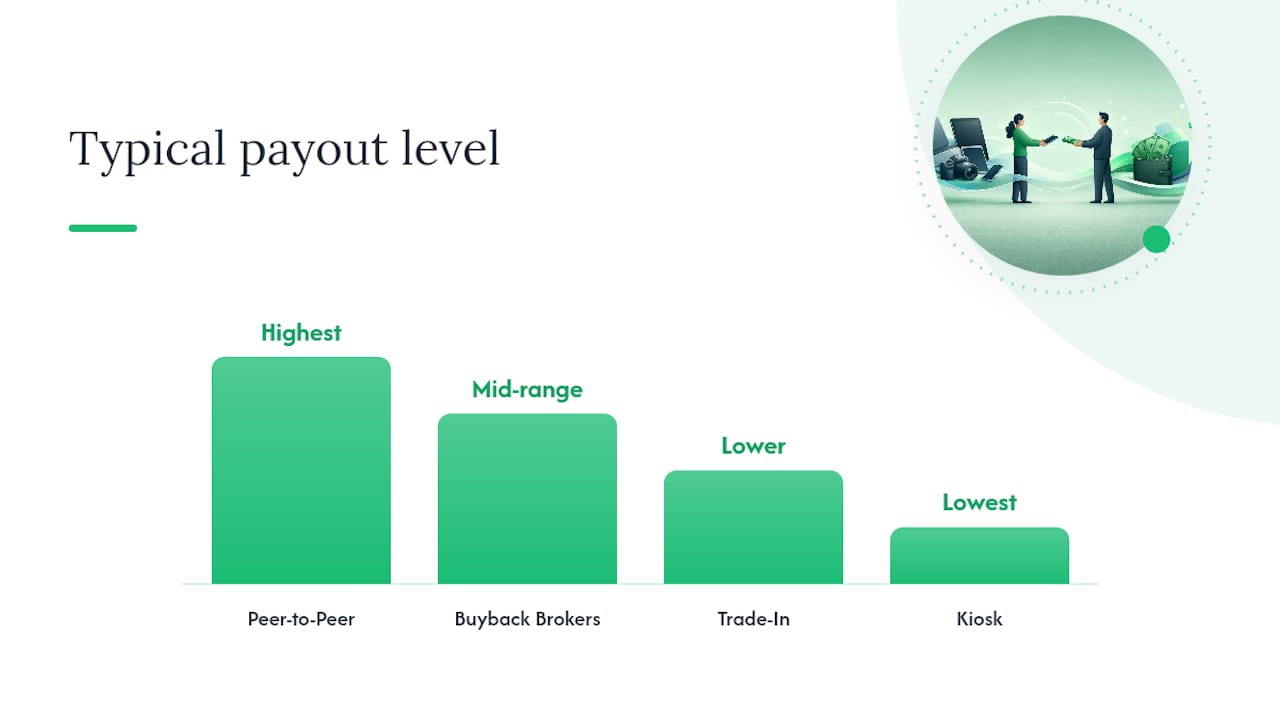
Best for top cash: a local peer-to-peer marketplace. Best for instant convenience: a kiosk or retailer trade-in counter. Best for a middle ground: an independent buyback broker that mails you a prepaid label and pays within days.
Statistic to remember: Independent buyback and peer-to-peer channels commonly pay 20% to 40% more than carrier trade-in credit for the same device, according to MyDeviceValue's pricing comparisons. If you're willing to spend an extra 20 minutes taking photos and writing a listing, that premium adds up fast on anything worth more than $100.
For sellers who want that extra cash without giving up basic safety tools, Marketplace pairs local peer-to-peer pricing with verified seller ratings and secure payment options, so you're not choosing between a better price and a safer transaction.
What Are the Real Tradeoffs of Each Selling Route?
Each route fits a different kind of seller. Here's where each one actually shines, and where it falls short.
Peer-to-peer marketplaces (Marketplace, Facebook Marketplace, Swappa) get you the best price because you're selling directly to the end user. The catch: you handle photos, questions, and meetups yourself, and a lowball offer or a no-show buyer is part of the deal. A seller unloading a recent flagship phone will often net noticeably more here than through any buyback service.
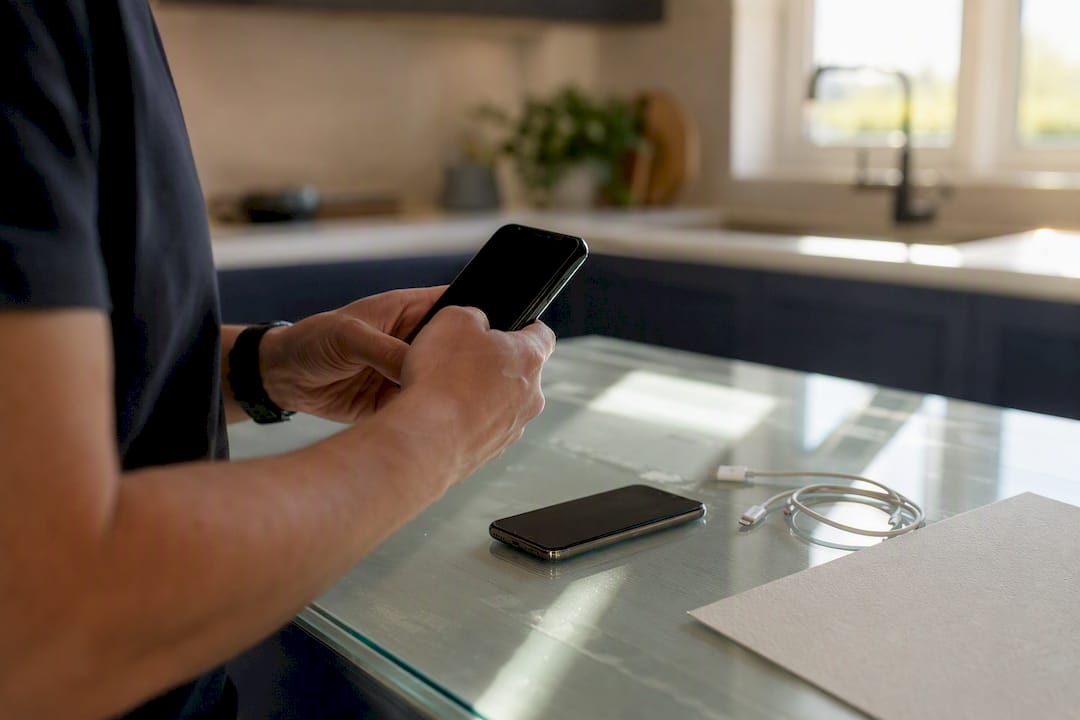
Independent buyback and broker services (ItsWorthMore) work well when you want a guaranteed number without the back-and-forth. You get a quote, mail in the device, and get paid, usually within a week. Someone offloading a cracked-screen laptop that no local buyer wants often does better here than trying to list it themselves.
Carrier and retailer trade-ins (Amazon Trade-In, Best Buy) are built for speed and simplicity, especially when you're already buying a replacement. The tradeoff is that most pay in store credit, not cash, and the quoted value can drop sharply if the device fails their inspection.
Kiosks (ecoATM) are the fastest possible option: walk up, scan the device, take the cash. They're best for an old phone sitting in a drawer that isn't worth the effort of a real listing.
Pro Tip: A lower-convenience option is still worth the extra effort when the device is genuinely high-value. Spending 30 minutes writing a solid listing for a device worth $600 makes far more financial sense than spending that same 30 minutes to sell a $40 tablet.
How Much Is Your Used Electronic Actually Worth?
Price comes down to a handful of factors, and they don't all carry equal weight. Model and generation matter most, followed by storage capacity and processor tier, then functional condition (does everything work), cosmetic condition (how it looks), battery health, and whether the device is carrier-locked or has a clean IMEI. Original accessories and the retail box add a smaller but real bump.
Timing matters more than most sellers realize. HowMuchIsItWorth notes that electronics commonly lose 20% to 30% of their value in the first year alone, with sharper drops right after a new model launches. A seller who lists closer to a new flagship phone announcement often misses out on some resale value compared to listing earlier.
"Carrier-locked or blacklisted devices can sell for substantially less than unlocked equivalents," notes ItemValueChecker, which tracks directional resale ranges across hundreds of models.
Sample directional ranges for well-maintained, unlocked devices in good working condition vary by category and condition.
Worth knowing: ValueSnap reports its AI-based estimates typically land within 10% to 15% of actual sale prices for common electronics, but it still recommends cross-checking recent sold listings before settling on a number. No calculator replaces a quick scan of what identical devices actually sold for last week.
Carrier status alone can significantly affect your price, and a phone with a cracked screen but a clean ESN will often still outsell a pristine phone that's blacklisted.
How Do You Sell a Device for the Best Price?
Getting top dollar isn't complicated, but skipping a step usually costs you money. Here's the order that works:
- Identify the exact model and specs. Storage size and chip generation change the price bracket significantly, so check settings, not memory.
- Verify carrier and IMEI status. A quick carrier-unlock check or IMEI lookup avoids a rejected buyback offer or an angry buyer later.
- Test everything and document condition honestly. Check the camera, speakers, charging port, and buttons; note battery health percentage if the device reports it.
- Factory reset and remove your accounts. Sign out of iCloud, Google, and any device-tracking service before listing. Marketplace's guide to resetting a phone before selling walks through this step by step.
- Photograph in good light and gather accessories. List the original box, charger, and cables if you still have them.
- Set a price using recent comps, not just what you paid or what you wish it were worth.
- Choose your route and either publish the listing or request quotes from a couple of buyback services to compare.
- Arrange safe payment and handoff, whether that's a local meetup or insured shipping.
Price slightly above your target to leave room for negotiation, and if you're comparing buyback quotes, always factor in shipping cost and fees before assuming the higher number wins.
Safety matters as much as price. Check buyer ratings when the platform offers them, prefer in-person cash or secured digital payments over wire transfers, and use tracked, insured shipping for anything mailed. Walk away from any buyer who pushes for an unusual payment method or refuses to meet in a public place.
Pro Tip: Sell before a new model launch, not after. Keep the original box and cables. And if your device's battery health is above 85%, say so in the listing; it's one of the first things serious buyers ask about.
When Is Marketplace the Right Call?
I'd point most sellers toward a local peer-to-peer marketplace first, simply because the math favors it: no shipping fees, no broker markup, and you keep full control of the price. Marketplace backs that up with verified seller ratings and secure payment options, so you're not sacrificing safety to get the better number. The one exception is a genuinely broken device or a seller who needs cash in the next ten minutes. In that case, a buyback quote or a kiosk makes more sense than waiting on a local buyer.
Get the Most for Your Used Electronics Locally
Marketplace is built for exactly the scenario this article just walked through: skipping the trade-in markdown and the shipping wait to sell directly to a local buyer at a price you set yourself.
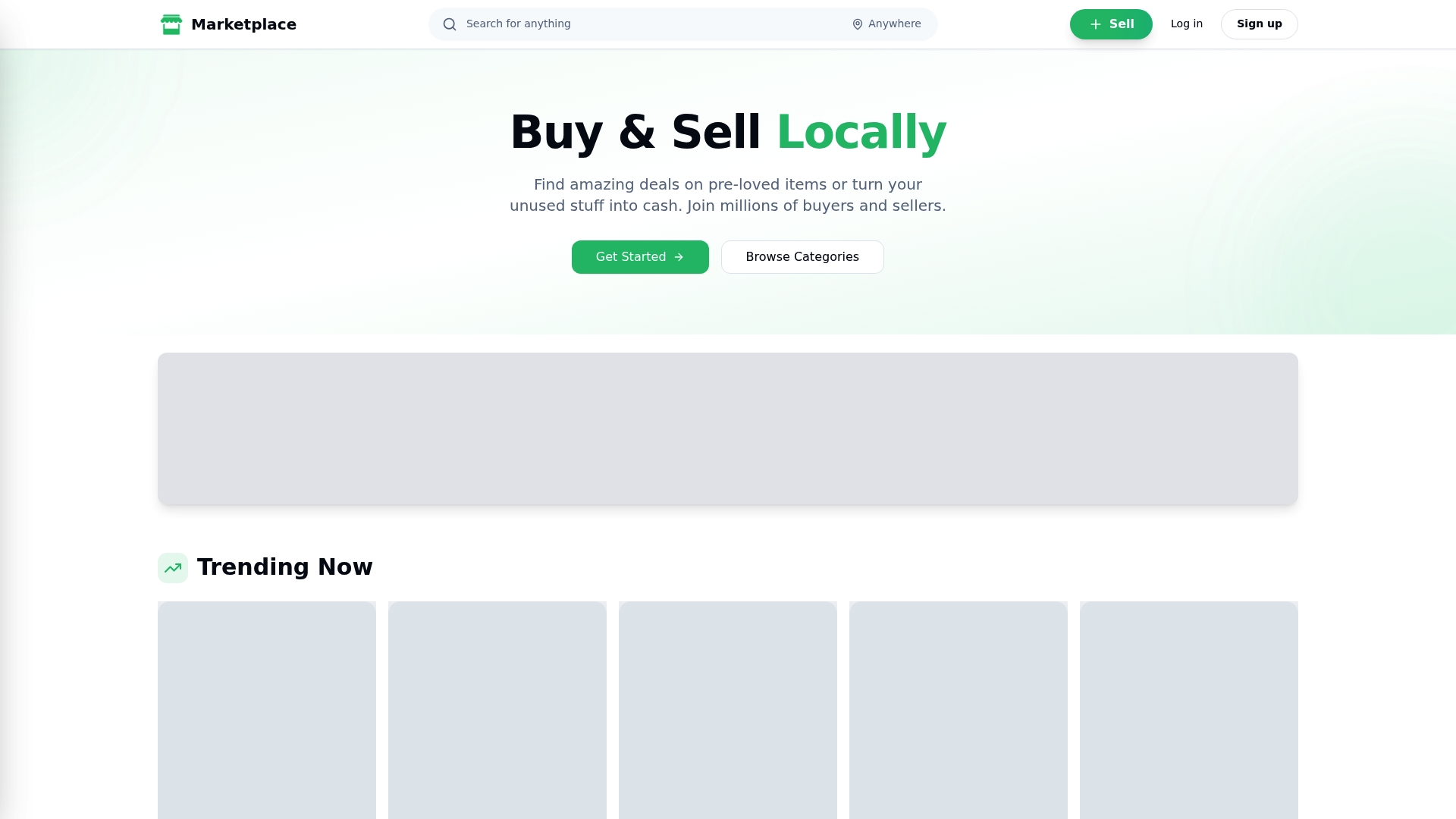
Every listing on Marketplace comes with verified seller ratings, secure in-app payment options, and instant chat so you can answer buyer questions without exchanging personal contact info. The mobile app adds location-based search and push notifications, meaning local buyers can find your listing the moment it goes live, not days later. That immediacy is exactly what turns a stale kiosk price into a real offer from someone who wants your exact device.
Getting started takes two steps: create a listing with your photos and price, then meet locally or arrange secure payment once a buyer commits. There's no shipping label to print and no waiting on a mailed check.
Sources
- MyDeviceValue — Compare Buyback Prices for Phones, Tablets & More
- Electronics Value Calculator — Free Photo Resale Estimate
- How Much Are My Electronics Worth? | Free AI Tool (2026)
- What Are My Electronics Worth? Free AI Valuator | ValueSnap