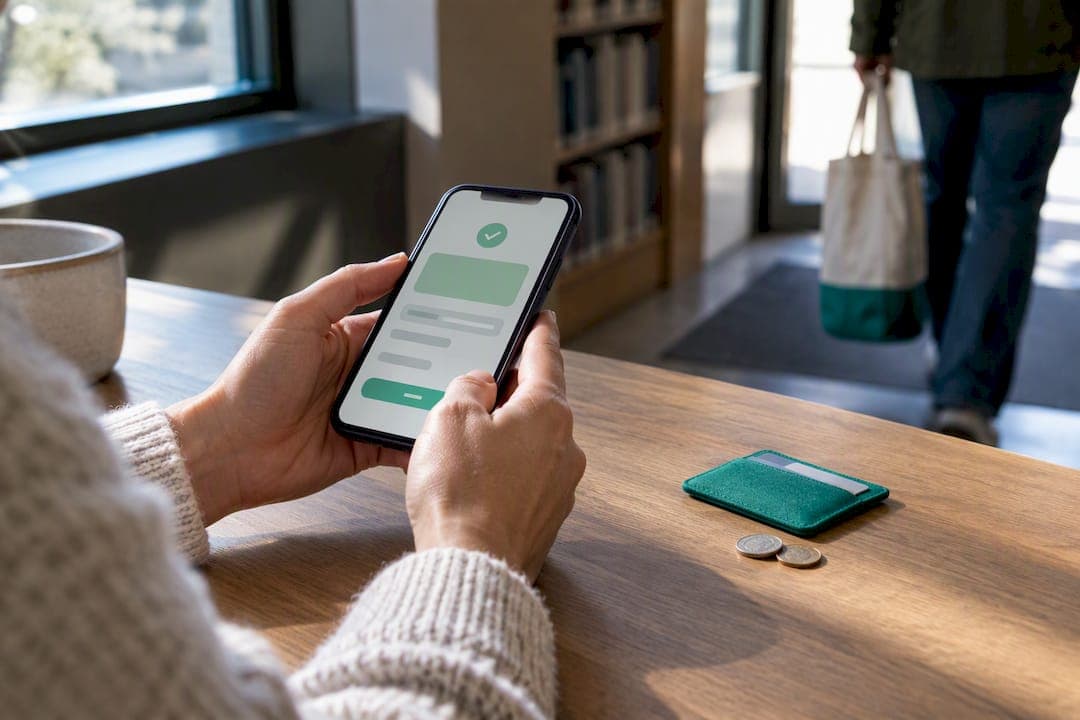
Most selling apps combine a referral or transaction percentage with a payment-processing fee that has its own percentage plus a flat charge, and some add listing or promotion costs on top. For local sellers, avoiding shipping is usually the single fastest way to cut total costs. A quick formula: sale price, minus referral percentage, minus processing percentage and flat fee, minus any listing or promotion charge, minus shipping, equals what actually lands in your account.
TL;DR:
- Avoid shipping costs altogether by prioritizing local pickup to maximize net proceeds on low-priced items under $50.
- Processing fees and referral percentages remain unavoidable, but their impact decreases as the sale price increases.
- Bundling small items can significantly reduce flat processing and listing fees compared to selling items separately.
- Carefully calculate promotion costs to ensure advertising dollars generate an actual incremental sale rather than just increased expenses.
- Always consult the platform’s official fee schedule, as fee calculation details like percentage bases and additional charges vary and can affect true earnings.
Table of Contents
- Which fees actually show up on a typical sale
- The fee-by-fee breakdown you need before you list
- What you actually keep from a $25, $50, or $100 sale
- Which fees matter most when you sell locally
- Fee-reduction tactics you can use today
- How MarketplaceAnywhere is built to cut hidden costs for local sellers
- How fees affect your seller rating and account standing
- Hidden fees that catch sellers off guard
- Choosing speed vs. price when fees start to bite
- Sell locally and skip the fees that eat into small sales
- Where to check current, official fee schedules
- Sources
- FAQ
Which fees actually show up on a typical sale
Before you list anything, it helps to know the handful of fee categories that show up again and again, because not every platform charges all of them and the mix determines your real payout.
- Listing fees: a flat charge to post an item, though many apps now offer free basic listings with paid boosts as the upsell.
- Referral or final-value fees: a percentage of the sale price, sometimes calculated on the item price alone and sometimes on item plus shipping.
- Payment-processing fees: almost always a percentage plus a small flat amount per transaction, charged by the payment processor rather than the marketplace itself.
- Promoted listing fees: optional charges to push your item higher in search results, priced as cost-per-click, a daily budget, or a percentage of the eventual sale.
- Shipping and fulfillment charges: postage, packaging, and any fulfillment service fees when the platform handles storage or delivery.
- Subscription or membership fees: a recurring charge some platforms use to unlock lower per-sale rates for frequent sellers.
The optional ones are easy to spot: promoted listings and subscriptions are choices you make, not costs baked into every sale. Processing fees and referral fees are the ones you rarely escape, since they are tied directly to completing the transaction.
Put together, the math looks like this: sale price minus (referral percentage times sale price) minus (processing percentage times sale price plus the processing flat fee) minus any listing or promotion fee minus shipping equals net proceeds. You would subtract $4.00 for referral, then $1.50 for processing, leaving $34.50.

The fee-by-fee breakdown you need before you list
Each fee type has its own quirks, and the gotchas usually live in the fine print rather than the headline rate.
- Listing fees are less common than they used to be. Many marketplaces now offer free listings and only charge when you want extra visibility, so check whether "free to list" really means free or just free for a basic tier.
- Referral or final-value fees are typically a percentage of the item's price, but some platforms calculate that percentage on item price plus shipping, which quietly raises your effective rate. Category matters too: electronics, vehicles, and collectibles often carry different percentage bands than general merchandise.
- Payment-processing fees almost always combine a percentage with a flat cents-per-transaction charge. That flat piece is the part sellers underestimate. A 3% plus $0.30 structure costs you $0.30 whether the item sells for $10 or $500, so it eats a much bigger share of a cheap sale than an expensive one.
- Promoted listings come in a few pricing shapes: cost-per-click, a daily ad budget, or a cut of the final sale price if the promotion leads to a purchase. The return depends entirely on whether the extra exposure gets you a sale you would not have made otherwise, so it is worth tracking cost per incremental sale rather than assuming any boost pays for itself.
- Shipping and fulfillment charges stack up fast when a platform handles storage, packing, and delivery on your behalf. Even when you ship it yourself, the label cost, box, and packing materials add up on lower-priced items in a way that barely registers on expensive ones.
App-store economics are a useful contrast here, even though they are not directly comparable to physical-goods marketplaces. Samsung's Galaxy Store, for example, pays developers a revenue share of 80% of net sales for paid apps and in-app items and 85% for subscriptions under the model effective May 15, 2025. Apple's Core Technology Fee in the EU adds €0.50 for each first annual install over one million for developers who adopt its Alternative Terms Addendum, a fee that only applies in that specific distribution scenario. Neither structure maps onto what a person selling a used bike or a dresser pays, but both show the same lesson: fees are rarely one flat number, and the details of how a percentage is calculated matter as much as the percentage itself.
What you actually keep from a $25, $50, or $100 sale
Numbers make this concrete.
- A $25 sale: referral takes $2.50, processing takes $0.75 plus $0.30 for $1.05 total. Local pickup nets $21.45. Add $5 in shipping and packaging, and the seller nets $16.45, a payout that is roughly 23% lower just from fulfillment.
- A $50 sale: referral takes $5.00, processing takes $1.50 plus $0.30 for $1.80. Local pickup nets $43.20. Shipping that item for $7 drops the net to $36.20, still a meaningful hit but a smaller share of the total than on the cheaper item.
- A $100 sale: referral takes $10.00, processing takes $3.00 plus $0.30 for $3.30. Local pickup nets $86.70. Even with a higher shipping cost of $10 for a bulkier item, the net lands at $76.70, and the flat $0.30 processing fee barely registers against a sale this size.
The pattern holds across every price point: the flat processing fee and shipping costs shrink as a share of the sale the higher the price climbs. That is exactly why low-priced, local items suffer the most from fees they cannot avoid, and why picking up in person instead of shipping is the highest-leverage move for anyone selling items under $50.
Which fees matter most when you sell locally
For local, peer-to-peer sellers, referral and processing percentages are the costs you cannot sidestep, since they apply to nearly every completed sale regardless of how the item changes hands. Shipping and fulfillment are a different story: cutting them out by meeting a buyer nearby is the most direct way to raise your effective net percentage, especially on items priced under $50 where a flat shipping cost eats a disproportionate slice.
Promoted listings deserve a narrower role. They can make sense when you need cash fast and the extra visibility gets a stalled listing moving, but paying for exposure on an item that would have sold anyway is money handed over for nothing. The rule of thumb: use promotion when speed matters more than margin, skip it when you can afford to wait for organic interest.
Fee-reduction tactics you can use today
None of these require switching platforms, just a slightly sharper approach to pricing and listing.
Pro Tip: Round your target price up by a few dollars to cover the referral and processing cut, so your "net in your pocket" number is the one you actually planned for.
- Price with fees baked in: decide what you need to net, then add back the referral percentage and processing costs before you set the listed price.
- Bundle small items: selling five $5 items separately means five flat processing fees; bundling them into one $25 listing means paying that flat fee once.
- Offer local pickup and clear payment terms: this removes shipping costs entirely and speeds up the transaction, since buyers do not wait on a mailed item.
- Calculate promotion cost per sale before you pay for it: if a boost costs $2 and only nets one extra sale out of ten boosted listings, that $2 spread across the successful sale is real money, so track it.
- Avoid repeated relisting: if a platform charges a fee each time you relist an expired item, refresh timing and pricing before it expires rather than after.
How MarketplaceAnywhere is built to cut hidden costs for local sellers
MarketplaceAnywhere is designed around the local transaction, which is where most of the avoidable costs above actually disappear. Secure payments and verified seller ratings reduce the friction that leads to disputes or refunds, and direct buyer-seller communication through instant chat lets you negotiate pickup times and terms without a third party in the middle. Location-based search puts your listing in front of nearby buyers faster, which shortens the time an item sits unsold and reduces the temptation to pay for a promoted boost just to move it. The platform's seller guides cover pricing strategy and safe transaction practices for anyone new to listing locally.
How fees affect your seller rating and account standing
Fees do not directly change your seller rating, but the way you handle them often does. A seller who prices too aggressively to offset high fees may end up cutting corners on packaging or description accuracy, which shows up in buyer feedback. Chargebacks and refund requests triggered by processing disputes can also flag an account for review on some platforms, and repeated cancellations to dodge a listing fee tend to hurt visibility in search results over time. The safest approach is straightforward: price fairly, describe items accurately, and treat fees as a cost of doing business rather than something to work around at the buyer's expense.

Hidden fees that catch sellers off guard
Beyond the obvious referral and processing charges, a few less visible costs can quietly reduce what you take home. Withdrawal fees appear on some platforms when you transfer your balance to a bank account, particularly for instant transfers versus standard multi-day transfers. Currency conversion fees apply if you sell across borders and the platform settles in a currency different from your bank account's default, a cost that is easy to miss until the deposit lands lower than expected. Billing fees, separate from the main service fee, are common across app-store and marketplace payment processors and often show up as a small flat charge layered under the percentage you already accounted for. The lesson is the same every time: read the fee schedule on the platform's own help pages rather than relying on a rough estimate from memory.
Choosing speed vs. price when fees start to bite
Selling fast makes sense for low-value items you just want gone, where the time spent negotiating for a few extra dollars costs more than it saves. Holding out makes more sense for higher-value items, where a percentage fee is a smaller bite relative to the effort of finding a better offer. Either way, factor your own time into the real cost of a sale, not just the fee line.
— Marketplace
Sell locally and skip the fees that eat into small sales
The platform is designed for sales where fees tend to have a significant impact, particularly in a mid-price range where shipping and flat processing charges affect net proceeds. Push notifications and location-based search put your listing in front of nearby buyers fast, and instant chat lets you settle pickup details without back-and-forth delays.
To get started, create a listing, choose local pickup, and set your price using the net-proceeds formula from earlier in this guide.
| Step | What you do | Why it helps |
|---|---|---|
| List the item | Create a listing with photos and a clear price | Gets visibility through location-based search |
| Choose pickup | Select local pickup instead of shipping | Removes shipping and fulfillment costs entirely |
| Set your price | Use the net-proceeds formula to price with fees in mind | Ensures your listed price matches what you actually want to net |
Start your next listing on MarketplaceAnywhere and keep more of what your items are worth.
Where to check current, official fee schedules
For exact, up-to-date rates, consult the platform's own documentation rather than secondhand summaries. Google Play's service fee pages detail tiered rates, program discounts, and billing fees that vary by region, and its guidance on new versus existing installs explains how lower rates get applied. For pricing strategy that goes deeper into margin math, HypeWorks' pricing guide is a useful outside reference.
Sources
- Galaxy Store FAQ — Samsung Developer
- Core Technology Fee overview — Apple Developer
- Service fees — Play Console Help
FAQ
How much does eBay take from a $100 sale?
Exact rates depend on category and seller program, so check the platform's own fee page for the current final value fee and payment-processing charge that apply to your listing category before you price an item.
Which selling app has the lowest fees?
There is no single answer, since fee structures vary by category, whether the platform charges for shipping labels, and whether you qualify for a lower-fee seller tier. Comparing the referral percentage, processing fee, and any listing or promotion cost side by side for your specific item type is the most reliable way to find the cheapest option.
How much should I charge someone to sell their stuff online?
Price based on what similar items are actually selling for, then add back the referral percentage and processing fee so your target net still lands where you want it.
How much does Amazon take if you sell on Amazon?
Amazon's referral fees vary by product category, and sellers should check Amazon's own seller central fee schedule for the current rate that applies to their specific category. Fulfillment costs add further variation depending on whether the seller ships the item directly or uses a fulfillment service.