
If you need cash by Sunday and have a garage full of stuff, hold a garage sale. If you want the best possible price for a specific item, list it online. Most people end up doing both: a garage sale for volume and speed, online listings for anything with real resale value. A platform like MarketplaceAnywhere makes the online half easy by keeping sales local, so you skip shipping entirely.
TL;DR:
- Garage sales offer quick volume clearance but typically yield lower prices than online listings for valuable items.
- Online selling takes longer but often results in closer-to-market prices, especially for high-value, niche, or branded objects.
- Combining both methods by sorting items beforehand maximizes speed and profit, focusing online efforts on items worth over $30.
- Safety measures, like confirming pickup details and using protected payments, are essential for both local sales and online transactions.
- MarketplaceAnywhere simplifies local online sales by eliminating shipping, with fast listing, buyer chat, and secure payments, making it ideal for high-value, local items.
Table of Contents
- Garage Sale vs Online Marketplace: Comparing Speed, Price, and Effort
- Running a Garage Sale: What to Sell and How to Price It
- Selling Online: Listings, Fees, and What Actually Moves
- Hybrid Selling: How to Split Your Inventory Between Both
- Safety and Logistics for Both Selling Methods
- What Actually Works Once You've Done Both
- List It Locally With MarketplaceAnywhere
- Sources
- FAQ
Garage Sale vs Online Marketplace: Comparing Speed, Price, and Effort
The two methods solve different problems, and pretending otherwise is how people end up frustrated with both. A garage sale converts a pile of stuff into cash in a single weekend. Online selling takes longer per item but often pays more for the right item.
Speed favors garage sales without much argument. You set a date, put out signs, and by Saturday afternoon you've cleared volume that would take weeks to sell one listing at a time. Online selling can move fast for hot items, but slow-moving stuff sits for days or weeks waiting for the right buyer to scroll past it.
Price potential flips the script. A garage sale price ceiling is whatever a stranger will pay while standing in your driveway, usually a fraction of real value. Online, a buyer searching specifically for that item, with time to compare listings and check what similar pieces actually sold for, will often pay two or three times a yard-sale price for the same object.
Here's how the two stack up across the factors that actually matter:
- Speed: Garage sales clear items same day; online listings can take days to weeks to sell.
- Price potential: Garage sales cap low; online sales reach closer to real market value for desirable items.
- Effort: Garage sales concentrate work into one prep weekend; online selling spreads smaller tasks across days.
- Reach: Garage sales pull from your neighborhood; online marketplaces reach buyers actively searching for that exact item.
- Logistics: Garage sales need setup, tables, and signage; online sales need photos, measurements, and a pickup or shipping plan.
- Safety: Garage sales expose your home to strangers all day; online sales let you screen buyers before agreeing to meet.
Neither one wins outright. The right call depends on downsizing goals and how much time you're willing to trade for a better price.
Running a Garage Sale: What to Sell and How to Price It
Garage sales work best for the stuff nobody wants to research or wait for: kids' toys, kitchen gadgets, board games, linens, tools, and anything that photographs poorly but is obviously useful in person. Furniture with damage, mismatched dish sets, and bins of miscellaneous hardware all move faster in a driveway than in a listing.
Here's a realistic timeline for pulling one off without burning out:
- Two to three weeks out: Sort items into sell, donate, and trash piles. Pull anything with real resale value and set it aside for online instead.
- One week out: Price everything. Bundle small items ("all books $1") rather than pricing them individually, and set clear minimums for anything valuable enough to negotiate.
- Sale day: Put up signs at nearby intersections by 7 a.m., group similar items together, and staff the sale with at least two people so nobody has to leave the cash box unattended.
- Afternoon: Drop prices as the day winds down. Half-price after 2 p.m. moves more volume than holding firm and hauling it all back inside.
Pro Tip: Price big-ticket items just below a round number ($18 instead of $20). It sounds like a deal even when the discount is tiny, and it speeds up decisions.
Realistically, expect a solid sale to bring in a few hundred dollars, and a well-organized multi-family sale can push into the low thousands, though prep time eats into that hourly return more than people expect. If something didn't sell by 3 p.m., donating it beats hauling it back inside for next year.
Selling Online: Listings, Fees, and What Actually Moves
Online selling earns its keep on items with real, identifiable value: furniture in good shape, name-brand clothing, collectibles, and electronics with a model number a buyer can research. If someone would Google the item before buying it, list it online instead of pricing it at a garage sale.
A listing that actually sells needs a few basics done right:
- Take photos in daylight, from multiple angles, including any flaws up close.
- List exact measurements for furniture. "Fits most rooms" gets ignored; "72 inches long" gets clicked.
- Check completed sales for the same or similar item before setting a price. Active asking prices tell you what sellers hope for, not what buyers actually pay.
- Note condition honestly, including scratches, missing pieces, or wear.
Once the listing is live, the real work is managing responses. Expect a mix of lowball offers, ghosted pickup times, and a few serious buyers. Confirm pickup details before agreeing to a time, and build a no-show buffer into your schedule so a flaky buyer doesn't cost you the whole afternoon.
Most local marketplaces take a small cut of the sale or charge for optional promoted listings, so factor that into your asking price rather than getting surprised at payout. For larger or bulkier items, a strong product page with clear specs cuts down on repetitive questions and speeds up the sale.
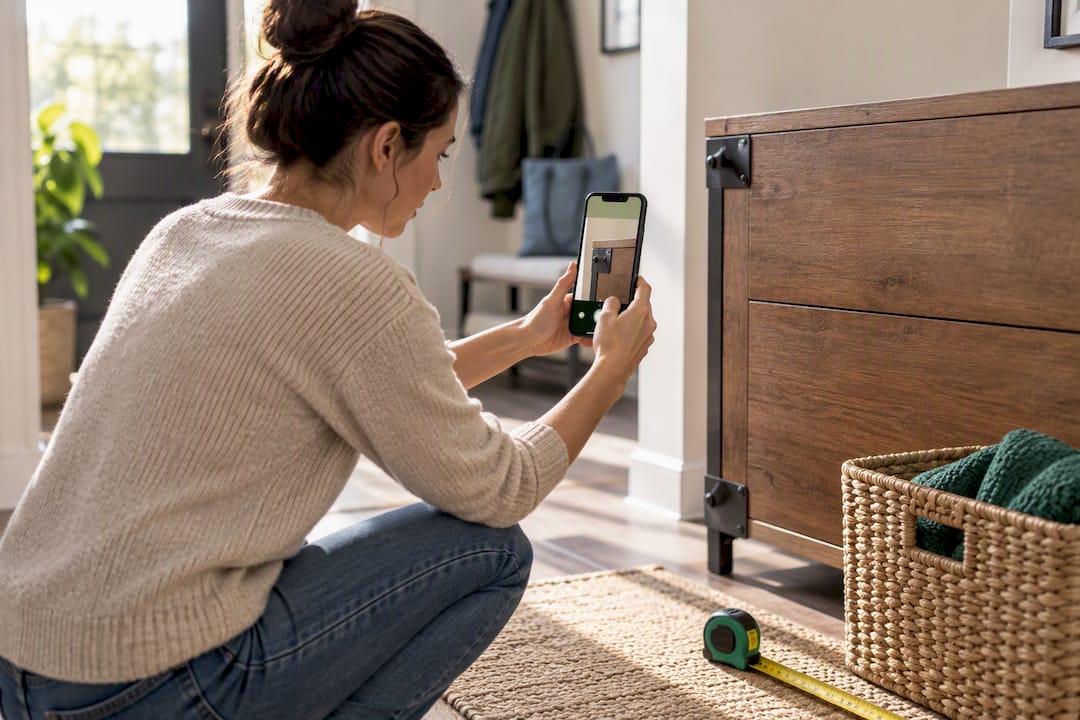
Pro Tip: List on a Thursday evening. Weekend browsers see it fresh, and you'll get your first responses before Saturday morning garage-sale traffic even starts.
Patience pays off here. A niche item might take two weeks to find its buyer, but that buyer usually pays close to what it's worth.
Hybrid Selling: How to Split Your Inventory Between Both
Run both channels at once and you get speed and better prices without picking a side. The trick is sorting items before either sale starts, not scrambling mid-weekend.
Ask four questions about each item:
- Is it worth more than $30? If yes, it's a candidate for online listing.
- Can it be shipped or picked up easily? Bulky furniture stays local either way; small collectibles can go wider if a platform supports it.
- Is it niche, branded, or sentimental? Specialty buyers pay more and are easier to find online.
- Do you have a real deadline? If you're moving in five days, skip the online wait and put it in the sale.
A workable weekend plan: list your top 10 to 15 highest-value items online with a 7 to 14 day window, starting the Monday before your garage sale. Put everything else out for the sale itself.
- Bundle unsold leftovers into "grab bag" boxes at the end of the sale.
- Donate anything left over rather than relisting it for another two weeks.
- Cross items off both lists as they sell so you never double-book a pickup for something already gone.
Safety and Logistics for Both Selling Methods
Garage sales put your home on display all day, so keep valuables out of sight and staff the sale so nobody's left alone with the cash box. Online sales carry different risks: you're meeting strangers based on a text exchange, so daylight public meetups and confirmed pickup windows matter more than they seem to.
- Keep payment inside the marketplace platform when it offers protected checkout, rather than switching to cash or a separate app mid-conversation.
- Require pickup confirmation before the buyer arrives, and meet in a public spot if you have any doubts.
- For anything shipped, use padded envelopes for small items and a sturdy box with extra tape for anything fragile, factoring the cost into your price upfront.
- Watch for common local-selling scams like fake payment confirmations before releasing an item.
| Situation | What to do |
|---|---|
| Garage sale, cash handling | Keep a locked box, staff the table at all times |
| Online, payment | Use platform-protected payment, avoid off-platform requests |
| Online, pickup | Confirm time in writing, meet in daylight |
| Shipping | Weigh and measure before pricing, budget for packaging |
What Actually Works Once You've Done Both
Most people overestimate how much a garage sale will make and underestimate how long online selling actually takes. Sellers who treat both as tools instead of competing philosophies come out ahead. MarketplaceAnywhere's location-based search and verified ratings help close the gap between "list it" and "sell it" for local buyers, and sellers who use instant chat features to answer questions quickly tend to close deals in days rather than weeks. A common pattern: furniture and electronics with a few sharp photos sell within a weekend when priced against real completed sales instead of wishful thinking.
— Marketplace
List It Locally With MarketplaceAnywhere
The platform skips the shipping headache entirely by keeping every sale local, so the furniture, electronics, and specialty items that do best online never have to leave your neighborhood. Users get secure payments, verified seller ratings, and direct chat with buyers, all built for exactly the local, no-shipping transactions this guide recommends for higher-value items.
Listing takes minutes: snap photos, set your price using real completed sales as your guide, and post it in one of several categories from electronics to home and garden. Notifications alert you the moment a buyer messages, so you're not checking an app all day waiting for a response. If you want a head start on what to sell first, the garage sale app roundup covers tools that pair well with a hybrid strategy. Ready to turn your next high-value item into cash without a single shipping label? Start your listing on MarketplaceAnywhere today.
Sources
This article draws on consumer-protection guidance from the FTC, earnings data from The Penny Hoarder, and comparative reporting from Flea Market Insiders and Allegro Living. For local transaction etiquette, see the marketplace etiquette guide.
- Why Yard Sales Still Beat Vinted and Craigslist (2026) | Flea Market Insiders
- The Penny Hoarder — Garage sale alternatives and earnings examples
- Garage Sale vs. Selling Online: What’s Best for Downsizing Seniors? | Allegro Living
FAQ
What Doesn't Sell Well at Garage Sales?
Anything requiring explanation or research tends to flop at a garage sale: electronics with no context, high-end collectibles, and specialty gear that needs a buyer who already knows what it's worth. Big furniture in poor condition and outdated technology also tend to sit unsold. These items typically do better listed online, where a motivated buyer can find and research them.
Is It Better to Sell Online or Have a Garage Sale?
It depends on the goal. A garage sale clears volume fastest and works well for downsizing or moving deadlines, while online listings typically bring higher prices for niche, branded, or valuable items. A hybrid split, listing high-value pieces online and putting the rest in a sale, usually beats picking just one.
What Is the Easiest Way to Sell Items Locally Online?
A local marketplace app that keeps payment, chat, and pickup in one place tends to be the easiest route, since it skips shipping logistics entirely. MarketplaceAnywhere handles this with categorized listings, verified seller ratings, and direct buyer chat, making it a straightforward option for selling furniture, electronics, and other local items without printing a shipping label.
Are Garage Sales Really Worth It?
They're worth it if your priority is fast cash and clearing space, but the hourly return can be low once you count prep, signage, and staffing time. For a few hundred dollars in a weekend they make sense; for high-value items, online listing usually pays better per hour invested.