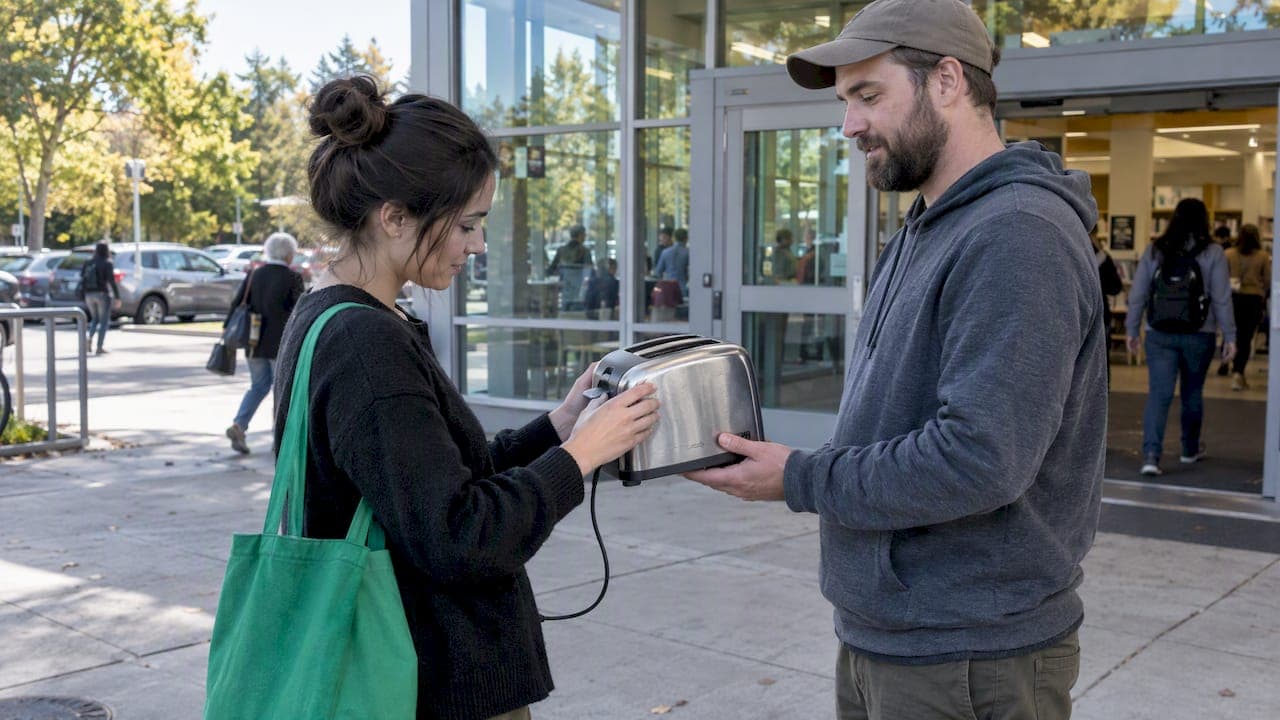
The single most important rule for local pickup safety is meeting in a busy, well-lit public place, ideally a designated police exchange zone, and never handing over cash or goods until you've inspected the item and confirmed payment. Keep every conversation on the marketplace platform you're using. Skipping either step is how most pickup scams and thefts happen.
TL;DR:
- Always meet in a busy, well-lit public location, preferably a police exchange zone, and avoid private addresses or secluded areas.
- Verify accounts with transaction history, keep all communications in the marketplace app, and require detailed answers before agreeing to meet.
- Confirm item condition and payment terms beforehand through written messaging, and inspect the item thoroughly before handing over funds.
- Use secure, platform-supported payment methods and avoid wire transfers, gift cards, or checks that can bounce or be reversed.
- Watch for red flags such as overpayment scams, pressure to move off-platform, or suspiciously new accounts with little detail or generic listings.
Table of Contents
- 1. Quick safety checklist for every stage of a pickup
- 2. Vetting and communication: screening the other party and keeping evidence
- 3. Choosing a safe meetup spot and time that actually lowers risk
- 4. Payment and handover: secure methods and what to check on-site
- 5. Common scams and red flags to watch for
- 6. What police and the FTC say about pickup safety
- 7. Avoid sharing personal information beyond what is necessary
- 8. Plan your own transportation and park nearby to ensure a quick exit
- 9. Set clear terms about item condition and payment before meeting
- A note on where real pickup risk comes from
- Marketplace's take on keeping local trades safe
- List and trade with more confidence
- FAQ
- Sources
1. Quick safety checklist for every stage of a pickup
Use this as a fast reference before you confirm any meetup.
- Vetting: Check the other person's account age and reviews, and ask a clarifying question about the item before agreeing to meet, following advice on how to verify an online art seller before you buy.
- Meeting: Choose a police exchange zone, a busy coffee shop, or a monitored parking lot instead of a private address.
- Payment: Skip wire transfers, gift cards, and cryptocurrency. Use a platform-integrated payment or a card when possible.
- Inspection: Power on electronics, check serial numbers against the listing, and ask for a receipt if one exists.
- Logistics: Bring a friend, text someone your meeting time and location, and park so you can leave quickly.
Pro Tip: Screenshot the listing and your conversation before you leave the house, in case you need them later for a dispute.
2. Vetting and communication: screening the other party and keeping evidence
A new account with no reviews, a generic bio, and stock photos on the listing is worth a second look before you commit to meeting. Genuine sellers and buyers usually have some transaction history and respond to specific questions about the item's condition, age, or included accessories with real detail rather than vague reassurance.
Keep every message inside the marketplace app rather than switching to text or email. Platform messages create a timestamped record that both the marketplace and, if needed, your bank can reference during a dispute, something the FTC's guidance on buying through online marketplaces points out directly: moving a conversation off-platform usually means losing any built-in fraud protections.
- Ask who's selling or buying and why, and note if answers feel rehearsed or evasive.
- Request one or two extra photos of the item from different angles.
- Save screenshots of the listing and chat before you leave for the meetup.
- If someone pushes to text or call instead of using the app, treat it as a reason to slow down, not a reason to comply.
3. Choosing a safe meetup spot and time that actually lowers risk
Where and when you meet matters as much as who you're meeting. A few practical rules make the difference between a routine handoff and a risky one.
- Pick a designated police safe exchange zone when your city has one. These are typically under 24-hour video surveillance and sit outside a police station, and the Columbus Division of Police's Internet Purchase Exchange Zones program notes that officers generally won't act as witnesses but the cameras and location deter trouble.
- If no official zone exists nearby, choose a 24-hour store parking lot, the front of a busy restaurant, or a well-trafficked plaza during daylight hours.
- Avoid private residences, side streets, or anywhere isolated, and skip after-dark meetings whenever you can reschedule for daytime instead.
- For vehicle sales, confirm the make, model, and plate details ahead of time and meet somewhere you can safely test-drive on a known route.
- If the other person refuses a public location or insists on their home or yours, treat that refusal itself as a red flag and consider canceling.
4. Payment and handover: secure methods and what to check on-site
Pay in person using a platform-integrated payment option or a card whenever the marketplace supports it. Cash is acceptable for lower-value, in-person deals as long as you count it on the spot and hand it over only after inspecting the item. What you should avoid entirely is sending money before you've seen the item in person.
The FTC's advice on avoiding online selling scams is specific here: wire transfers, gift cards, and cryptocurrency are all hard to trace or reverse once sent, and a check can look like it's cleared within a couple of days while the bank is still verifying it weeks later.
A deposited check can show as "available" within two days, but full verification can take weeks, according to the FTC, which is exactly why a fraudulent check can bounce after you've already handed over the item and spent the funds.
- Power on electronics and test core functions before paying, not after.
- Check the serial number against what's listed or photographed earlier.
- Take a short video of the item's condition at handover for your own record.
- If you suspect fraud after the exchange, report it to the marketplace and your bank immediately.
5. Common scams and red flags to watch for
Most pickup scams follow a handful of predictable patterns. Recognizing them early saves you from losing money or merchandise.
- Overpayment refund scam: the buyer sends more than the asking price, often by check, then asks you to refund the difference before the original payment clears.
- Fake escrow or third-party payment services: scammers direct you to an unfamiliar "secure" payment site that has no real buyer protection and simply disappears with the funds.
- Pressure to move off-platform or pay in advance: a request to text directly or wire a deposit before meeting is one of the clearest warning signs.
- Thin or suspicious accounts: brand-new profiles, no reviews, stock photos, or vague, generic answers to direct questions about the item.
6. What police and the FTC say about pickup safety
Local law enforcement and federal consumer protection agencies have been pointing to the same handful of safeguards for years, and they line up closely with the checklist above.
That's the core of guidance from the Metropolitan Police Department in Washington, DC, which also lists police-station lockers and Amazon Lockers as secure handoff alternatives where they exist. Departments like Columbus set up monitored exchange zones specifically because officers aren't available to supervise every transaction, so the camera coverage and public location do the deterring instead.
| Guidance source | Core recommendation |
|---|---|
| Columbus Division of Police | Designated exchange zones under 24-hour video surveillance outside police stations |
| Washington, DC MPD | Public, well-lit meetings; inspect before paying; use lockers where available |
| FTC | Avoid wire transfers, gift cards, and cryptocurrency; be cautious with checks |
Boiled down, the official advice maps onto a simple three-point check: verify who you're dealing with, meet somewhere public, and confirm payment only after inspection.
7. Avoid sharing personal information beyond what is necessary
You don't need to give a buyer or seller your home address, workplace, or full name to complete a local transaction. The marketplace listing and in-app chat already give the other party everything required: item details, a meeting point, and a way to reach you. Sharing anything more opens a door you don't need to open.
Stick to first names if you're comfortable, and let the platform's messaging handle contact instead of handing out a personal phone number upfront. If a deal requires more detail, such as a vehicle title transfer or a serial number for a high-value item, share only what that specific transaction legally requires and nothing else.
Be cautious about posting your exact address publicly, even in casual conversation, when arranging a pickup. A nearby public landmark, a store name, or a cross street gives someone enough information to find you without revealing where you live. The same logic applies to photos: cropping out house numbers, mail, or other identifying background details before you post item photos keeps your home address out of public view.

If someone asks for information that has nothing to do with completing the sale, such as your employer, daily schedule, or other accounts you use, that's a reasonable moment to end the conversation. Legitimate buyers and sellers care about the item and the handoff logistics, not your personal life.
8. Plan your own transportation and park nearby to ensure a quick exit
Drive yourself to the meetup whenever possible, rather than relying on a ride you can't control the timing of. Having your own vehicle means you're never stuck waiting around or dependent on someone else's schedule if you need to leave quickly.
Park close to the meeting spot, facing the direction you'll need to drive away, and avoid pulling into a spot that boxes you in. For a parking lot meetup, choose a space near the entrance or exit rather than one buried in a far corner, even if it means a few extra feet to walk the item back.

If you're meeting someone for a vehicle sale and need to test-drive, plan the route in advance and stick to roads you know, ideally ones with other traffic around. Avoid letting an unfamiliar person direct you somewhere you haven't agreed on beforehand.
This same logic extends to timing: give yourself a buffer before and after the meetup so you're not rushing to another commitment. Rushing is when people skip steps like inspecting an item carefully or double-checking payment, and a scammer counts on that pressure working in their favor.
9. Set clear terms about item condition and payment before meeting
Agree on the basics before you ever leave the house: what condition the item is in, what's included, the final price, and how payment will happen. Doing this over platform messaging, rather than figuring it out in person, means you have a written record if something doesn't match up at the handoff.
If a listing says "gently used" or "like new," ask what that means specifically. Are there scratches, does it include the original box or charger, has it ever been repaired? Getting these details in writing ahead of time protects both sides and prevents an awkward renegotiation standing in a parking lot.
Confirm the payment method before you meet, not after. If you've agreed on a platform-integrated payment or cash, say so clearly, and don't let the other party switch to a different method at the last minute without discussing it first. A sudden request to "just Venmo it instead" or accept a check for more than the agreed price is a signal to slow down, not speed up.
For higher-value items like electronics or vehicles, it's worth confirming the serial number, VIN, or model number against the listing beforehand too, so there's no dispute about whether the item shown in person matches what was advertised.

A note on where real pickup risk comes from
Most advice about pickup safety treats every transaction as equally risky, but that's not quite right. The highest-risk moments aren't random crime, they're the predictable pressure points: a buyer pushing to move off-platform, a request to meet somewhere private, or a payment method designed to be hard to reverse. Readers who focus their caution on those specific moments, rather than treating every stranger as a threat, end up both safer and less exhausted by the process. Caution is a tool for the handful of moments that matter, not a mood to carry into every trade.
— Marketplace
Marketplace's take on keeping local trades safe
We built in-app messaging and a library of safety guides because the handoff moment is where most risk lives. If something feels off during a trade, our reporting tools and support team are there to help you flag it and follow up.
List and trade with more confidence
We make it easier to vet who you're dealing with before you ever agree to meet, through in-app messaging that keeps a record of your conversation, and secure payment options built into the platform.
- Verified seller ratings help you judge trustworthiness before you commit to a meetup.
- In-app chat keeps your conversation and agreed terms in one place if a dispute comes up.
- Secure, platform-integrated payments reduce the need for cash or risky transfer methods.
Browse categories like electronics, fashion, vehicles, and more, and start a listing or a search on our marketplace today.
FAQ
Is local pickup on eBay safe?
Local pickup is generally safe when you follow the same core rules that apply to any marketplace: meet in a public, well-lit location, inspect the item before paying, and keep communication within the platform. The safety comes from the precautions you take during the handoff, not from which marketplace hosts the listing.
What not to do during a local pickup?
Don't meet at a private residence, agree to pay before seeing the item, or accept payment methods like wire transfers, gift cards, or cryptocurrency, which the FTC warns are difficult to trace or recover. Also avoid moving the conversation off the marketplace app, since that removes any record you'd need if a dispute comes up.
Is it safe to do porch pickup on Facebook Marketplace?
Porch pickups at a private home carry more risk than meeting at a public location, since police guidance, including from the Washington, DC MPD, generally recommends well-lit public places or designated safe exchange zones instead. If a porch pickup is unavoidable, daylight hours, a visible street, and telling someone your plans beforehand all help reduce the risk.
What does "local pickup only" mean?
"Local pickup only" means the seller isn't offering shipping and expects the buyer to collect the item in person, usually within a specific city or region. It's common for bulky items, vehicles, or anything where shipping costs would outweigh the item's value.
Sources
- Internet Purchase Exchange Zones — Columbus Police
- Online purchases — Metropolitan Police Department (MPD)