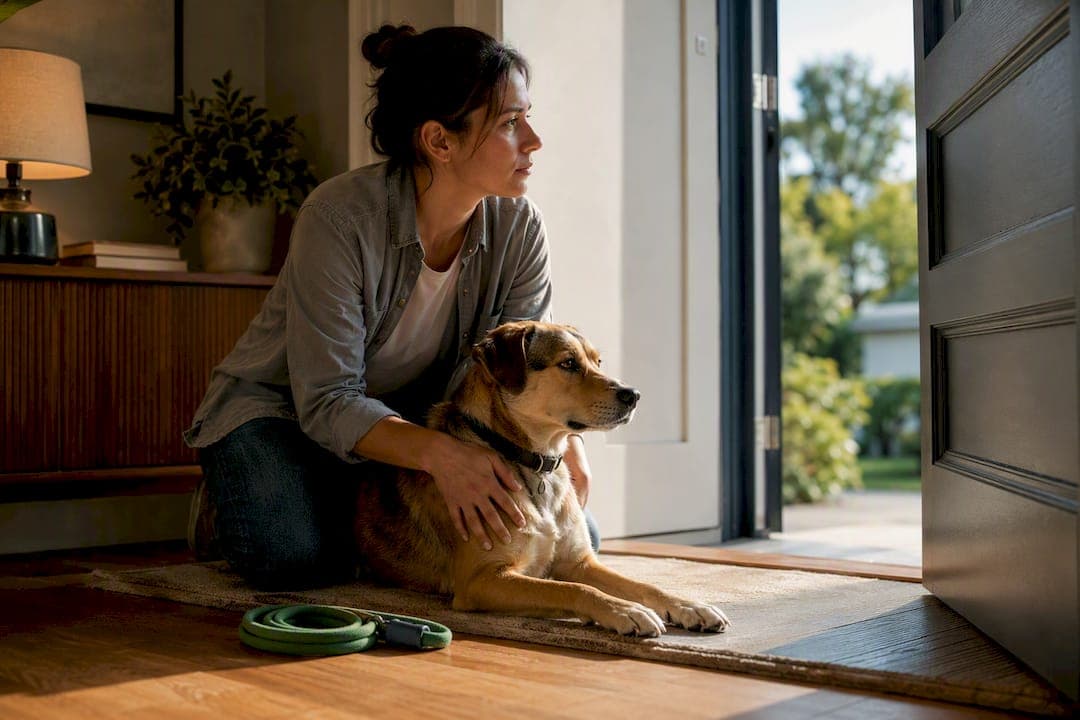
Rehoming should be your last option, not your first phone call. When keeping your pet genuinely isn't possible, self-rehoming beats shelter surrender for most animals: prepare your pet's records, write an honest listing, screen every applicant by phone and in person, run a three-week trial, and sign a transfer agreement before the pet leaves your care.
TL;DR:
- Preparing a current veterinary record, honest listing, and clear behavior notes increases the likelihood of a successful rehoming by attracting responsible adopters.
- Screening applicants thoroughly through phone interviews, references, and in-person meetings helps prevent bad-faith transactions and flippers from acquiring your pet.
- Utilizing trusted owner-to-owner platforms with structured application processes and meeting in public keeps the rehoming process safe and controlled.
- Implementing a trial period of about three weeks with a formal transfer agreement ensures that the pet is returned if the placement does not work out, reducing multiple household moves.
- Checking for existing contracts that require returning to the original breeder or rescue is critical to avoid legal issues before listing the pet publicly.
Table of Contents
- Consider Alternatives and Safety Net Resources Before Rehoming
- Prepare the Pet and Gather Medical Records
- Write a Listing That's Honest, Not Just Appealing
- Where to Post Your Listing Safely
- Screening Applicants and Spotting Red Flags
- Meeting, Trial Period, and the Handoff
- Following Up After the Adoption
- Marketplace's Take on Safe Local Rehoming
- Listing Your Pet Locally With Marketplaceapp
- Where to Go for Direct Help
- Sources
Consider Alternatives and Safety Net Resources Before Rehoming
Most owners who start searching for pet rehoming advice are already past the point of casual consideration. Something has changed. Money is tight, a landlord issued an ultimatum, or a behavior problem feels unmanageable. Before you write a single listing, though, it's worth checking whether the actual problem has a smaller fix than giving up the animal entirely.
Humane organizations run programs specifically built to keep pets in their current homes. Seattle Humane and similar groups nationwide offer low-cost veterinary care, pet food banks, behavior consultations, and even temporary foster arrangements for owners going through a rough patch. These services exist because shelters know that a rehomed pet, once removed from a family, rarely returns.
Options worth checking before you list your pet:
- Local pet food banks (many operate through humane societies or churches)
- Low-cost or sliding-scale veterinary clinics for medical issues driving the decision
- Certified trainers or behaviorists offering free or reduced-rate consultations for aggression, anxiety, or house-training problems
- Temporary foster networks that buy you a few weeks to solve a housing or financial crisis
- Housing assistance programs for renters facing pet-related eviction threats
- National charities like the ASPCA or your regional humane society, many of which have direct owner-support hotlines
Shelter surrender still makes sense in specific situations: a stray with no known owner, a pet showing aggression that puts household members at real risk, or a case where no private rehoming path is safe. If none of those apply, self-rehoming is usually the gentler route. It skips the kennel stress entirely and lets you control who ends up with your animal, a point the Animal Welfare League of Alexandria makes clearly in its own guidance for owners weighing the decision.
One more thing to check before you do anything else: your adoption or purchase contract. Many breeders and rescues require that the animal be returned to them, not rehomed privately, and Austin Animal Services notes this clause gets overlooked constantly. Pull that paperwork out and read it before you post anything.
Prepare the Pet and Gather Medical Records
A pet that is current on vaccines, spayed or neutered, and microchipped is dramatically easier to place well. Adopters read these details as signs of a responsible previous owner, and they're right to. Before you write a listing, run through this checklist:
- Schedule a recent veterinary exam. A checkup within the past few months reassures adopters and catches anything you'll need to disclose.
- Confirm vaccination status. Rabies, distemper, and any regional requirements should be current, with paperwork in hand.
- Verify spay or neuter status. If the pet isn't fixed, be upfront about it. This affects both adopter interest and the price you can reasonably ask.
- Check or update the microchip. If your pet has one, confirm the registration is current. If not, this is a good moment to have one implanted, since it protects the animal long after it leaves your home.
- Note any treatable or chronic conditions. Arthritis, allergies, dental issues. None of these are dealbreakers for the right adopter, but hiding them is.
- Compile the paper trail. Vaccination records, medication lists, past vet visit summaries, and any behavior notes from trainers.
- Write down daily routines. Feeding schedule, exercise needs, favorite toys, sleeping habits. This becomes the transition guide the new owner will actually use.
Skipping this step doesn't just make your pet harder to place. It makes it more likely the adoption fails and the animal bounces to a second or third home, which is worse for everyone, especially the pet.
Write a Listing That's Honest, Not Just Appealing
The instinct when rehoming a pet is to make the listing sound as good as possible. Resist that. A listing built to attract the widest possible pool of applicants attracts a lot of the wrong ones: impulse adopters, people who didn't read past the photo, or worse.
Pro Tip: Take photos at your pet's eye level, not from above. A dog or cat photographed from standing height looks small and submissive; get down on the floor and the personality shows.
Good photos share a few traits:
- Shot at the pet's eye level, in natural light, without a cluttered background
- At least one full-body shot showing size and build accurately
- A close-up of the face that captures actual expression, not a squinting reaction to flash
- Something in frame for scale, especially for unusually small or large animals
Your bio needs structure, not just enthusiasm. Cover the essentials first: age, breed or mix, size, energy level, and health status. Then walk through a typical day. Does this dog need two long walks or is a backyard enough? Does this cat prefer to be left alone most of the day? Follow that with the quirks, good and bad: resource guarding around food, separation anxiety when left too long, reactivity to other dogs on leash. End with a plain description of the home that would suit this animal best, whether that's a quiet apartment, a fenced yard, or a household with no small children.
Full disclosure here isn't just an ethical box to check. According to the AKC's guidance on responsible rehoming, owners who disclose issues like resource guarding or separation anxiety upfront end up matching their pet to adopters who are actually prepared for those challenges, which cuts down on failed placements later.
Where to Post Your Listing Safely
Not every corner of the internet treats pet listings the same way, and the difference matters more than most owners realize. Vetted owner-to-owner rehoming platforms build in structure that generic classifieds skip entirely: applications, transfer forms, and recommended meeting guidelines that reduce risk before a stranger ever sees your address, a structural advantage Adopt a Pet's Rehome platform points to directly in its own step-by-step guidance for owners.
Safer places to list your pet include:
- Owner-to-owner platforms designed specifically for pet rehoming, which typically include applicant screening tools
- Breed-specific rescue networks, which often maintain owner-surrender listing services and can connect you with adopters who understand the breed
- Your veterinarian's clinic, many of which keep a bulletin board or informal referral list for clients rehoming pets
- Trusted local social groups or community bulletin boards, especially ones tied to a real neighborhood rather than an anonymous nationwide feed
Channels to avoid or approach carefully: fully open, anonymous free classifieds with no applicant history or reviews, anyone who offers to ship the animal sight unseen, and cash-only arrangements where the buyer refuses any form of identity verification. These aren't hard rules against every stranger, but they're where flippers and bad actors tend to operate, and a breeder's guide to spotting scam buyers lays out exactly what that pattern looks like from the seller's side.
Screening Applicants and Spotting Red Flags
This is the step owners skip when they're in a hurry, and it's the one that matters most. A thorough screening process filters out the people who shouldn't have your pet before you've invested any emotional energy in them.
Run every serious inquiry through a phone pre-screen first. Ask about their current housing situation and whether they rent or own. Ask about other pets in the home and how those animals get along with new additions. Ask about their daily schedule and who's actually home during the day. Ask why this particular pet caught their attention, since vague answers here are often a tell.
- Confirm housing stability. Renters should have landlord permission for pets in writing, especially for dogs with size or breed restrictions.
- Ask for references. A veterinarian reference from a current or past pet is one of the strongest signals of a responsible owner.
- Request contact information for their current or former vet. A legitimate adopter won't hesitate to provide this.
- Discuss daily routine in detail. Someone who can't describe how the pet will spend its day likely hasn't thought this through.
- Watch how they react to your pet's disclosed issues. Someone who brushes off a mentioned behavior problem too quickly may be telling you what you want to hear.
Certain behaviors should stop the process entirely. Refusal to provide any contact information or references, insistence on immediate same-day pickup, offers to pay unusually high amounts with "no questions asked," vague or shifting answers about other pets in the home, and any request to ship the animal without meeting first. These patterns correlate strongly with flipping schemes and other bad-faith transactions, where animals are resold, used as bait, or worse.
Timeline expectations matter here too. A well-screened, honestly written listing typically finds a serious applicant within two to six weeks, according to Best Friends Animal Society, though puppies and popular purebreds tend to move faster while senior pets or those with medical needs can take longer. Don't let a slow week push you into skipping a step.
Meeting, Trial Period, and the Handoff
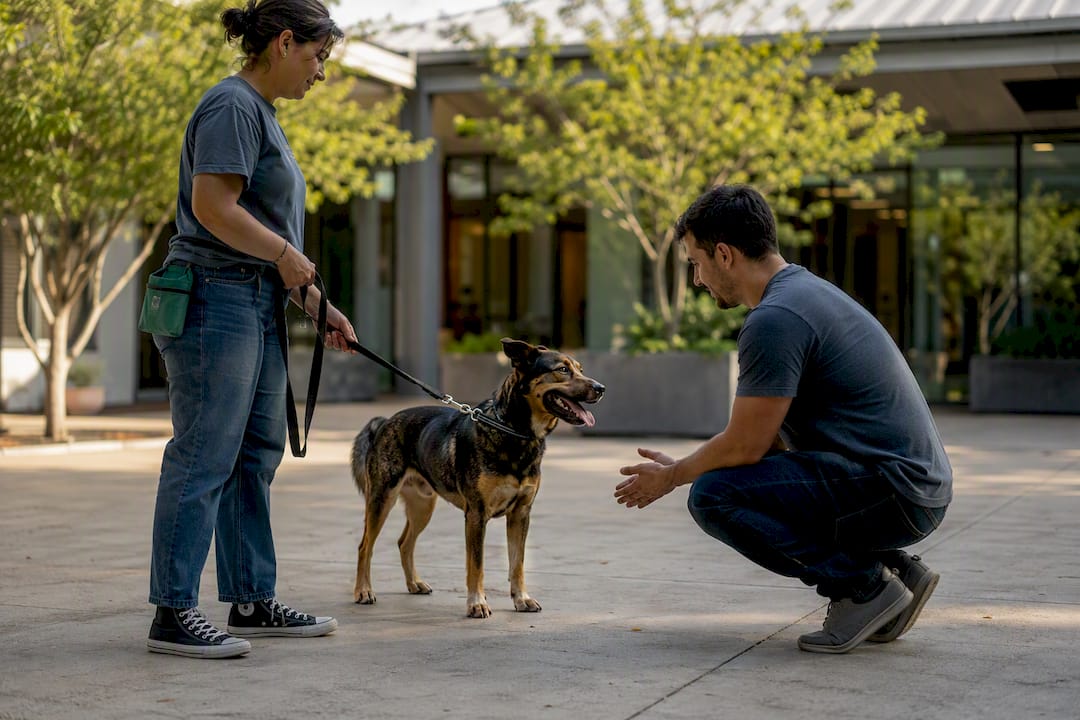
First meetings should happen somewhere neutral, not at your home and not at the adopter's. A quiet park, a pet supply store parking lot, or a vet clinic lobby all work. Bring the pet on a leash or in a carrier, watch how the adopter interacts with the animal, and trust your gut if something feels off. A second meeting at the adopter's home, arranged in advance and during daylight hours, lets you confirm the housing situation matches what they described.
Once you've settled on an adopter, a trial period changes the entire dynamic of the placement. The Animal Foundation recommends roughly three weeks, long enough for both the pet and the new household to settle into a real routine, with an understanding that if things don't work out, the pet returns to you rather than getting passed along to a third party or dumped at a shelter.
| Trial period element | What it should specify |
|---|---|
| Duration | Roughly three weeks, in writing |
| Return condition | Pet returns to original owner, not resold or surrendered elsewhere |
| Communication | Check-in dates agreed upon in advance |
| Fee refund terms | Whether any rehoming fee is refundable if the trial fails |
At handoff, whether immediate or after a trial, a few things should travel with the pet without exception:
- A signed transfer-of-ownership or adoption agreement, even a simple one-page version
- Complete medical records, including vaccination history and any medication instructions
- Microchip transfer paperwork, so the registration reflects the new owner
- A written transition guide covering feeding schedule, routines, and quirks
- A familiar item, like a blanket or toy, to ease the adjustment
A modest rehoming fee, rather than giving the pet away free, does real work here. It's a practical filter that discourages flippers and casual takers while signaling that a serious adopter is willing to invest in the animal from day one.
Following Up After the Adoption
Handing over the leash isn't the finish line. A quick check-in at 48 hours, another at one week, and a final one around the three-week trial mark gives you a real read on how the placement is going, not just a hopeful assumption.
Ask specific questions at each check-in: how is the pet eating, sleeping, and adjusting to the new environment? Has the pet shown any behavior the adopter wasn't expecting? Send along your routine notes if you haven't already, plus a couple of pointers on feeding and training that worked for you.
- Confirm the 48 hour, one week, and three week check-in dates before the pet leaves
- Share contacts for low-cost vet care or behavior help in case issues come up
- Agree in advance that if the trial fails, the pet returns to you rather than getting rehomed again by the adopter
That last point protects the animal from bouncing through multiple households, which is often worse for a pet's well-being than staying in one home a little longer while you sort out a better plan.
Marketplace's Take on Safe Local Rehoming
We've spent years building guidance around safe local transactions, and pet rehoming shares more with a used furniture sale than most owners expect. The core risks are identical: strangers meeting strangers, money changing hands, and one side holding more information than the other. The safety habits that protect a seller handing off a couch apply just as directly to an owner handing off a dog.
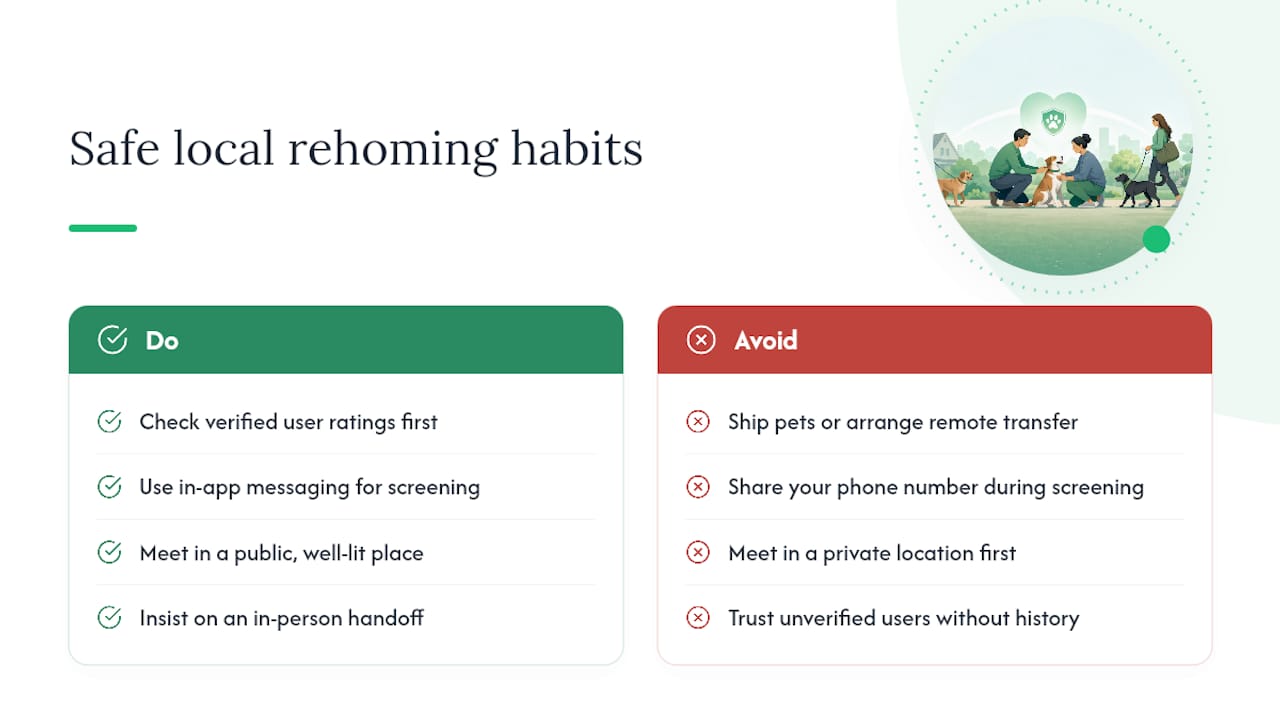
Verified user ratings matter for the same reason in both cases. They give you a track record before you ever agree to a meeting. In-app messaging keeps your phone number private during the screening phase, which is exactly when you want distance from a stranger, not less of it. And meeting in a public, well-lit location for the first exchange isn't caution for caution's sake. It's the single habit that prevents the worst outcomes, whether you're selling a bike or placing a cat.
Our own guide to local marketplace etiquette covers the meeting-safety fundamentals in more depth, and the instinct to insist on an in-person handoff rather than shipping or remote arrangements applies to pets with even higher stakes than it does to electronics.
— Marketplace
Listing Your Pet Locally With Marketplaceapp
If you've read this far, you already know the safest rehoming path runs through people you can actually meet, screen, and follow up with, not anonymous nationwide shipping arrangements. There are local exchange platforms that support pet rehoming once you've prepared your pet's records and written an honest listing.
Features useful for rehoming include location filters to keep responses close enough for in-person meetings, seller ratings to assess who you're talking to before agreeing to anything, and secure in-app messaging to enable phone screening without immediately sharing personal numbers.
Setting a modest rehoming fee inside your listing does the filtering work described earlier, discouraging flippers while still keeping the process approachable for a genuine adopter. Keep the listing focused: clear photos, an honest bio, medical status, and behavior notes. Handle every meeting in public, and don't ship the animal to anyone you haven't met.
Ready to start? Create your listing on Marketplace and set your own screening pace from the first response.
Where to Go for Direct Help
If you need guidance beyond what's covered here, a few resources are worth bookmarking. The Animal Foundation's rehoming guide and the Animal Welfare League of Alexandria's self-rehoming resource both walk through the full process in more detail. For owner-support programs like food banks and low-cost vet care, contact your local humane society directly, since availability varies significantly by region. If your situation involves a stray, safety risk, or no viable private placement, your local shelter or rescue remains the right first call for urgent help.
Sources
- Self-rehoming your pet - Animal Welfare League of Alexandria
- Rehoming a dog responsibly: what to know - AKC
- Pet rehoming - Seattle Humane