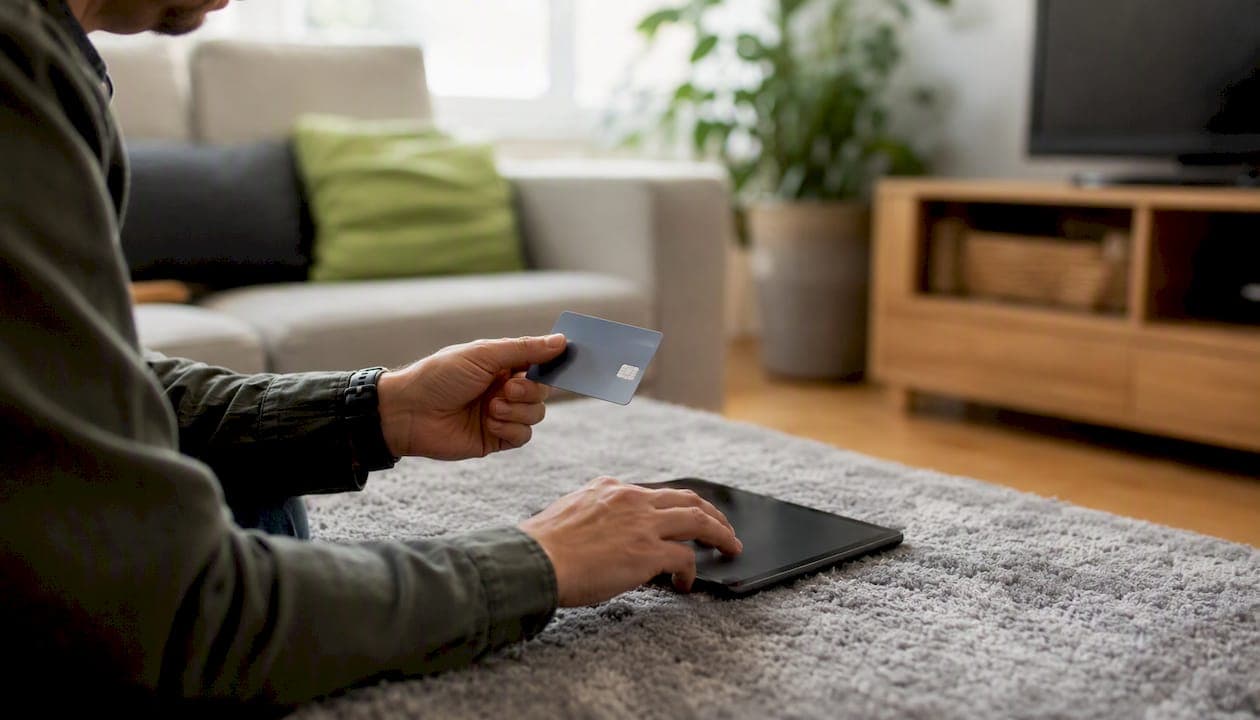
Credit cards, digital wallets with tokenization (Apple Pay, Google Pay, PayPal), and virtual card numbers are the safest payment methods for most U.S. consumers. For recurring bills with trusted institutions, ACH transfers work well. For in-person purchases, EMV chip and contactless NFC payments beat magstripe every time. Avoid wire transfers, gift-card payments, and off-platform P2P transfers for any purchase where you might need to dispute a charge.
Quick scenario rules:
- Online marketplace or unknown seller: Use a credit card or tokenized digital wallet. Chargebacks and zero-liability policies give you a real recovery path if something goes wrong.
- In-person local pickup: Tap or dip with a chip card. Prefer on-platform payment over cash when the marketplace supports it.
- Recurring bills (utilities, rent): ACH or a credit card both work. ACH is fine for trusted, verified payees.
- Paying a friend: Use a platform-backed P2P option carefully. Confirm the recipient before sending, because most P2P transfers are hard to reverse.
Table of Contents
- 1. Credit cards are usually the safest choice for consumers
- 2. Digital wallets protect your card data through tokenization
- 3. EMV chip and contactless NFC payments beat magstripe in person
- 4. ACH transfers and eChecks: secure for trusted payees, risky for strangers
- 5. Prepaid cards and gift cards: limited exposure, limited protection
- 6. Wire transfers and crypto are effectively irreversible
- 7. How to pick the right payment method for your scenario
- 8. Safety checklist and what to do if something goes wrong
- 9. Safer payments for local peer-to-peer transactions on Marketplaceapp
- Sources
1. Credit cards are usually the safest choice for consumers
Credit cards give you the strongest consumer protections of any payment method: fraud monitoring, zero-liability policies, and the right to dispute charges through a chargeback. Networks like Visa, Mastercard, and American Express all maintain zero-liability programs, meaning you generally owe nothing for unauthorized transactions you report promptly. The Fair Credit Billing Act adds a federal backstop, giving you the right to dispute billing errors and fraudulent charges in writing.
The practical advantage is reversibility. If a seller ships the wrong item, never ships at all, or turns out to be fraudulent, you can file a dispute with your card issuer and get the charge reversed. That option disappears the moment you pay by wire transfer or gift card.
PayPal's guide to secure online payments lists credit cards among the most protective methods precisely because they combine encryption, issuer fraud monitoring, and dispute rights in one instrument. Use them for online marketplace purchases, high-value items, and any transaction with a seller you don't know well.
Practical steps to get the most out of credit card security:
- Turn on real-time transaction alerts in your card's app.
- Use a virtual or temporary card number for one-off purchases (most major issuers offer this).
- Check your statement weekly, not just monthly.
- Set a low credit limit on a card you use only for online shopping.
Pro Tip: Pair your credit card with Apple Pay or Google Pay at checkout. The merchant never sees your real card number, and you get both tokenization and chargeback rights at the same time.
2. Digital wallets protect your card data through tokenization
When you pay with Apple Pay, Google Pay, or PayPal's one-touch checkout, the merchant never receives your actual card number. Instead, the wallet generates a unique token for each transaction. That token is useless to anyone who intercepts it because it can't be reused at a different merchant or replicated.
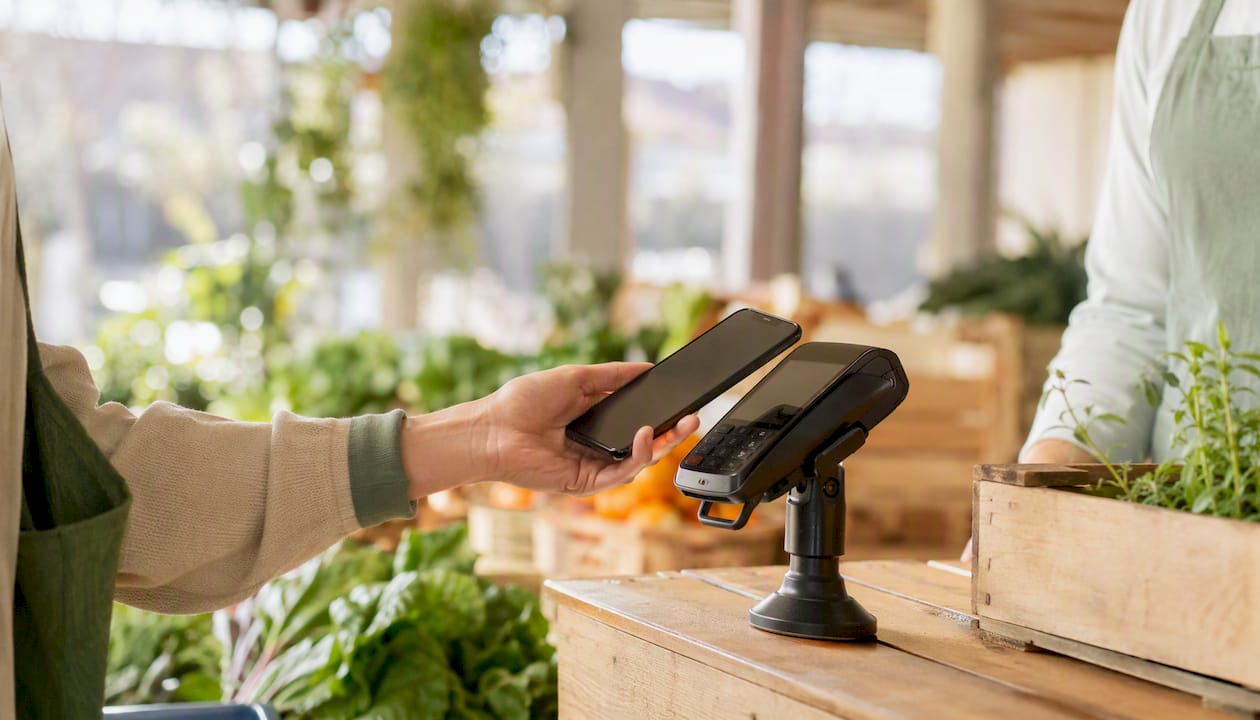
CNBC's analysis of the safest ways to pay confirms that digital wallets reduce exposure by combining tokenization with device-level authentication, whether that's Face ID, a fingerprint, or a PIN. Even if a retailer's database gets breached, attackers walk away with a one-time token tied to a single transaction, not your card number.
Here's what each layer of protection actually does:
- Tokenization: Replaces your real card number with a transaction-specific code.
- Biometric or passcode authentication: Requires you to confirm your identity on the device before the payment goes through.
- MFA integration: Many wallets trigger an additional issuer verification step for high-value or unusual purchases.
- Issuer fraud tools: Apple Pay, Google Pay, and PayPal all connect to your underlying card's fraud monitoring, so alerts still fire.
When to prefer a digital wallet over typing your card number directly: mobile checkouts, contactless in-store payments, and any merchant you haven't used before. The merchant stores nothing reusable.
Pro Tip: Before you tap "pay," confirm the checkout screen explicitly shows the Apple Pay, Google Pay, or PayPal logo. A spoofed page won't trigger your wallet's authentication flow, which is itself a warning sign.
3. EMV chip and contactless NFC payments beat magstripe in person
Chase's guide to secure payment methods puts it plainly: EMV chip and contactless NFC payments generate a unique cryptographic code for every single transaction, making them far harder to clone than magnetic-stripe cards. A skimmer that captures a magstripe can reproduce that card indefinitely. A skimmer that captures a chip transaction gets a one-time code that's already expired.
The difference in practice:
- Chip dip (EMV): Insert the card and leave it in the terminal. The chip communicates with the bank to create a transaction-specific authorization code. Pull the card out early and the transaction fails.
- Contactless tap (NFC): Hold your card or phone near the terminal. The same cryptographic process happens wirelessly in under a second.
- Magstripe swipe: The terminal reads a static data string. That string doesn't change between transactions, so a compromised terminal captures everything a fraudster needs.
In-person safety checklist:
- Always chip-dip or tap. Swipe only if the terminal gives you no other option.
- Inspect the card reader before inserting. Wiggle the card slot; a loose overlay is a skimmer.
- Cover the keypad when entering your PIN, even at trusted locations.
- Avoid handing your card to a server or cashier who walks away with it. Request a portable terminal or go to the register yourself.
4. ACH transfers and eChecks: secure for trusted payees, risky for strangers
ACH transfers and eChecks move money directly between bank accounts through the Automated Clearing House network, which operates under NACHA rules and Federal Reserve oversight. For recurring, predictable payments to known institutions, they're a solid choice: your utility company, landlord, or payroll provider all qualify.
The key distinction from card payments is recourse. Card networks process disputes in days. ACH reversals follow a different timeline and are generally harder to initiate, especially for authorized transfers where you approved the payment but the goods or services never arrived. That slower dispute path matters a lot when you're dealing with an unknown seller.
When ACH works well:
- Recurring bills where you've verified the recipient's account details.
- Payroll and employer-to-employee transfers.
- Large, scheduled payments to established institutions (mortgage servicers, insurance companies).
When to avoid ACH:
- Purchases from sellers you don't know personally.
- One-time transactions with no prior relationship.
- Any situation where you might need to reverse the payment quickly.
Before setting up an ACH payment, verify the recipient's bank account details through a direct call or official website, not through a link in an email. Keep a record of the authorization and the account details you used.
A note on timing: ACH disputes can take several business days to resolve, compared to the near-immediate provisional credit many card issuers extend during a chargeback investigation. For purchases where reversibility matters, a credit card is the safer instrument.
5. Prepaid cards and gift cards: limited exposure, limited protection
Prepaid cards cap your losses at the card balance, which makes them useful for budgeting or low-value purchases where you'd rather not expose a bank account or a full credit line. Load $50 onto a prepaid card for a specific purchase, and that's the most you can lose if something goes wrong.
Gift cards are a different story. Most gift cards have no chargeback rights, no fraud protection, and no way to recover funds once the card is redeemed. They're designed for gifting, not for payments between strangers.
Red flag: If a seller in a marketplace or P2P transaction asks you to pay with gift cards, stop immediately. No legitimate seller needs payment in iTunes, Google Play, or Amazon gift card codes. This is one of the most common scam patterns the FTC documents, and the money is almost always unrecoverable once the codes are shared.
When prepaid cards make sense: online subscriptions you want to cap, travel spending, or giving someone a fixed-amount payment tool. When they don't: any transaction where you need dispute rights, buyer protection, or the ability to reverse a charge.
6. Wire transfers and crypto are effectively irreversible
Wire transfers and most cryptocurrency transactions work like handing someone cash in an envelope. Once the money leaves, it's gone. Bankrate's analysis of cybercrime and payment safety flags both methods as high-risk for consumer purchases specifically because recovery options are limited or nonexistent.
Why scammers prefer these channels:
- No chargeback mechanism exists for wire transfers.
- Crypto transactions are recorded on a blockchain but are not reversible by any central authority.
- Both methods move money faster than any dispute process can intervene.
- Tracing and recovering funds requires law enforcement involvement, which rarely results in recovery for individual consumers.
The practical rule: Treat a wire transfer or crypto payment request from a stranger the same way you'd treat a request for cash. If you wouldn't hand someone $800 in bills without a receipt and a way to get it back, don't wire it either.
When these methods might be appropriate: sending money to a family member you know personally, or investment contexts where you understand the irreversibility and have independent verification of the recipient. For buying goods from any seller you haven't met, use a credit card, a tokenized digital wallet, or an escrow service instead.
7. How to pick the right payment method for your scenario
The three questions that drive the decision: Do you need the ability to dispute this charge? Does the payment expose your bank account directly? Is the counterparty someone you know and trust?
Common scenarios and what to use:
- Buying from a local marketplace seller you don't know: Credit card or tokenized wallet, through the platform's checkout. Stay on-platform. The FTC's consumer advice on online marketplaces is direct: paying off-platform forfeits marketplace dispute resolution and increases scam risk.
- Paying a friend back for dinner: A P2P app (Venmo, Zelle) is fine for small, confirmed amounts. Confirm the recipient's handle before sending. Treat it as cash once sent.
- Paying a utility or recurring bill: ACH or a credit card. Both are appropriate; credit card gives you a dispute path if the biller makes an error.
- Buying from an unknown online seller: Credit card only. Virtual card number if your issuer offers one.
- High-value local pickup (a car, furniture, electronics): Credit card or escrow service. Cash is risky for the buyer; wire transfer is risky for everyone. For a vehicle listing like a used Honda Civic on Marketplaceapp, using the platform's payment flow protects both parties.
Red flags that should make you stop and reconsider:
- The seller pushes you to pay outside the platform.
- Payment is requested in gift cards, wire transfer, or crypto.
- There's unusual urgency ("I need payment in the next hour").
- The seller asks you to keep the transaction secret.
8. Safety checklist and what to do if something goes wrong
Before you pay:
- Confirm the URL starts with
https://and the domain matches the site you intended to visit. - Look for official payment processor logos (Visa, Mastercard, PayPal, Apple Pay) at checkout.
- Use a password manager with domain-locked autofill. If it doesn't autofill, the domain may be spoofed, which is a practical anti-phishing signal worth trusting.
- Avoid entering payment details on public or unsecured Wi-Fi. Use your phone's mobile data instead.
- Prefer on-platform payment flows to preserve dispute rights.
During the transaction:
- Use a credit card or tokenized wallet whenever possible.
- Enable MFA on your payment accounts.
- Never share full card numbers, CVVs, or bank account details over chat, email, or phone unless you initiated the call.
If something goes wrong:
- Freeze your card immediately through your issuer's app or by calling the number on the back of the card.
- File a dispute or chargeback with your card issuer. Document everything: screenshots, order confirmations, chat logs.
- Report the fraud to Reportfraud. The FTC uses these reports to track patterns and support enforcement.
- If the transaction happened on a marketplace, report it through the platform's dispute or fraud reporting tool as well.
- If a wire transfer or bank account was compromised, contact your bank's fraud department immediately and ask about NACHA return options.
9. Safer payments for local peer-to-peer transactions on Marketplaceapp
The single most protective step for local marketplace transactions is staying inside the platform's payment flow. The FTC confirms that off-platform payments strip away marketplace dispute resolution, and scammers know this. A common tactic is to move the conversation to text or email and then request a wire or gift-card payment before the buyer realizes the platform's protections no longer apply.
A safe Marketplaceapp workflow looks like this: check the seller's verified ratings and transaction history before engaging, use in-app chat to keep a record of all communication, and insist on the platform's payment option rather than cash or a direct transfer. For items you can verify before buying, do so before payment clears.
Pro Tip: Marketplaceapp's verified seller ratings and in-app chat create a paper trail that supports dispute resolution. If a seller pushes you off the platform or refuses to accept the built-in payment option, that resistance is itself a warning sign.
For in-person local pickups:
- Meet in a public place (a coffee shop, a police station's designated safe-exchange zone).
- Bring a friend when picking up high-value items.
- Complete payment through the platform before or during the handoff, not after.
- Avoid carrying large amounts of cash. A card-backed on-platform payment protects you; cash does not.
You can browse local marketplace options to understand how different platforms handle payment protections before you commit to a transaction.
Key Takeaways
Credit cards and tokenized digital wallets are the safest payment methods for most U.S. consumers, combining fraud monitoring, zero-liability policies, and chargeback rights that wire transfers and gift cards simply cannot match.
| Point | Details |
|---|---|
| Credit cards lead on protection | Chargebacks, zero-liability, and fraud monitoring make them the safest choice for online and marketplace purchases. |
| Tokenized wallets add a layer | Apple Pay, Google Pay, and PayPal replace your card number with a one-time token, so merchants never store reusable data. |
| Chip and tap beat magstripe | EMV chip and NFC contactless payments generate unique transaction codes that can't be cloned like a magstripe. |
| Avoid irreversible methods | Wire transfers and gift-card payments are effectively unrecoverable once sent. Treat them like cash. |
| Stay on-platform for marketplace safety | Off-platform payments forfeit dispute resolution. Use Marketplaceapp's built-in payment flow and report fraud at reportfraud.ftc.gov. |
Marketplaceapp's perspective on payment safety
At Marketplaceapp, we built our platform around the idea that a local transaction should feel as safe as buying from a store. Our verified seller ratings, in-app chat, and integrated payment flow aren't just features — they're the infrastructure that keeps dispute resolution available if something goes sideways. We've seen firsthand how quickly a transaction goes wrong when a buyer moves off-platform to pay by wire or gift card, and how rarely that money comes back. Our advice is simple: follow the checklist in this article, insist on on-platform payment, and use a credit card or tokenized wallet as your funding source whenever you can. If something feels off, it probably is. Start buying and selling on Marketplaceapp with the protections already in place.
This article is general information, not a substitute for advice from a qualified financial advisor. Consult a qualified financial professional about your own circumstances before acting on anything here.
Sources
- Here are 6 of the safest ways to pay online and in-person - CNBC
- Safe Ways To Pay Online & In Store | Chase
- How to make secure online payments: 7 secure payment methods | PayPal US
- Buying From an Online Marketplace | Consumer Advice
- Cybercrime Is On The Rise. These Are The Safest Ways To Pay | Bankrate