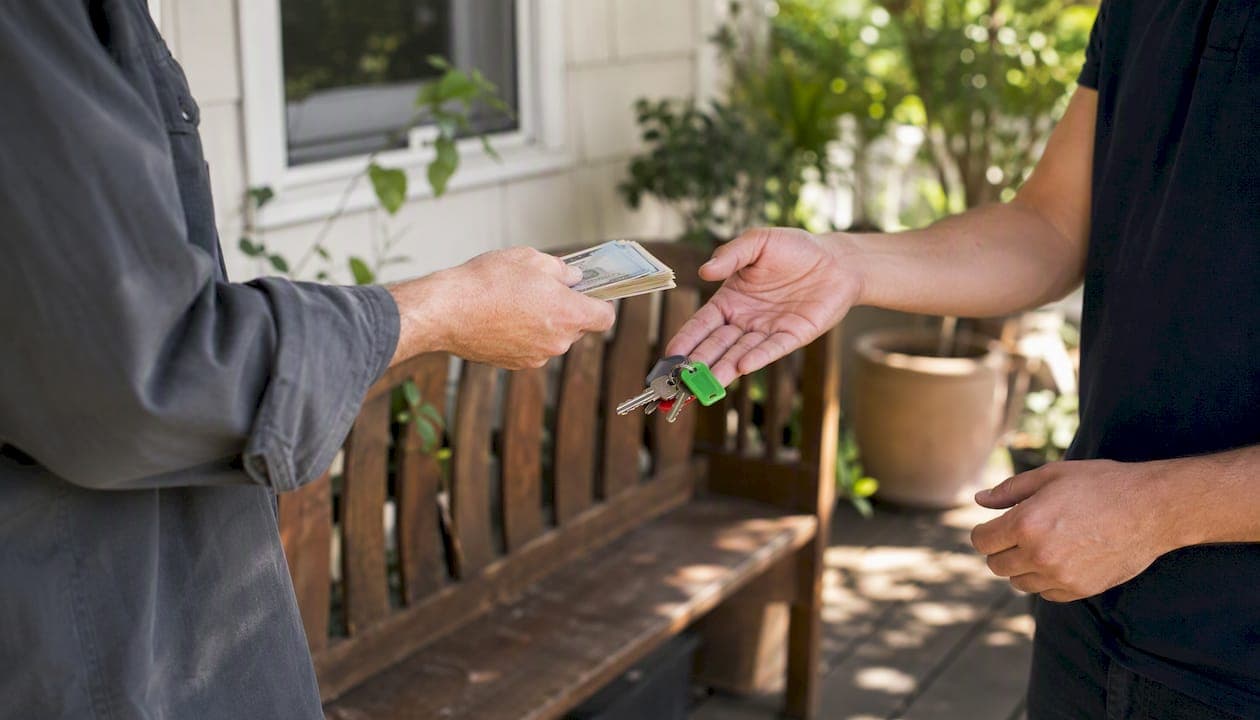
For most U.S. sellers, listing on a location-based marketplace and offering a buyer-paid delivery option is the fastest path to cash. You skip shipping headaches, reach buyers within driving distance, and close deals in days rather than weeks. Here's what to do right now:
- Take 6 photos in indirect daylight (overall shot, front, side, close-up of any wear, a tape measure against the piece, and one staged-in-room shot).
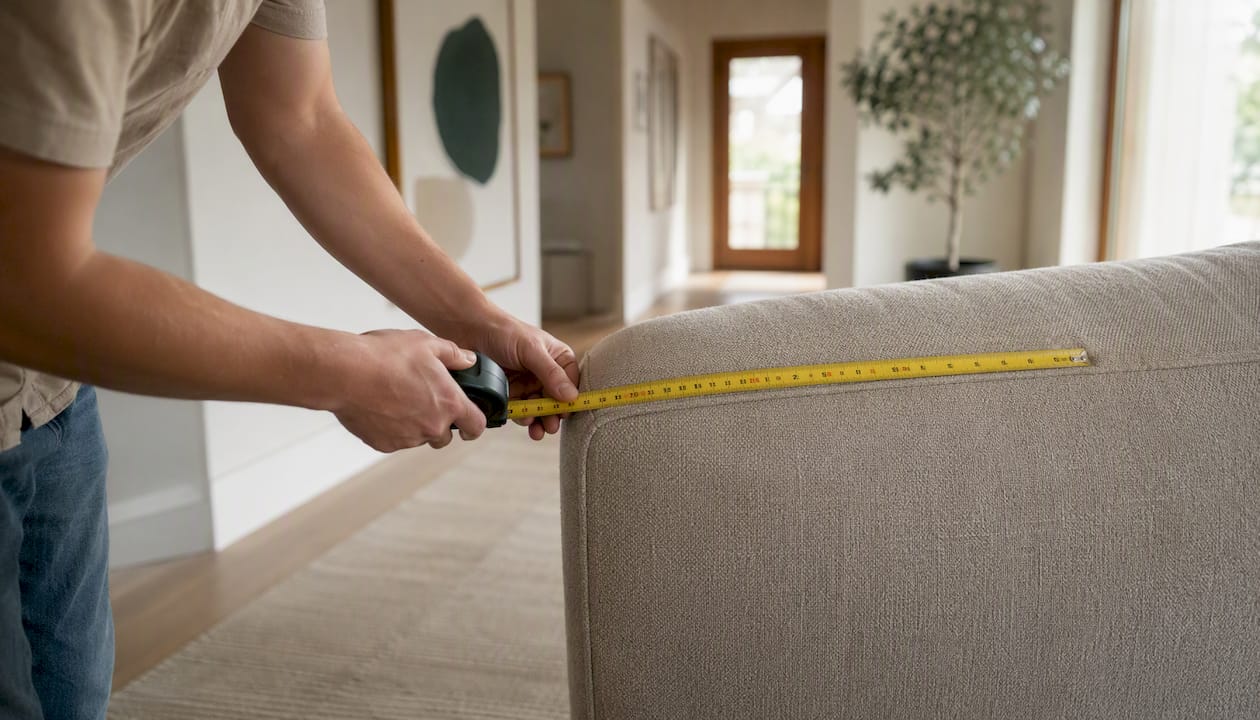
- Measure length, width, height, and seat depth, then note whether the piece fits through a standard 32-inch doorway.
- Set your asking price using this formula: retail price multiplied by between one quarter and one half, adjusted for condition, plus a small negotiation buffer.
Marketplaceapp (MarketplaceAnywhere) is the recommended starting point. It combines local reach with secure payments, verified seller ratings, and in-app messaging, so you spend less time chasing flaky buyers and more time closing.
Key Takeaways
| Point | Details |
|---|---|
| Photos drive inquiries | Shoot 6–8 images in indirect daylight; a low-angle reshoot fixes most stalled listings. |
| Price with a buffer | Set asking price 10–15% above your floor; decide your minimum before the first message arrives. |
| State delivery terms upfront | Quoting buyer-paid delivery (— same-city). This removes the transportation barrier and converts more buyers. |
| Match channel to item type | Large sofas need high-volume local marketplaces; designer pieces belong on curated or consignment channels. |
| Use Marketplaceapp | Zero commission on local pickup, verified ratings, and secure payments make it the practical first stop for most sellers. |
Table of Contents
- Where to sell furniture locally: which channel fits your item?
- How to clean, stage, and photograph furniture that sells fast
- How to price your furniture and write a listing that converts
- Pickup, delivery, and logistics: what to sort out before you list
- How to stay safe and get paid without getting scammed
- When to use consignment or specialty marketplaces for high-value pieces
- Your complete listing checklist and ready-to-use templates
- Matching your selling method to the type of furniture you have
- List your furniture on Marketplaceapp and reach local buyers today
- Sources
Where to sell furniture locally: which channel fits your item?
Not every channel works for every piece. A sectional sofa and a vintage side table have completely different buyer pools, and picking the wrong channel costs you time. According to Shopify's selling guide, location-based marketplaces are often the fastest local channel and typically charge no commission on local pickup sales.
| Channel type | Typical fee/commission | Best for |
|---|---|---|
| Location-based marketplace app | 0% for local pickup; varies for paid delivery | Large furniture, everyday pieces, quick cash |
| Neighborhood/classifieds platform | 0% | Hyper-local, small items, free giveaways |
| Consignment shop | 40–60% commission to the store | Mid-range pieces you don't want to photograph or list |
| Curated vintage/designer marketplace | 20–40% commission | Designer, vintage, or rare pieces with provenance |
| Auction house | 15–25% buyer's premium; seller fees vary | High-value antiques, estate pieces |
| Flea market / garage sale | Booth rental ($20/day typical) | Clearing multiple items at once |

Location-based marketplace apps are the default choice for most sellers. Zero commission on pickup sales, a large local buyer pool, and simple listing flows mean you can be live in under 15 minutes. The trade-off: you handle all communication and logistics yourself.
Neighborhood platforms and classifieds work well for items under $100 or anything you'd rather give away than ship. Buyer quality varies, so expect more low-ball offers.
Consignment and curated vintage shops take a significant cut, but they handle photography, buyer vetting, and sometimes pickup. Worth it when you have a piece worth $500 or more and no interest in managing the sale yourself.
Flea markets and garage sales shine when you're clearing a whole room. Booth rental costs are low, and cash transactions are immediate. The downside is you're competing with dozens of other sellers and foot traffic is unpredictable.
For a broader look at local selling apps and how they compare, Marketplaceapp's blog breaks down the options by speed and fee structure.
How to clean, stage, and photograph furniture that sells fast
Photo quality is the single biggest lever you control. Furniture Path reports that well-photographed pieces frequently sell within 24–48 hours, while identical items with dim or cluttered photos can sit for weeks.
Photo checklist (shoot in this order):
- Overall shot from 6–8 feet away, showing the full piece against a clean wall
- Front-facing shot at eye level
- Side profile
- Close-up of any wear, scratches, or repairs (honesty here prevents returns and disputes)
- Tape measure photo showing length and height in frame
- Detail shot of fabric texture, wood grain, or hardware
- Staged-in-room shot if the space is tidy (adds perceived value immediately)
- Top-down shot for tables, ottomans, or storage pieces
Measurement checklist:
- Length, width, height (all three, in inches)
- Seat depth and seat height for sofas and chairs
- Doorframe clearance note: "Fits through a standard 32-inch doorway" or "Requires 36-inch clearance"
- Staircase or elevator restrictions if relevant
Small fixes that raise perceived value: wipe down every surface with a damp cloth, tighten any loose screws, touch up minor scratches with a furniture marker, and remove personal items from the frame. None of this takes more than 20 minutes, and it shows in the photos.
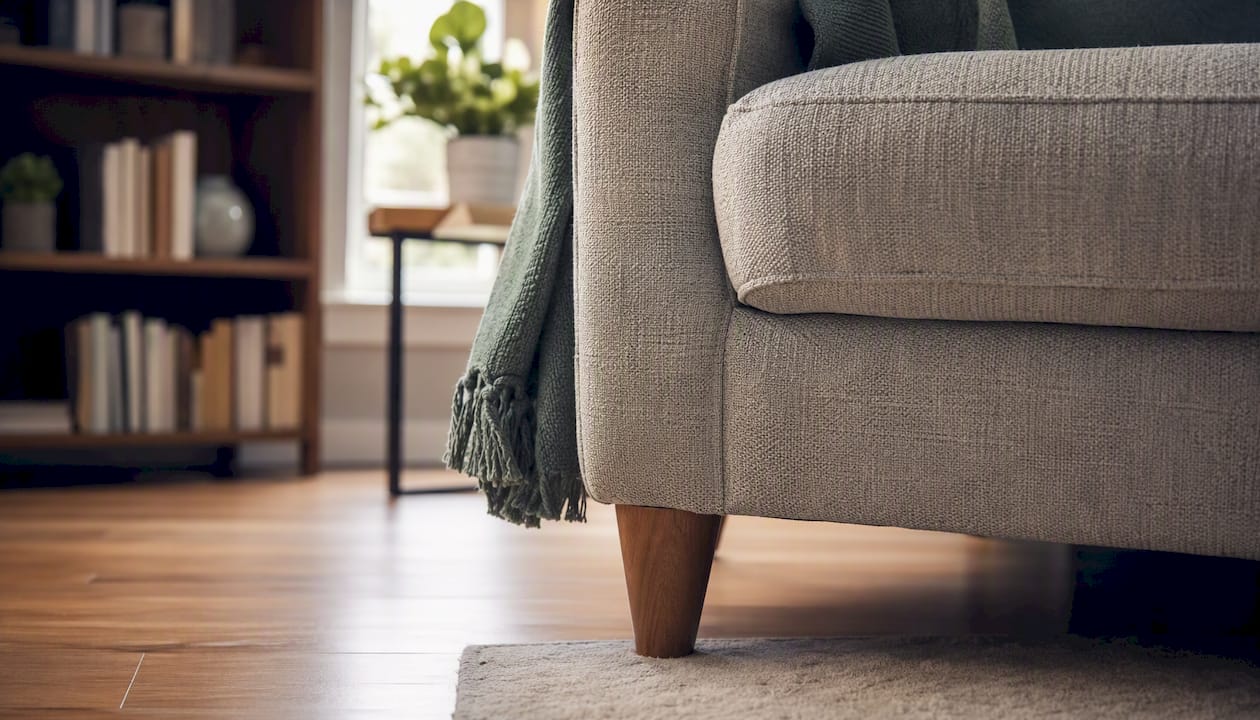
Pro Tip: Reshoot in indirect daylight near a window, not overhead indoor lighting. Shoot from a slightly low angle (camera at seat height for sofas, knee height for tables). This single change in lighting and angle is the most common fix for listings that aren't getting inquiries.
Example listing title format:
[Color] [Material] [Item type] — [Key dimension] — [Condition] — [Pickup/Delivery note]
Example: Gray linen sectional sofa — 110" wide — excellent condition — local pickup or buyer-paid delivery
How to price your furniture and write a listing that converts
Pricing is where most sellers either leave money on the table or price themselves out of the market entirely. Forbes Advisor recommends treating your listing like a storefront with accurate photos, honest descriptions, and a reasonable negotiation buffer above your real floor price.
The pricing formula:
- Find the current retail price of the same or comparable item (check the brand's website or a major retailer).
- Multiply by a fraction between about one quarter and one half depending on condition, with higher fractions for like new or barely used items, moderate fractions for good condition with minor wear, and lower fractions for visible wear or repairs.
- Add a modest negotiation buffer above your target floor price.
- Check local comps: search the same item type in your ZIP code and adjust if your price is considerably above similar listings.
Worked example: A sofa that retailed for $900, in good condition with minor cushion wear. Target floor: $900 × 0.35 = $315. If they offer $250, you hold.
Listing copy template:
- Title: [Color] [Material] [Item] — [Dimension] — [Condition] — [Pickup/Delivery]
- Description fields to include: dimensions (all three), material, age, condition (honest), reason for selling (optional but builds trust), pickup availability, delivery option and who pays, payment methods accepted.
Negotiation: Decide your absolute minimum before the first message arrives. A common response when someone low-balls: "Thanks for your interest. I'm firm at $X, but I can hold it for you through [date] if you'd like to arrange pickup." That's it. No lengthy justification needed.
Storage Hub's local selling guide confirms that listings with accurate descriptions and smart pricing consistently sell faster and attract fewer time-wasters.
Pickup, delivery, and logistics: what to sort out before you list
Logistics surprises kill sales. A buyer who shows up and can't fit the sofa through the door, or who didn't realize they needed a truck, is a lost sale. Sort this out before you post.
Pickup vs. delivery:
- Local pickup only works fine for small items (chairs, side tables, lamps) and buyers with SUVs or trucks.
- For large pieces, Homeshow quoting a buyer-paid delivery price upfront. Sellers who include delivery pricing in the listing convert more buyers because it removes the transportation barrier entirely.
Delivery pricing ranges to quote buyers:
Doorway and access checklist:
- Measure the piece's widest point and compare to your doorway (most interior doors are 32–36 inches wide).
- Note staircase width and any 90-degree turns.
- If the building has an elevator, note the interior dimensions.
- State all of this in the listing: "Sofa disassembles into two sections; each section fits through a 32-inch doorway."
Disassembly: If legs or arms detach, say so. Offer to have tools ready. For very large pieces, mention whether you can assist with loading or whether the buyer should bring a helper.
Pro Tip: Add a line to your listing: "Buyer is responsible for bringing adequate help for loading. I can assist with one person." This sets expectations and prevents the awkward moment where one person shows up expecting you to carry a 200-pound dresser alone.
How to stay safe and get paid without getting scammed
Selling locally is generally safe, but a few basic rules protect you from the most common problems.
Meetup safety checklist:
- Schedule viewings during daylight hours.
- For large items, have a friend or family member present during pickup.
- Confirm the buyer's profile before agreeing to a time (verified ratings and a profile photo are good signs).
- For high-value pieces, consider meeting first in a public place before bringing the buyer to your home.
- Never leave the item unattended with a buyer before payment clears.
Payment policy (paste this into your listing): "Payment accepted: cash or instant digital payment (Zelle, Venmo, or Cash App). Payment must be confirmed before item is released. No checks, no wire transfers, no third-party payment agents."
Common scams and how to avoid them:
- Overpayment scam: A buyer sends a check for more than the asking price and asks you to refund the difference. The check bounces days later. Rule: never accept checks, ever.
- Shipping redirect scam: A "buyer" asks you to ship the item to a third party and offers to pay via PayPal Goods & Services. They file a dispute after receiving it. Rule: local only, in-person handoff.
- Fake payment screenshot: A buyer shows a screenshot of a transfer that never actually went through. Rule: confirm funds in your account or app before releasing the item, not after.
Listing terms that clearly state payment method and pickup responsibilities dramatically reduce low-quality inquiries. Shopify's guide and Storage Hub both recommend spelling out these terms in the listing itself, not just in messages.
When to use consignment or specialty marketplaces for high-value pieces
If your piece is a designer brand, a genuine antique, or something with documented provenance, a general local marketplace may undervalue it. The right buyer for a mid-century credenza or a vintage Knoll chair isn't browsing the same feed as someone looking for a $75 bookshelf.
Decision criteria:
- Value threshold: if the piece is worth $500 or more at retail, a curated channel is worth considering.
- Rarity or design demand: pieces by recognized designers or from notable periods attract buyers who search specifically for them.
- Condition and provenance: original receipts, designer tags, or restoration records increase sale price on curated platforms.
- Logistics: if the piece requires white-glove shipping or professional crating, a consignment service that handles logistics may save you money overall.
Typical commission ranges by service type:
- Consignment store: 40–60% of sale price goes to the store; you receive the remainder.
- Curated vintage/designer marketplace: 20–40% commission, often with better buyer reach and photography support.
- Auction house: seller fees vary; buyers typically pay a 15–25% premium on top of the hammer price.
These are ranges, not guarantees. Actual terms vary by shop, platform, and piece. Always get the commission structure in writing before consigning.
Pro Tip: Gather every piece of documentation you have: original receipt, brand tags, any restoration records, and photos of the piece in its original setting. Consignment shops and curated marketplaces use this to authenticate and market the piece. For extra confidence on high-value items, verifying authenticity before listing can protect both you and the buyer.
Your complete listing checklist and ready-to-use templates
Prep and listing checklist
- Clean all surfaces; tighten loose hardware
- Measure length, width, height, seat depth
- Note doorway/staircase clearance
- Take 6–8 photos in indirect daylight
- Research local comps (same item, same ZIP, similar condition)
- Calculate asking price using the formula above
- Write listing title and description
- State payment method and pickup/delivery terms in the listing
- Post to at least one location-based marketplace; repurpose to a second channel if the item is mid-range or higher
Template A: quick-cash listing (speed-optimized)
Title: Gray fabric sofa — 84" wide — good condition — local pickup or buyer-paid delivery
Description: Selling a gray fabric sofa, 84" wide × 36" deep × 34" tall. Seat height 18". Minor cushion wear on the left armrest (shown in photos). No stains, no pet hair, smoke-free home. Legs detach for easier moving; fits through a 32" doorway.
Cash or Zelle only. Pickup available weekends. Buyer-paid delivery available; message for a quote. First confirmed payment gets it.
Template B: premium listing (margin-optimized)
Title: West Elm Harmony sofa — 96" — like new — original $1,400 — local pickup or white-glove delivery
Description: West Elm Harmony sofa in slate performance fabric. 96" wide × 40" deep × 33" tall, seat depth 24". Purchased March 2023; used in a guest room fewer than a dozen times. No wear, no stains, original legs included. Retail $1,400; asking $560.
Delivery available via white-glove service (buyer pays, ~$300 same-city). Cash, Zelle, or Venmo. Will hold 24 hours for confirmed buyers only. Serious inquiries only, please.
Sample buyer messages
Scheduling pickup: "Hi, the [item] is still available. I'm free Saturday between 10 AM and 2 PM or Sunday afternoon. Does either work for you? Please confirm 30 minutes before arrival."
Accepting an offer: "I can do $[amount]. Send payment via [Zelle/Venmo/cash] at pickup and it's yours. Let me know your preferred day."
Confirming delivery: "Payment confirmed. The item is ready for pickup/delivery on [date]. Please bring [a helper / a truck / nothing, I'll assist]. See you then."
Matching your selling method to the type of furniture you have
The size and category of a piece should drive your channel and logistics decisions, not just your price.
Large sofas and sectionals are the hardest to move and the most likely to stall. The buyer pool shrinks fast when people realize they need a truck and two friends. Listing on a high-volume local marketplace with an explicit buyer-paid delivery option is the best approach. State disassembly options clearly, include the doorway measurement note, and price slightly below comparable listings to compensate for the logistics burden.
Dining tables and chairs sell well as sets but also individually. A set of six chairs with a matching table moves faster together, but if the table is oversized, consider selling the chairs separately at a slightly higher per-unit price. Buyers searching for dining chairs are often replacing broken ones, so individual listings get traction too.
Dressers, wardrobes, and large storage pieces have a narrow buyer pool because of weight and access issues. Lead with the disassembly note and doorway dimensions. These pieces often do better at a slight discount on a local marketplace than sitting in a consignment shop for months.
Small accent pieces (side tables, lamps, ottomans, bar carts) are the easiest to sell. Photos matter most here because the items are small enough that buyers make decisions quickly. List these on a neighborhood platform or local marketplace, price them at the lower end of comps, and expect fast turnover. Bundling two or three small pieces at a slight discount moves inventory faster than listing each separately.
Designer or vintage pieces belong on a curated channel or consignment, as covered above. Don't undercut a genuine mid-century piece by listing it next to $40 IKEA side tables. The right buyer will pay the right price, but only if they can find it on the right platform.
Timing your listing also matters more than most sellers realize. Weekend mornings and the first week of a new month (when people move) consistently generate more buyer activity for furniture.
What we've seen work, and what sellers keep getting wrong
Selling furniture locally looks simple until you're fielding 12 messages from people who never show up. The practical reality is that most failed sales come down to two things: photos that don't show the piece honestly, and prices that don't account for the buyer's logistics cost.
At Marketplaceapp, we see listings succeed when sellers treat the listing like a product page, not a classified ad. That means real dimensions, honest condition notes, and a clear answer to the question every buyer is silently asking: "How do I actually get this home?" Sellers who answer that question in the listing, by quoting a delivery option or confirming the piece fits through a standard door, close faster and with fewer cancellations.
The safety piece is non-negotiable. Cash or instant digital payment, confirmed before the item leaves your hands. No exceptions for "I'll send it tonight" or "my assistant will handle payment." The sellers who get burned are almost always the ones who made one exception to a rule they already knew.
List your furniture on Marketplaceapp and reach local buyers today
Most sellers waste time on platforms that either charge high commissions or attract buyers who aren't serious. Marketplaceapp gives you a sharper alternative: zero commission on local pickup sales, verified buyer ratings so you know who you're dealing with, and location-based search that puts your listing in front of buyers who are actually nearby.
The platform's in-app messaging and secure payment flow mean you're not chasing buyers across text threads or worrying about fake payment screenshots. List your piece in minutes, set your pickup terms, and quote a buyer-paid delivery option directly in the listing to expand your reach beyond buyers with trucks.
Start listing on Marketplaceapp today. The process takes under 15 minutes, fees are transparent, and your listing goes live immediately with location-based visibility to buyers in your area.
Sources
- How to Sell Furniture Online — Shopify
- How to Sell Your Used Furniture Locally & Online | Storage Hub
- Homeshow
- How to Sell Furniture Fast: 7 Tips That Actually Work - Furniture Path
- How to Sell Furniture Online: Step-by-step tips | Forbes Advisor