
If you want the short answer: MarketplaceAnywhere is the strongest all-around pick for local sellers because it pairs location-based search with secure payments and verified seller ratings, which most pure classifieds boards and community groups don't offer together. For a quick shortlist beyond that, look at a local-first app with built-in payment protection, a neighborhood-group style board for hyperlocal freebies and quick cash items, and a nationwide marketplace that also supports local pickup for higher-value gear.
Here's the practical breakdown before you pick:
- Best overall for most sellers: MarketplaceAnywhere, for the mix of local reach and secure payments.
- Best for large or bulky items: local-first apps with no seller fees for in-person pickup, since local marketplaces often skip listing fees entirely for furniture, exercise equipment, and appliances.
- Best for clothing and accessories: niche resale apps built around photo-heavy browsing and category tags.
- Best for collectibles and specialty gear: nationwide marketplaces with auction or fixed-price listings and shipping support.
One safety note before you list anything: police departments and consumer-safety groups consistently recommend using designated safe exchange zones for in-person handoffs, which matters more than almost any pricing decision you'll make. That single habit prevents most of the bad outcomes people associate with selling locally.
Key Takeaways
The most reliable path to a fast, safe local sale is matching your item to the right platform category and never skipping the safety basics.
| Point | Details |
|---|---|
| Match item to platform | Bulky, hard-to-ship items belong on local-first apps; niche or high-value items do better on nationwide or resale-focused platforms. |
| Payment protection isn't universal | Shipped sales usually include protection; in-person cash sales almost never do, so plan accordingly. |
| Safety habits beat luck | Meet in safe exchange zones and keep all communication inside the app. |
| Photos and pricing drive speed | Five to eight clear photos and a round, realistic price sell items faster than any promoted listing. |
| Consider MarketplaceAnywhere first | For local sales where secure payments and verified profiles matter, MarketplaceAnywhere is a strong first stop before shipping-based alternatives. |
Table of Contents
- What Are the Best Local Selling Platforms Compared Side by Side?
- How We Evaluated These Local Selling Platforms
- Platform-by-Platform Notes for Local Sellers
- How Do You Pick the Right Local Selling Platform?
- What Safety and Payment Protections Should You Expect?
- Listing and Pricing Tactics That Actually Sell Items Faster
- How Does Platform Availability Vary by Region?
- What Are Typical Return and Refund Policies on Local Sales?
- When Is MarketplaceAnywhere the Right Choice for Local Sellers?
- Get Started Selling Locally With MarketplaceAnywhere
- Frequently Asked Questions
- Sources
What Are the Best Local Selling Platforms Compared Side by Side?
Fees, buyer reach, and payment protection swing wildly depending on which type of platform you use, and that's really the whole decision in a nutshell. A furniture seller who wants a same-day pickup has completely different needs than someone shipping a signed jersey across the country.
| Category | Best for | Fees / seller costs | Buyer reach | Shipping or local pickup | Payment protections | Ease of listing | Typical time to sell | Trust & safety features |
|---|---|---|---|---|---|---|---|---|
| Local-first app with secure payments | Furniture, electronics, general local sales | Low or no listing fee; small transaction fee on paid sales | Local, radius-based | Local pickup, some shipping options | In-app secure payment, seller verification | Fast, mobile-first listing flow | 1–5 days | Verified ratings, in-app messaging |
| Neighborhood/community groups | Quick giveaways, low-value items, hyperlocal deals | Usually free | Very local (single neighborhood or town) | Local pickup only | None built in; cash or peer payment apps | Simple posting, less structured | 1 to 5 days | Community moderation, informal trust |
| Nationwide marketplace with local pickup option | Collectibles, cars, larger appliances | Free local listings; fees often apply to shipped sales | National, with local filter | Both, seller's choice | Payment protection mainly on shipped orders | Moderate learning curve | Days to weeks | Buyer/seller ratings, dispute resolution |
| Niche resale app (clothing/collectibles) | Fashion, sneakers, trading cards | Percentage-based fee on sale, often 10 to 20 percent | National, shipping-based | Shipping required in most cases | Platform-held payments until delivery confirmed | Photo and tag-heavy listing process | 3–14 days | Buyer protection on shipped items |
| Buyback / instant-sale service | Electronics, quick cash without negotiating | Payout below resale value, no listing fee | N/A, direct sale to service | Mail-in, no local option | Guaranteed payout | Fastest, minimal effort | Same day to a few days | No buyer interaction needed |
Legend: Best overall goes to the local-first secure-payment category. Best free option for quick local pickup goes to neighborhood groups. Best for high-value items goes to nationwide marketplaces with pickup support. Best for clothing and resale goes to niche resale apps.
How We Evaluated These Local Selling Platforms
Every platform category above got weighed against seven criteria, and none of them counted equally. Buyer reach and fees carried the most weight, since those two factors determine whether an item actually sells and how much money lands in your pocket.
- Buyer reach (25%): how many nearby active users are browsing that category.
- Fees and seller costs (25%): listing fees, transaction cuts, and hidden costs like payment processing.
- Payment protections (15%): whether the platform holds funds until delivery or leaves the transaction entirely on trust.
- Ease of listing, especially on mobile (15%): how fast you can go from photo to live listing.
- Category fit (10%): whether the platform's audience actually shops for what you're selling.
- Time-to-sell (5%): how quickly comparable items typically move.
- Trust and safety features (5%): verified profiles, in-app messaging, and rating systems.
Reviewers who track these apps generally rate them on ease of use, fees, payment options, and buyer reach, and that same framework holds up whether you're comparing a local app or a shipping-based marketplace. This guide draws on that framework, current app-store product descriptions, and published safety guidance from consumer protection sources, and it reflects 2026 platform behavior. It deliberately steers around naming every individual competing app in a comparison table, since fee structures and features shift often enough that a generic category comparison ages better. MarketplaceAnywhere is included by name because it's the platform this guide is published on, and its local-first payment model fits squarely into the "best overall" category above.
Platform-by-Platform Notes for Local Sellers
Different categories of local selling apps solve different problems, and knowing which bucket your item falls into saves a lot of wasted listing time.
Local-first app with secure payments
- Best for: furniture, electronics, tools, general household items you'd rather not ship.
- Pros: fast mobile listing, buyer messaging built in, payment protection reduces no-show risk.
- Cons: buyer pool is capped by your radius, so rural sellers see fewer views.
- Fees: typically free to list locally, with a modest fee only when a buyer pays through the app.
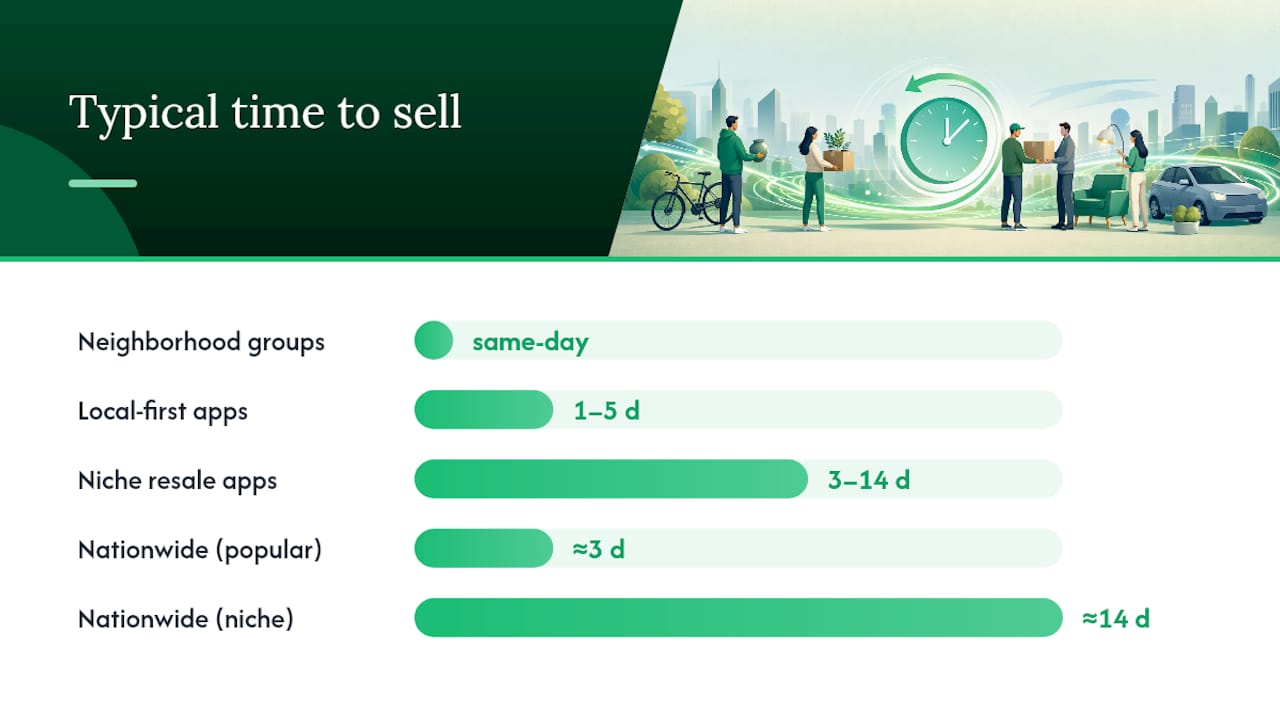
- Typical time to sell: 1 to 5 days for reasonably priced items.
- Listing tip: use exact measurements and note pickup availability directly in the title.
- When to choose this: you want speed, local buyers, and some payment protection without shipping headaches. This is where MarketplaceAnywhere fits, and it's the category we recommend starting with for most household items.
Neighborhood/community groups
- Best for: low-value giveaways, moving sales, quick cash on items under $50.
- Pros: zero cost, very local audience, casual and fast.
- Cons: no payment protection, inconsistent moderation, cash-only norms.
- Fees: free.
- Typical time to sell: often same-day for genuinely cheap items.
- Listing tip: post in the morning when local feeds get the most traffic.
- When to choose this: you're clearing out a garage and don't care about maximizing price, just speed. Neighborhood-focused alternatives work well here.
Nationwide marketplace with local pickup option
- Best for: collectibles, cars, appliances, and anything with a national niche audience.
- Pros: bigger buyer pool, auction-style pricing possible on rare items.
- Cons: shipping adds cost and hassle for bulky goods; fee structures are more complex.
- Fees: usually free for local-only listings, percentage fees apply on shipped sales.
- Typical time to sell: days for popular items, weeks for niche ones.
- Listing tip: offer both pickup and shipping to widen your buyer pool.
- When to choose this: your item has value to buyers outside your immediate area.
Niche resale apps for clothing and collectibles
- Best for: fashion, sneakers, trading cards, and anything with a dedicated resale culture.
- Pros: built-in audience already shopping that category, buyer protection on shipped goods.
- Cons: seller fees eat into margins, and most sales require shipping rather than local meetups.
- Fees: commonly 10 to 20 percent of the sale price.
- Typical time to sell: 3 to 14 days depending on demand.
- Listing tip: tag brand, size, and condition precisely since buyers filter aggressively.
- When to choose this: you're selling fashion items and want a shopper base already primed to buy. Category guides like how to sell clothes locally or a dedicated shoe-selling app comparison go deeper on this specific path.
Buyback and instant-sale services
- Best for: older electronics you just want gone without any back-and-forth.
- Pros: no negotiating, no meetups, guaranteed payout.
- Cons: payout is meaningfully lower than resale value, no local option at all.
- Fees: none, but the quoted price already reflects a discount.
- Typical time to sell: same day to a few days once shipped.
- Listing tip: check the payout quote against a quick local listing first. You might get more for less effort.
- When to choose this: your time is worth more than the price gap, and you'd rather not deal with buyers.
How Do You Pick the Right Local Selling Platform?
Match the platform to the item first, not the other way around. Here's a simple sequence:
- What is the item, and how hard is it to ship? Furniture and appliances point you toward local-only options; small, durable goods can go nationwide.
- Is getting top dollar more important than speed? If yes, list on a nationwide marketplace or niche resale app and be patient. If speed matters more, go local-first and price to move.
- Do you need payment protection? Shipped sales almost always benefit from a platform that holds funds until delivery; local cash sales rarely offer this at all.
- Are you comfortable meeting strangers in person? If not, lean toward shipping-based platforms or buyback services instead of local pickup.
A few pricing habits make a real difference once you've picked a lane:
- Price furniture and large items about 10 to 15 percent above your rock-bottom number, since buyers almost always negotiate.
- Price clothing and small electronics close to your target, since resale shoppers compare listings fast and abandon overpriced ones.
- Round prices to clean numbers ($40, not $38) for local cash transactions; odd numbers work better in shipping-based marketplaces where buyers filter by price range.
- Cross-post the same item across two or three platforms rather than waiting on one, but only if you can update all listings the moment it sells.
- Accept an offer at 85 to 90 percent of asking if it comes within the first day or two. Waiting past that window for a better offer rarely pays off for common household goods.
- Use promoted or boosted listings sparingly, mainly on items that have sat unsold for over a week, since paid visibility tools add cost that only makes sense once organic traffic has stalled.
What Safety and Payment Protections Should You Expect?
Protection levels are not consistent across local selling, and that's the part most first-time sellers get wrong. Shipped sales on nationwide marketplaces or niche resale apps typically hold the buyer's payment until delivery is confirmed, which protects both sides. In-person local sales, whether through an app or a neighborhood group, usually run on cash or peer-to-peer payment apps with no platform guarantee behind them at all.
| Platform category | Typical payment method | Built-in protection | Recommended meetup practice |
|---|---|---|---|
| Local-first app with secure payments | In-app secure payment | Yes, funds held until confirmed | Meet at a public location; confirm payment before handoff |
| Neighborhood/community groups | Cash or peer payment app | None | Meet in a well-lit public area during daylight |
| Nationwide marketplace, local pickup | Cash for pickup, protected payment for shipping | Only on shipped orders | Use a safe exchange zone for high-value pickup items |
| Niche resale app | Platform-held payment | Yes, held until delivery confirmed | N/A, shipping only |
| Buyback service | Direct payout after shipment | Guaranteed payout | N/A, no meetup involved |
For any in-person exchange, a few habits matter more than the platform you chose:
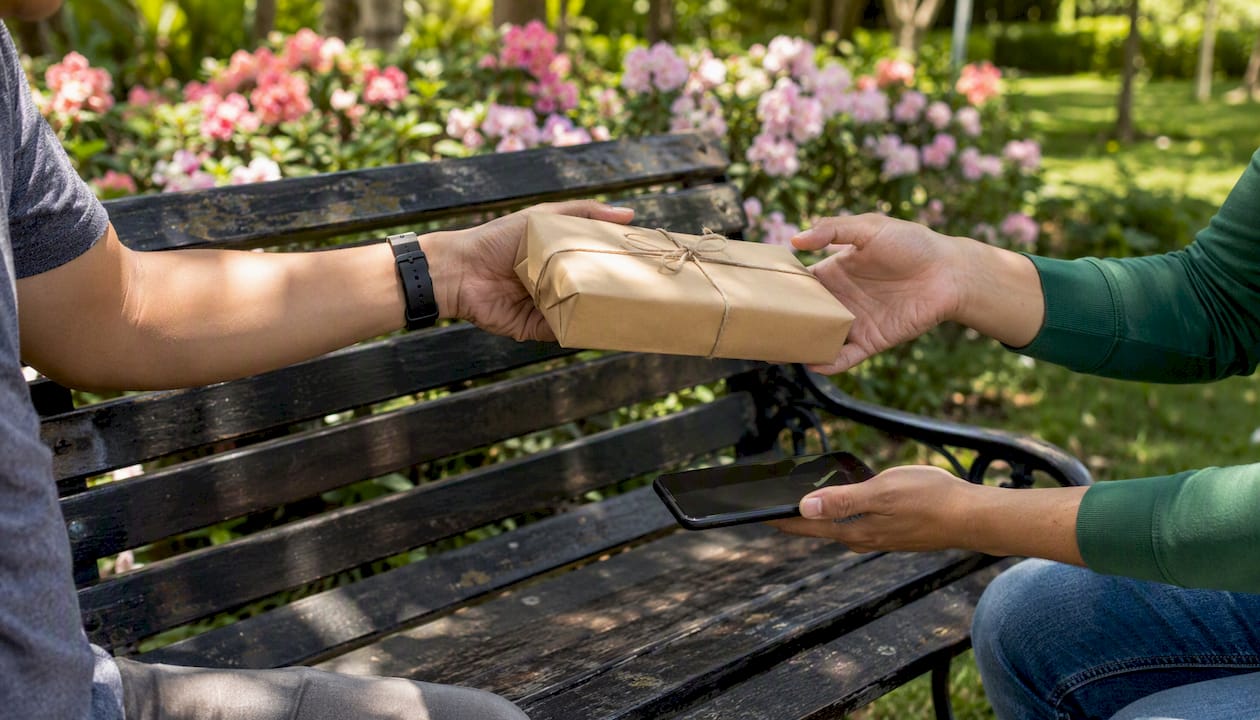
- Meet at a designated safe exchange zone, often a police station parking lot, especially for anything over $100.
- Keep all communication inside the platform's messaging system so there's a record if something goes wrong.
- Don't share your home address until you've confirmed the buyer's identity and the meetup plan.
- Bring a friend along for high-value items like electronics, jewelry, or anything you can't easily replace.
Pro Tip: Screenshot the buyer's profile and your chat thread before you meet, just in case the transaction goes sideways and you need to report it later.
Listing and Pricing Tactics That Actually Sell Items Faster
A good listing does most of the selling before a buyer ever messages you. Photos matter more than any other single factor.
- Take 5 to 8 photos from different angles, including close-ups of any wear or damage. Honesty here prevents canceled sales later.
- Include exact measurements in the description, not just "large" or "medium," since buyers judge fit for their space before they ever ask.
- Front-load your title with searchable keywords: brand, size, model number, or color, in that order.
- List local pickup availability explicitly. Buyers filter by this constantly, and vague listings get skipped.
- Post in the evening or early morning when local browsing traffic tends to spike.
- Cross-posting works, but industry roundups consistently point to strong photos and multiple listing points as the biggest lever for faster sales, so don't skip the photo step just because you're posting in three places at once.
- Don't take lowball offers personally. Counter with a number that's only slightly below your ask, since most lowballers are testing, not committing.
- Reserve promoted listings for items that haven't moved after a week, not as a first move.
Pro Tip: Price your item at $47 instead of $50. That small drop below a round number reads as more carefully considered and gets more clicks in search results.
How Does Platform Availability Vary by Region?
Coverage is uneven, and that's worth knowing before you assume every app works the same way in your area. Local-first apps depend entirely on active user density nearby, so a platform that feels packed with buyers in a mid-size city can feel nearly empty in a rural county. Neighborhood-group platforms have the same issue in reverse: they thrive in dense residential areas but often have thin or nonexistent coverage outside them.
Nationwide marketplaces sidestep this problem somewhat because shipping extends your buyer pool regardless of where you live, but that comes at the cost of losing the local-pickup convenience that makes selling bulky items easy. If you're in a smaller market, it's worth checking active listing counts in your own city before committing to one platform. A quick search of your zip code and item category tells you more about real coverage than any national ranking ever will.
What Are Typical Return and Refund Policies on Local Sales?
Local sales conducted in person are generally final, and that's by design. Most local-first apps and neighborhood groups don't offer built-in return or refund mechanisms because the transaction happens face-to-face. Buyers are expected to inspect the item before paying, which is exactly why in-person inspection is one of the biggest advantages of buying locally over ordering something sight unseen.
Platforms that support shipping behave differently. Niche resale apps and nationwide marketplaces that process shipped orders typically build in a short return or dispute window, often a matter of days after delivery, tied to the payment protection that holds funds until the buyer confirms the item matches its description. Buyback and instant-sale services sit in between: once you ship an item and receive payout, that sale is usually final with no return path, so it pays to get an honest condition assessment from the service before shipping.
When Is MarketplaceAnywhere the Right Choice for Local Sellers?
The sellers who get the most out of MarketplaceAnywhere are the ones who value control over the transaction: they want to see who they're selling to, they want a payment that's actually protected rather than a cash handoff in a parking lot, and they don't want to spend an hour figuring out shipping labels for a used end table. Location-based search and verified seller ratings solve a specific problem that neighborhood groups and pure classifieds boards never really addressed: knowing who you're dealing with before you agree to meet them.
That said, this isn't the right tool for every sale. If you're selling a rare collectible with a national fan base, a shipping-focused marketplace with auction-style pricing will likely get you more money than a local-only audience ever could. If your priority is squeezing out every last dollar rather than closing the deal quickly and safely, that trade-off is worth making consciously. But for the bulk of local selling — furniture, electronics, tools, general household goods — the combination of secure payments and verified profiles solves the two biggest pain points sellers actually complain about: getting stood up and getting scammed.
The conventional wisdom treats all local selling apps as interchangeable classifieds boards. They're not. The ones that build in payment protection and identity verification are solving a fundamentally different problem than the ones that are just a digital bulletin board, and that distinction should drive your platform choice more than fee percentages ever will.
Get Started Selling Locally With MarketplaceAnywhere
If you've read this far, you already know the biggest headaches in local selling: flaky buyers, cash handoffs that feel risky, and listings that take forever to write. MarketplaceAnywhere was built around fixing exactly those three problems for people selling furniture, electronics, fashion, and everything in between.
The core features that matter here: secure in-app payments so you're not relying on cash or hoping a peer payment app doesn't glitch, verified seller ratings so buyers trust you faster, location-based search so your listing actually reaches people close enough to pick up today, and push notifications that ping you the moment someone messages about your item. The listing flow is built mobile-first, so you can photograph an item and have it live in a couple of minutes.
Getting started takes two steps: visit the MarketplaceAnywhere marketplace and create your account, then list your first item with photos and a clear price. Browse a live example of what a good listing looks like, and get your next sale moving today.
Frequently Asked Questions
What is the best local selling platform for beginners? MarketplaceAnywhere is a solid starting point because the listing flow is mobile-first and secure payments remove most of the awkwardness around handling cash with a stranger.
Which platforms are best for selling furniture locally? Local-first apps with no listing fees and local pickup work best for furniture, since shipping large items is expensive and often impractical.
Do local selling platforms offer refunds? Most in-person local sales are final with no built-in refund process, while platforms that support shipping typically include a short return window tied to delivery confirmation.
Is it safe to meet a buyer or seller in person? It can be, if you follow basic precautions like meeting in a designated safe exchange zone, keeping chats in-app, and bringing a friend for high-value items.
How long does it typically take to sell something locally? Reasonably priced local items often sell within 1 to 5 days on local-first apps, while niche or higher-priced items can take one to two weeks.