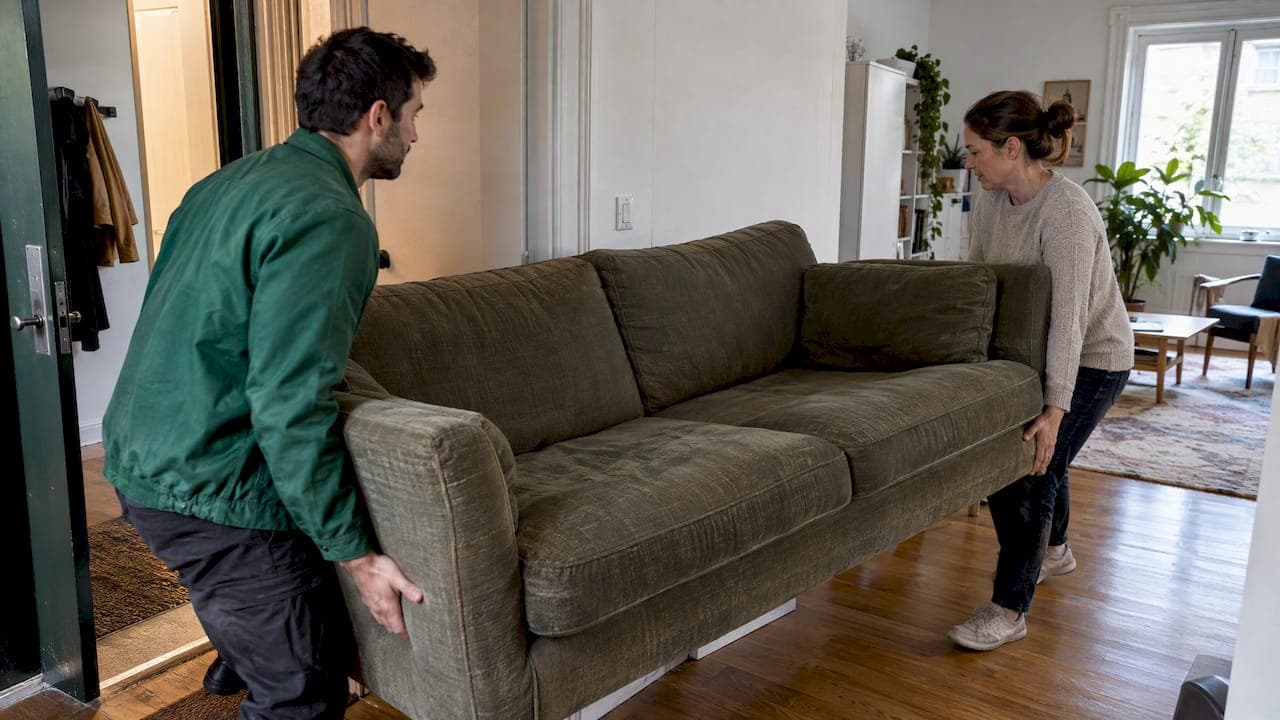
Pickup usually wins when you're nearby, the item is small enough to inspect and carry, and you have a vehicle ready to go. Local delivery usually wins when the item is bulky, fragile, or you lack transport, or when you need the seller's help moving something heavy. Either way, compare the full payable total and the promised time window, not just a label like "free delivery."
TL;DR:
- Some free delivery offers require a minimum purchase or a tight delivery radius, while paid service may add flat or per mile fees.
- Store pickup allows inspection before payment, curbside pickup limits inspection, and parcel shipping uses national carriers rather than a single local trip.
- A package marked with your local courier is near your address, but it may not arrive today; check tracking and service details.
- For pickup, meet in a bright public place, verify the seller’s identity, use traceable payment, and photograph the item’s condition before completing the exchange.
Table of Contents
- Pickup vs delivery at a glance
- What "pickup" and "local delivery" actually mean
- The four fulfillment formats you'll actually encounter
- Comparing the real cost and time tradeoffs
- What tracking statuses and carrier restrictions really mean
- A step-by-step checklist for choosing pickup or delivery
- Inspecting, loading, and handling returns after the handoff
- Why we support both pickup and local delivery
- List, schedule, and close your sale with Marketplaceapp
- FAQ
- Sources
Pickup vs delivery at a glance
The fastest way to decide is to match your situation against who does the final trip and who handles the heavy lifting.
- Last-mile trip: with pickup, you travel to the seller or store; with delivery, the seller or a courier comes to you.
- Loading and inspection: pickup lets you check the item on the spot before paying; delivery usually means inspecting after handoff.
- Speed: pickup can often happen same-day if both parties are available; delivery depends on scheduling, distance, and vehicle capacity.
- Cost to compare: pickup trades your gas and time for a lower or zero fee; delivery may add a flat fee or a per-mile charge.
- Best-fit items: small electronics, clothing, and collectibles suit pickup; furniture, appliances, and anything too heavy to carry alone often suit delivery.
Neither option is free. Pickup shifts cost onto your schedule and vehicle, while delivery shifts it onto a fee or a longer wait.
What "pickup" and "local delivery" actually mean
In plain consumer terms, pickup means you collect the item yourself from the seller, a store, or a designated location. Local delivery means someone, whether the seller, a courier, or a delivery driver, brings the item to your address within a limited geographic area.
Logistics researchers use the phrase more broadly. According to academic routing literature, "pickup and delivery" can describe four distinct planning problems: delivery-only, pickup-only, combined pickup-and-delivery, and paired origin-to-destination routing. These are scheduling categories for route planners, not labels you'll see at checkout.
In a typical marketplace sale, pickup might mean you drive to a seller's home to collect a bike, while delivery might mean a seller agrees to drop off a couch on their way across town. Same transaction type, two different handoffs.
The four fulfillment formats you'll actually encounter
Most local transactions fall into one of four formats, a classification that recent research on local selling treats as practical rather than fixed, since sellers sometimes use different names for the same setup.
- In-store pickup: you collect the item inside a store or from the seller's home, and you typically inspect it before paying.
- Curbside pickup: a seller or staff member brings the item to your car, cutting contact time but limiting your chance to inspect closely.
- Local delivery: the seller or a local courier drives the item to your address, usually within a defined radius and a scheduled window.
- Parcel shipping: the item travels through a national carrier network rather than a single local trip, adding tracking steps but removing distance limits.
Each format shifts responsibility differently. In-store and curbside both put scheduling in the seller's hands, while delivery requires both sides to agree on a time and address.
Comparing the real cost and time tradeoffs
A listing that says "free delivery" can still cost you more than pickup once you count what's missing from the sticker price. Before choosing, line up these factors side by side.
- Direct fees: delivery charges, service fees, or platform fees tied to the transaction.
- Indirect costs: your gas, parking, and the time spent driving to collect the item yourself.
- Opportunity cost: how much a delayed delivery window costs you if you need the item sooner.
- Hidden eligibility rules: some "free delivery" offers apply only above a minimum purchase or within a tight radius.
The INFORMS 2026 study on local selling notes that offering both pickup and seller-delivery changes how sellers compete, but it does not guarantee you a lower price just because delivery is offered. Fulfillment choice and price are separate things.
Paying extra for delivery tends to make sense when the item is too large for your vehicle, when you don't drive, or when the time saved is worth more to you than the fee.

Pro Tip: Always compare the final total in your cart, not the advertised price, since delivery fees and minimums can change which option is actually cheaper.
What tracking statuses and carrier restrictions really mean
Seeing "with your local courier" means your package has reached the delivery network near your address and been assigned to a driver. It does not guarantee same-day drop-off, since the exact timing depends on the carrier and service level, according to USPS tracking guidance.
A "local delivery restriction" notice is more specific and usually ties to one shipment rather than a blanket rule. Per FedEx customer support guidance, causes include the destination address, package characteristics, the service level purchased, capacity limits, or regulated contents.
- Check the carrier's tracking page for the specific reason code attached to your shipment.
- Contact the shipper or seller if the tracking page doesn't explain the restriction.
- Confirm your delivery address and the service level match what you ordered.
A step-by-step checklist for choosing pickup or delivery
Run through these questions before confirming your order, especially for larger or local peer-to-peer purchases.
- Distance and transport: can you get to the seller's location with a vehicle big enough for the item?
- Size, weight, and fragility: will the item fit safely in your car, or does it need two people and a truck?
- Urgency: do you need it today, or can you wait for a scheduled delivery window?
- Total cost: have you compared the final payable price for both pickup and delivery, including your own time and gas?
For in-person pickups, safety matters as much as logistics. Our 5 Point Local Pickup Safety Checklist covers the essentials:
- Meet in a public, well-lit location whenever possible.
- Verify the other party's identity before the exchange.
- Bring a friend or let someone know your meeting details.
- Use a traceable payment method rather than cash when you can.
- Document the item's condition with photos at the handoff.
Pairing this checklist with the practical questions above covers both the logistics and the safety side of the decision.
Inspecting, loading, and handling returns after the handoff
Whether you picked up or received a delivery, inspect the item before the transaction is final. For electronics, power it on, check the serial number, and take photos. For furniture or appliances, check for damage and confirm it matches the listing before the seller leaves.
- Agree in advance on who helps load heavy items and exactly where the handoff happens.
- Photograph any damage immediately and note it in your messages with the seller.
- Follow local returns guidance to arrange a refund or exchange if the item doesn't match the listing.
Sellers who want fewer disputes often benefit from clear local visibility and expectations set before the meetup; some sellers use tactics from local SEO playbooks to describe pickup logistics clearly in their listings, which reduces confusion at the door. Reviewing basic marketplace etiquette beforehand also helps both sides agree on timing and expectations without friction.
Why we support both pickup and local delivery
We built our platform around flexibility because no single fulfillment method fits every sale. A buyer picking up a bookshelf has different needs than one receiving a delivered mattress, and sellers need options that match their own schedules and vehicles.
Features like verified seller ratings, chat, notifications, and location-based search help both sides agree on logistics before they ever meet. Combined with safety checklists and scheduling tools, these features make either choice easier to execute with confidence.
— Marketplace
List, schedule, and close your sale with Marketplaceapp
We make it straightforward to arrange pickup or delivery for the same listing, whether you're buying a used bike or selling a couch. Secure payments, verified sellers, and in-app chat keep the back-and-forth in one place, and our scheduling tools help you lock in a time that works for both sides.
| Feature | What it does for you |
|---|---|
| Seller ratings | Helps you judge trustworthiness before you meet or pay |
| Chat and scheduling | Keeps pickup or delivery details organized in one thread |
| Secure payments | Reduces the need for cash-only handoffs |
| Safety checklist | Gives pickup buyers a clear pre-meeting routine |
Browse local listings across electronics, fashion, vehicles, and more to find your next pickup or delivery deal, or post your own item today.
FAQ
What does "pickup and delivery" mean?
In consumer terms, pickup means you collect an item yourself, while delivery means someone brings it to your address. In logistics planning, the same phrase can also describe combined routing problems where a vehicle handles both pickup and drop-off stops, according to academic routing literature.
What are the four types of delivery?
The four common consumer fulfillment formats are in-store pickup, curbside pickup, local delivery, and parcel shipping, a grouping used in recent research on local selling. Sellers sometimes use different names for these, such as click-and-collect, but the underlying handoff types stay the same.
Why does FedEx say local delivery restrictions?
A "local delivery restriction" message is tied to the specific shipment and can stem from the destination address, package characteristics, the service level chosen, capacity limits, or regulated contents, per FedEx customer support guidance. Checking the shipment's tracking details or contacting the shipper confirms the exact cause.
What does it mean when my package is with my local courier?
This status usually means the package has reached the delivery network near your address and been handed to a local operator, based on USPS pickup and tracking guidance. It does not guarantee same-day delivery, since timing depends on the carrier and the service level selected.
How do I schedule a USPS pickup for a local sale?
You can schedule a free pickup during regular delivery hours or request a paid Pickup On Demand, with scheduling available up to six months ahead according to USPS scheduling steps. Eligibility for free pickup depends on the item type, so check the request form before confirming a time.
Sources
- Information Systems Research (2026) — omnichannel/local selling study
- Springer logistics literature (pickup-and-delivery routing distinctions)
- FedEx customer support guidance