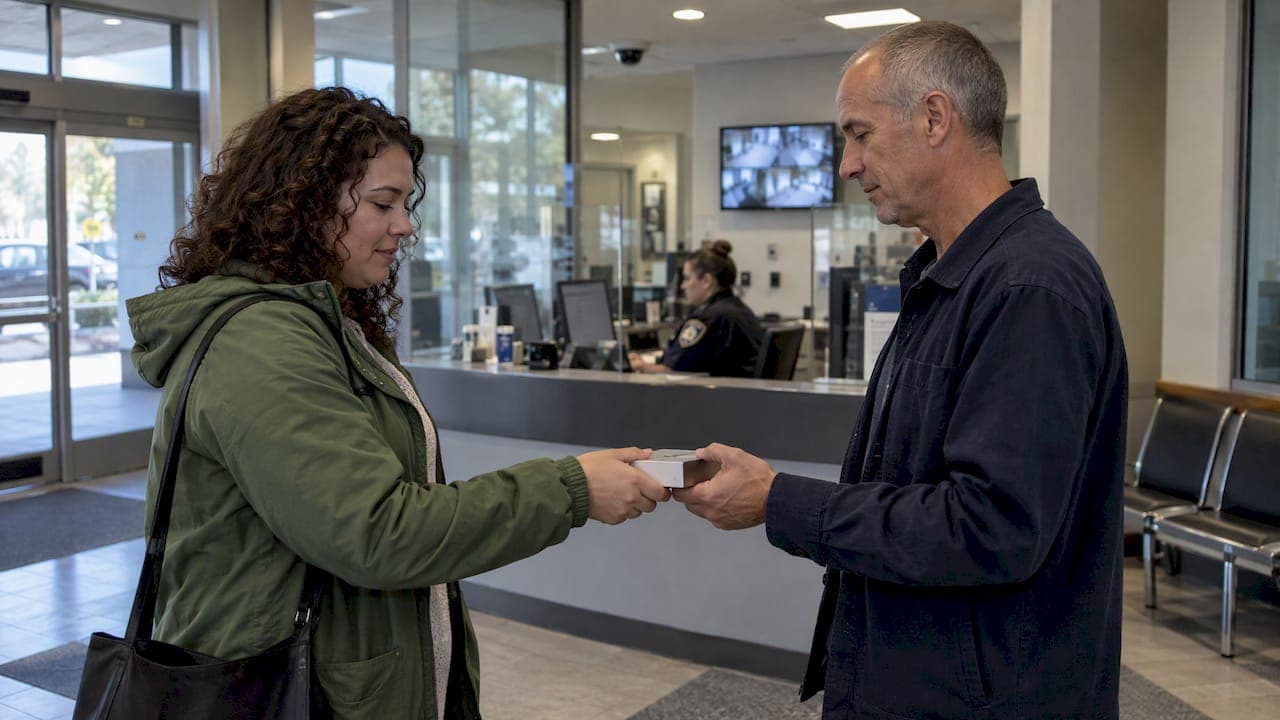
The safest place to meet for an online sale is a police-run safe exchange zone, where a marked, camera-monitored parking spot or lobby gives you a neutral, recorded setting. When one isn't nearby, a busy retail entrance or a staffed coffee shop during daylight is the next best choice. Avoid private homes, secluded lots, and any spot the other party suggests behind closed doors.
TL;DR:
- When no exchange zone is available, choose busy, well-lit public venues like retail entrances or staffed cafes during daytime hours.
- Confirm the seller's profile, agree on a specific time at a public spot, and share the plan with a trusted contact before the meetup.
- Use traceable payment methods such as credit cards or marketplace apps, and test electronics immediately to verify item condition.
- Avoid secluded, private, or empty parking lots, and watch for red flags like pressure to rush or inconsistent stories during the deal.
Table of Contents
- What official safe exchange zones are and what they provide
- Other safe public meetup options and tradeoffs
- Practical checklist: arranging the meetup and what to bring
- Red flags and immediate actions if something feels wrong
- MarketplaceAnywhere scheduling and etiquette: templates and verification tips
- Using exchange zones for custody exchanges
- Assessing parking lot safety and lighting
- Guidelines for technology use during meetups
- Considerations for international or long-distance meetups
- Legal considerations tied to meetup locations
- Why police exchange zones matter
- How MarketplaceAnywhere helps you arrange safer local trades
- FAQ
- Sources
What official safe exchange zones are and what they provide
A police safe exchange zone is a designated space, usually just outside a police station, set aside for person-to-person transactions and custody handoffs. According to the Fremont Police Department, these zones are typically well-lit parking spaces or lobbies monitored by cameras specifically for online marketplace meetups and similar exchanges.
Most departments run their parking areas continuously, while lobby access often follows regular business hours, so it's worth checking before you plan an evening meetup; for more on official protections and spotting red flags when using marketplaces, see how to avoid scams on Wallapop and Vinted. Officers generally don't step outside to witness or mediate the actual exchange. Their role is passive: the cameras, signage, and proximity to a police building do the work of discouraging bad behavior.
Most exchange zones operate under continuous video surveillance and explicitly ban illegal items on-site, which Fremont's program states directly. That combination of recorded footage and a public, monitored setting is what makes these zones effective even without an officer standing beside you.
Before you go, know what to expect:
- Marked parking spots or lobby areas set aside specifically for transactions
- Camera coverage that runs around the clock in most parking zones
- No officer involvement in pricing disputes, returns, or civil disagreements
- A strict ban on drugs, weapons, and other illegal items at the location
Other safe public meetup options and tradeoffs
When there's no exchange zone nearby, pick a location that's busy, visible, and hard to avoid being seen in. A crowded retail entrance, a staffed coffee shop, a library lobby, or a municipal building with front-desk clerks and cameras all work well because strangers rarely act out in front of witnesses.
The right venue depends on what you're trading. Small, high-value items like phones, jewelry, or collectibles are best handled indoors, where you can sit down, inspect the item calmly, and complete payment without rushing. Bulky items like furniture or appliances usually need a parking lot, so look for one attached to a busy store rather than an empty strip mall.
Steer clear of:
- Secluded parking lots with no foot traffic or nearby businesses
- Freeway on-ramps, rest stops, or other locations chosen for "convenience" to the seller
- Private residences, yours or theirs, even for a "quick five minutes"
- Locations suggested only after you've already agreed on a different public spot
If someone keeps steering the conversation toward a quieter location, treat that as a signal to slow down rather than a scheduling detail.
Practical checklist: arranging the meetup and what to bring
A little structure before you leave the house prevents most problems. Follow these steps in order:
- Confirm the other person's profile, photo, and reviews before agreeing to meet.
- Suggest a police exchange zone or a busy public venue, and name a specific time during daylight hours.
- Share your plan with a friend or family member, including the address and expected return time.
- Bring a fully charged phone and, where possible, a friend along for the exchange.
- Inspect the item in person: test electronics, check for damage, and compare any serial numbers to the listing.
- Pay using a traceable method such as a card or your marketplace app's built-in payment system.
- Confirm the transaction is complete before you part ways, and leave a review if the platform supports one.
On payment, the FTC's consumer guidance recommends credit cards or marketplace payment systems over gift cards, wire transfers, or cryptocurrency, since the latter offer little recourse if something goes wrong. A card payment or an escrow-style app transfer gives you a paper trail and a dispute process; cash works for small, in-person buys but leaves no record if a dispute follows.
Pro Tip: Test electronics on the spot by powering them on, checking the charging port, and running a quick call or app test before handing over payment.
Red flags and immediate actions if something feels wrong
Certain behaviors should make you pause before going any further. A refusal to meet in public or at an exchange zone is one of the clearest, since the Montgomery, Ohio police department treats that refusal as a practical warning sign. Pressure to rush the deal, unusual payment requests, or a story that keeps changing are others.
If you notice any of these, trust your instinct:
- Leave the area immediately if you feel unsafe, even mid-transaction.
- Screenshot the listing, every message, and any payment confirmation before you go.
- Note the other person's vehicle, plate number, and physical description if you can do so safely.
- Call 911 for an immediate threat; file a non-emergency report for fraud or a no-show after the fact.
Preserving this information, as Fremont's exchange zone program notes, materially helps police act on a report later.
MarketplaceAnywhere scheduling and etiquette: templates and verification tips
A short, firm message sets the tone before you even leave the house. For a first inquiry, try: "Hi, I'm interested in the item. Would you be open to meeting at a police safe exchange zone or a busy coffee shop near you this weekend?" For confirmation, something like: "Great, let's meet Saturday at 2 PM at [exchange zone address]. I'll be driving a blue sedan and will text when I arrive" keeps things specific and accountable.
Before you commit to a time, verify who you're dealing with:
- Check the seller's profile age, photo, and review history.
- Ask for one or two extra photos of the item from different angles.
- Compare any visible serial numbers against the listing description.
- Watch for a profile with no history or reviews that seem copied from elsewhere.
Our meetup scheduling tips page has more message templates, our local marketplace etiquette guide covers tone and timing, and our item authenticity checks walk through serial number and photo verification in more depth.
Using exchange zones for custody exchanges
Police exchange zones aren't built only for marketplace sales. Many departments designate the same monitored parking spots and lobbies for child custody handoffs, since a neutral, recorded setting tends to de-escalate tension between parents. The Murfreesboro Police Department notes that the combination of a public location and camera coverage helps reduce conflict during custody transfers.
Community guidance generally treats custody exchanges and marketplace meetups the same way: pick a time when the lobby or lot is staffed or well lit, arrive a few minutes early, and keep the interaction brief and businesslike. Some family courts even reference these zones directly in parenting plans, naming a specific police department location as the agreed handoff point.
If your family situation involves ongoing tension, ask the department directly whether their zone is listed as a recommended custody location, since not every city's program is set up with that use in mind. The same signage, cameras, and proximity to officers that deter scammers also tend to keep custody handoffs calm and documented, which matters if a dispute over timing or behavior comes up later.

Assessing parking lot safety and lighting
Not every public parking lot is equally safe, even during the day. Look for a lot attached to an active business with regular foot traffic, rather than one that sits empty behind a closed storefront. Overhead lighting matters more than most people expect: a lot with working lights, visible from the street, discourages the kind of behavior that thrives in shadowed corners.
Check a few things before agreeing to a specific spot:
- Is the lot visible from a main road, or tucked behind a building?
- Are there working light poles, and are they close to where you'll actually park?
- Does the lot have security cameras on nearby buildings, even if not the lot itself?
- Is there a staffed entrance or front desk within sight?
A lot that checks all four boxes during the day can look very different after sunset, so if your meetup might run late, reconsider the timing rather than the location.
Guidelines for technology use during meetups
Simple technology can add a real layer of protection without much effort. Sharing your live location with a friend or family member through your phone's built-in sharing feature means someone else knows exactly where you are for the duration of the meetup. Many phones support this natively, so there's no need to download a separate safety app unless you prefer one.
A few habits are worth building into every meetup:
- Turn on live location sharing before you leave and turn it off once you're home.
- Keep your phone charged and easily reachable, not buried in a bag.
- Save the other party's phone number and listing link somewhere outside the marketplace app in case the conversation disappears.
- Avoid posting photos with visible location metadata when you first list an item, since stripping that data keeps your home address or regular haunts out of public view.
None of this replaces picking a good location, but it gives a second line of defense if something does go wrong.
Considerations for international or long-distance meetups
Local, in-person exchange zones work well for nearby transactions, but they don't translate easily across borders or long distances. If a buyer or seller is in another country, meeting in person usually isn't practical, and the safety calculus shifts toward verifying identity and using traceable payment rather than picking a physical venue.
For long-distance deals, lean more heavily on your marketplace's built-in messaging and payment protections rather than arranging any in-person handoff. The FTC's guidance on marketplace purchases applies here too: use a payment method that offers dispute resolution, and be wary of any request to wire money or send a prepaid card internationally. Shipping with tracking and requiring payment through the platform itself reduces the risk that either side disappears after money or goods change hands.
If a seller or buyer insists on meeting partway between two distant cities at an unfamiliar location, treat that as a bigger warning sign than it would be for a local sale. Long travel combined with an unfamiliar venue strips away most of the advantages a local safe exchange zone normally provides.
Legal considerations tied to meetup locations
Choosing a meetup spot isn't just about personal safety. It can carry legal weight too. The FTC's INFORM Consumers Act increases transparency requirements for online marketplaces specifically to deter the sale of stolen or counterfeit goods, and it allows for civil penalties when platforms or sellers violate those reporting rules. That's a reminder that what you're selling, and how you document the sale, matters beyond the handoff itself.

Meeting at a police-affiliated exchange zone doesn't make a transaction legal if the item itself is stolen or prohibited, and officers at these zones generally won't offer legal advice or settle a civil dispute over a bad sale. If you're exchanging high-value items like vehicles or electronics, keep a receipt, a copy of the listing, and proof of payment in case ownership or condition is disputed later. For custody exchanges specifically, confirm with your family court or attorney whether a given location satisfies any court-ordered handoff terms before relying on it.
Why police exchange zones matter
Police exchange zones work because they move risk off your shoulders and onto a visible, recorded, institutional backdrop. That shift matters more than any single precaution you can take alone.
If your city doesn't have one, that's worth raising with your local police department directly. A short email or call asking them to designate a monitored lobby or lot costs little and can give an entire community a safer default for local trades.
— Marketplace
How MarketplaceAnywhere helps you arrange safer local trades
We include features such as verified seller ratings, in-app messaging, and safety guidance to help you arrange meetups more securely. Every listing lets you check a seller's history before you ever agree on a time or place, and our in-app chat keeps your phone number private until you decide to share it.
| What you get | Why it matters |
|---|---|
| Verified seller ratings | Lets you check a track record before agreeing to meet |
| In-app messaging | Keeps contact details private until you choose to share them |
| Safety guidance library | Walks through exchange zones, scheduling, and red flags |
When you list an item, you are encouraged to suggest a public or police safe exchange zone as the meeting point, alongside the chat thread. Start listing or browsing at MarketplaceAnywhere and bring that extra layer of verification into your next local trade.
FAQ
Where is a safe place to meet for a Craigslist sale?
A police safe exchange zone, where one exists, or a busy public venue like a staffed retail entrance or coffee shop during daylight hours works well for a Craigslist sale. The Fremont Police Department's exchange zone program describes these monitored lots and lobbies as purpose-built for exactly this kind of transaction.
Where is a safe place to meet for a Facebook Marketplace sale?
The same guidance applies: a police exchange zone is the top choice, followed by a busy retail or coffee shop location in daylight. Facebook Marketplace doesn't run its own physical locations, so buyers and sellers rely on the same public venues and department-run zones recommended for any local online sale.
Can you meet at a police station for a Facebook Marketplace sale?
Yes, many police departments welcome marketplace meetups in their parking lot or lobby, and some have marked spots specifically for this purpose. The Montgomery, Ohio police department encourages public, well-lit meeting spots, and a station lot fits that description well.
Do police stations have exchange zones?
Many, though not all, police departments designate a specific exchange zone with marked parking or lobby access and camera coverage, as seen in programs run by departments like Fremont. Availability and hours vary by city, so it's worth checking your local department's website or calling ahead before you plan a meetup around one.
Sources
- Exchange Zone | Fremont Police Department
- Safe zone for online purchases — Montgomery, OH
- INFORM Consumers Act — FTC
- Buying From an Online Marketplace — FTC Consumer Advice