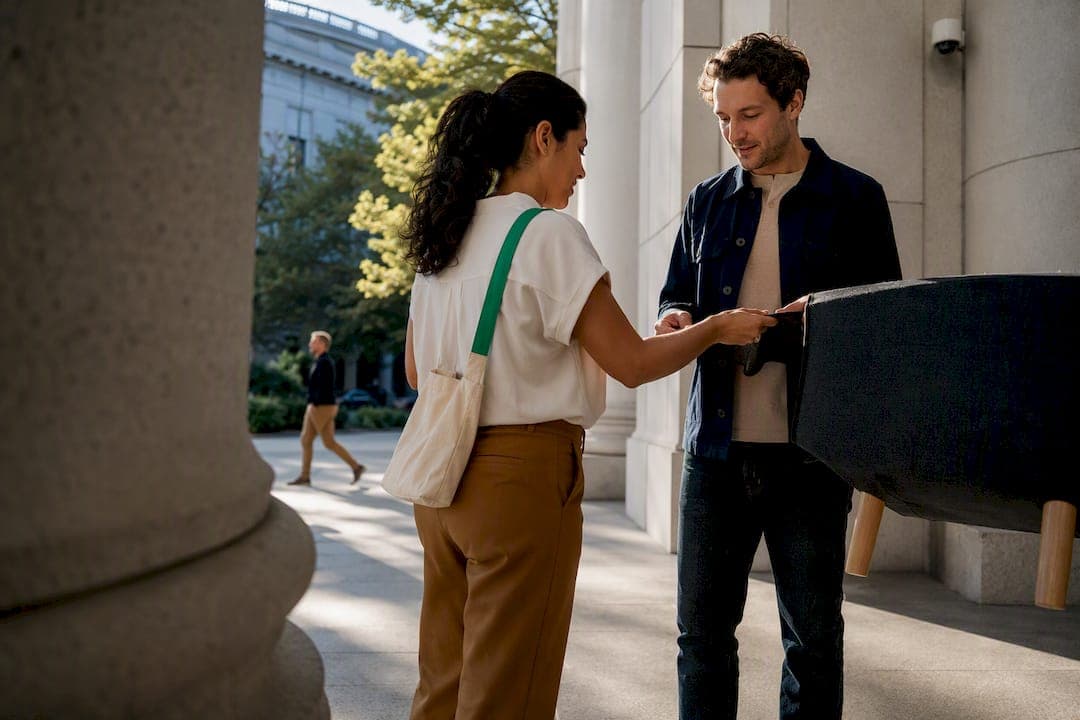
Insist on meeting locally, in a public, well-lit place, and never send money before you have inspected the item in person. Use cash for small local deals or a platform's verified payment tools, and walk away the moment someone offers to overpay, asks you to move off the app, or pushes an unusual payment method. That one habit, verify in person before you pay, prevents most classified ad scams before they start.
TL;DR:
- Meeting in a public, well-lit place with cameras or witnesses is essential, especially locations with foot traffic or outside police stations.
- Always inspect items thoroughly, test electronics, check serial numbers, and verify prices against similar listings before paying.
- Watch out for fake check scams, pressure to ship before payment clears, impersonation, and offers requesting remote reshipping or gift cards.
- Limit transactions to cash or platform-verified payment tools, and avoid long-distance deals or moving off-platform messaging to prevent fraud.
- Act quickly by saving evidence, reporting to your bank and the FTC, and filing police reports if you suspect scam involvement.
Table of Contents
- Meeting up safely: in-person rules that actually work
- Writing and vetting listings to lower your risk
- Common classified ad scams and the red flags to watch for
- High-risk secondhand items and how to check for recalls
- Safe payment options and the red flags that signal fraud
- What to do the moment you suspect a scam
- Where to report scams and get authoritative help
- How MarketplaceAnywhere builds safety into everyday listings
- Why consistent habits matter more than clever detection
- A safer way to buy and sell nearby
- Sources
- FAQ
Meeting up safely: in-person rules that actually work
Local transactions carry real risk because you are meeting someone you have only spoken to through text or chat. Police departments that track classified ad complaints recommend meeting in a public, well-lit space, ideally somewhere with foot traffic and security cameras, such as a bank lobby, a busy coffee shop, or a designated exchange spot outside a police station. These locations discourage bad actors and give you witnesses if something goes wrong.
Bringing a friend is not overkill, it is a basic precaution that costs nothing. Tell someone else where you are going, who you are meeting, and when you expect to be back, then check in with them once the deal is done. Never agree to meet at a stranger's home, and never invite a buyer to yours. If someone insists on a secondary location after you have already agreed on a public spot, treat that as a signal to cancel.
Before any money changes hands, inspect the item thoroughly. Turn on electronics and test them, check that serial numbers on the item match what was listed, and look for damage that photos might have hidden. A seller who resists letting you test a product in person is telling you something.
- Choose a public, high-traffic meeting spot with cameras or witnesses nearby.
- Bring a friend or tell someone your plans and check in afterward.
- Refuse any request to meet at a home or move to a second location.
- Test electronics, check serial numbers, and inspect condition before paying.
For more detail on handling the conversation and logistics around a meetup, see this guide to local marketplace etiquette.
Pro Tip: Schedule meetups during daylight hours whenever the item allows it. Visibility alone deters most opportunistic scams.
Writing and vetting listings to lower your risk
A well-written listing protects both sides of a deal. Sellers should include clear, well-lit photos from multiple angles, along with the model or serial number when relevant and an honest description of the item's condition. Vague listings with stock photos or no serial number are harder to trust and easier to fake.

What you leave out matters as much as what you include. Never post your home address, Social Security number, full date of birth, or other personal identifiers in a public listing. Scammers scrape this information to build convincing impersonation attempts later.
Sellers can reduce disputes by stating a clear meeting policy up front (public location only, cash or verified payment) and by offering a simple written receipt noting the item, price, and date. Buyers should run their own checks before agreeing to meet:
- Run a reverse image search on listing photos to catch reused or stolen images.
- Ask the seller for the exact model or serial number before you travel.
- Request a couple of extra photos taken at that moment, such as a photo with today's date written on paper.
- Compare the asking price against similar listings to spot prices that seem too good to be true.
Practical phrasing and structure tips are covered in this piece on listing description tips.
Common classified ad scams and the red flags to watch for
Most classifieds fraud follows a handful of well-worn scripts. Recognizing the pattern early is the fastest way to shut it down.
- Overpayment and fake check scams. A buyer sends a check for more than the agreed price and asks you to refund the difference. The FTC warns that these checks often look legitimate and clear temporarily, but bounce days later, leaving the seller on the hook to repay the bank for the full amount, including whatever was "refunded."
- Shipping and remote buyer scams. A supposed buyer claims to be out of town and pressures you to ship the item through a specific courier or "agent" before payment has actually cleared. Any pressure to ship before you have confirmed real funds is a warning sign.
- Impersonation and phishing. Someone posing as your bank, a payment platform, or a government agency contacts you about the transaction and asks for account details or a one-time code. FTC data show that people reported losing a very large amount to imposter scams in 2025, making it the most reported fraud category the agency tracks. The FTC's "Never Ever" guidance is a useful shortcut: legitimate businesses and government agencies will never ask you to pay with gift cards, wire transfers, or cryptocurrency, and they will never ask for remote access to your device.
- Brushing scams. Receiving a package you never ordered is not a mistake. It can signal that your name and address were compromised, sometimes tied to a seller account being used to post fake reviews. If this happens, change your account passwords and keep an eye on your credit.
- Fake job and reshipping offers. Some scammers use classified sections to recruit victims into reshipping stolen goods, disguised as a work from home job. Any listing that asks you to receive and forward packages for pay should be treated as fraud.
A closer look at seller-specific versions of these tactics is available in this rundown of local selling scams.
High-risk secondhand items and how to check for recalls
Some categories of used goods carry safety risks beyond the usual scam concerns. Children's products are the clearest example: a Consumer Reports evaluation found banned or recalled items, including drop-side cribs, crib bumpers, inclined sleepers, and in-bed sleepers, still listed on popular resale sites because marketplaces generally lack automated safety screening.
Before buying used, check these categories closely:
- Car seats, cribs, and infant sleep products, which are frequently subject to safety recalls.
- Small electronics and battery-powered devices, especially anything with a lithium battery showing swelling or damage.
- Any item where a model or serial number is missing, scratched off, or inconsistent with the listing photos.
Search the item's exact model and serial number against the CPSC recalls database and the manufacturer's own site before agreeing to meet. Physically inspect the item for missing parts, loose components, or signs it was repaired informally. For collectibles and specialty goods, ToylandEU's guide to toy safety recalls covers what parents should check before buying secondhand toys.
Safe payment options and the red flags that signal fraud
For local deals, cash handed over in person remains the simplest and lowest-risk option because there is nothing to reverse or dispute later. When a platform offers built-in, verified payment processing, that is usually the next best choice since it keeps a transaction record and some level of fraud protection.
Checks, wire transfers, gift cards, and cryptocurrency are the payment methods scammers reach for most often in classifieds fraud, precisely because they are hard or impossible to reverse once sent. If a buyer insists on paying with any of these for a simple local deal, treat it as a red flag rather than a quirk.
- Prefer cash in person or a platform's verified payment system for local transactions.
- Be wary of any buyer who insists on checks, wire transfers, gift cards, or crypto.
- Confirm an electronic payment has actually settled through the platform's own confirmation, not just a screenshot the buyer sends you.
- For high-value items, consider an escrow or verified payment service rather than relying on a personal check.
A university safety handout aimed at classified ad users reinforces the same basic rule: avoid long-distance transactions, never wire funds to someone you have not met, and favor face-to-face local deals whenever the item allows it.
What to do the moment you suspect a scam
Acting fast limits the damage and improves your odds of recovering funds or stopping further harm.
- Preserve every piece of evidence. Screenshot the listing, save all messages, note the listing URL, and record any transaction or payment confirmation IDs before anything disappears.
- Contact your bank or payment provider immediately. Explain that you believe you were defrauded, since many banks can reverse or flag a transaction faster the sooner they know.
- Report the listing to the platform and file a complaint with the FTC at ReportFraud.ftc.gov, which helps regulators track patterns even when individual recovery is not guaranteed.
- Contact local police if you met in person, lost significant money, or were threatened. Bring your saved messages, listing screenshots, and payment records, since a police report is often required for bank disputes or insurance claims.
For a seller specific breakdown of these same steps, this guide on local selling scams covers what to expect from each stage.
Where to report scams and get authoritative help
Reporting a scam does more than vent frustration, it feeds data that regulators and platforms use to catch repeat offenders.
- File a complaint at ReportFraud.ftc.gov with as much detail as possible: dates, amounts, messages, and usernames.
- Check the CPSC recalls database if the item in question is a recalled or banned product.
- Call your local police non-emergency line for in-person incidents or theft.
- Stay in the platform's own messaging system rather than moving to text or email, since that keeps a timestamped record the platform can act on if you report the listing.
How MarketplaceAnywhere builds safety into everyday listings
Secure payment processing, verified seller ratings, and in-app chat features help keep transactions inside a system that can be reviewed if something goes wrong. Location-based search helps keep matches local, which supports in-person inspection habits covered above.
Applying these features is simple: check a seller's rating and reviews before agreeing to meet, keep all negotiation inside the app's chat rather than switching to text, and use payment tools offered by the platform instead of outside apps whenever available. For more on evaluating an item before you commit, see this guide to verifying item authenticity, and for group-based local selling, this piece on local buy and sell groups.
Why consistent habits matter more than clever detection
The scams that work are rarely sophisticated, they rely on urgency and a break in your usual routine. The overpayment check, the buyer who cannot meet in person, the "verification code" request that sounds official: each one succeeds because someone skipped a habit they normally follow. Treat every unusual request, no matter how small, as a reason to slow down rather than a reason to move faster.
— Marketplace
A safer way to buy and sell nearby
Bringing your local deals onto a platform built around verified sellers, secure payments, and in-app messaging removes several of the risk points covered above without adding extra steps to your day. MarketplaceAnywhere keeps buyer and seller communication on the record, supports verified payment options, and surfaces seller ratings so you know who you are dealing with before you agree to meet.
If you would rather browse listings built with those protections in place, visit the MarketplaceAnywhere marketplace to see current local listings across electronics, fashion, vehicles, pets, home and garden, and more.
Sources
- Banned, unsafe baby products still for sale on popular secondhand marketplaces, Consumer Reports evaluation finds
- FTC data show people reported losing $3.5 billion to imposter scams in 2025
- Fake check scam targets online car sellers
- Online Classified Ad Safety | Carlsbad, CA
- CPSC recalls database
FAQ
Which is the safest online shopping site?
No single site is guaranteed scam-free, so safety depends more on your habits than the platform name. Look for sites with verified seller ratings, secure in-app payments, and messaging that keeps your conversation on the record rather than pushed to text or email.
Are online classifieds still popular?
Yes, local classifieds remain a common way to buy and sell used goods, particularly for items people prefer to inspect in person before paying. Their popularity is also why regulators like the FTC and consumer groups like Consumer Reports continue to track scams and safety gaps on these platforms.
What to beware of on classifieds and local marketplace apps?
Watch for buyers who overpay and ask for a refund of the difference, since this is a common fake check scam that leaves sellers owing money once the check bounces. Also be cautious of anyone who pressures you to ship an item before meeting, pushes payment through gift cards or wire transfers, or asks to move the conversation off the platform.
What are the downsides of classified ads?
Classified ads generally lack the automated safety screening larger retailers use, which means banned or recalled products can slip through onto resale platforms. Buyers and sellers also carry more personal responsibility for verifying item condition, authenticity, and payment safety than they would with a traditional retailer.
What should I do first if I think I've been scammed through a classified ad?
Save every message, screenshot the listing, and contact your bank or payment provider right away to report the suspected fraud. From there, report the listing to the platform and file a complaint at ReportFraud.ftc.gov so regulators can track the pattern.