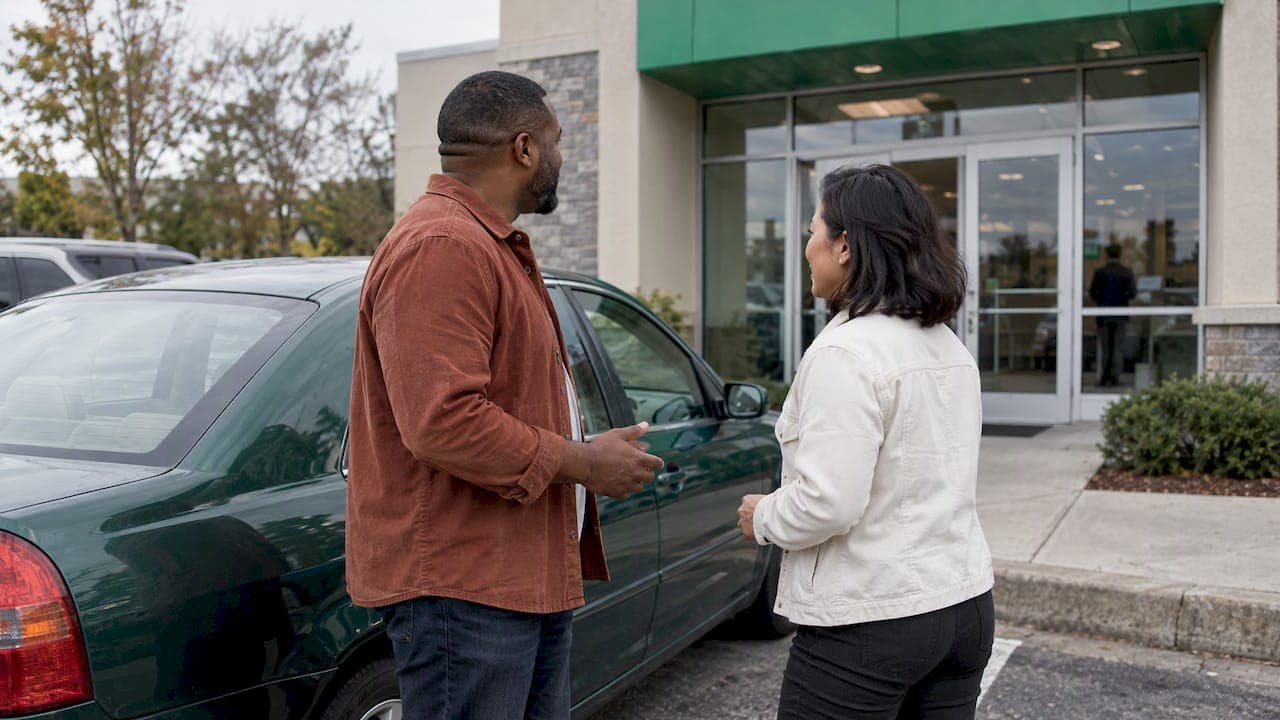
Yes, you can sell a car that still has a loan on it. The catch is that the buyer cannot get a clean title until your lender is paid, so the loan payoff has to happen as part of the sale, not after it. If you want to sell to a neighbor or another local buyer, you ask your lender for a payoff amount, agree on a price that covers it (or cover the gap yourself), and make sure the money reaches the lender before the lien is released and the title moves.
This guide walks through that process step by step. It also covers what to do if you owe more than the car is worth, how to handle a financed car in a private sale, and where buyers and sellers most often get burned.
TL;DR
- A lien means your lender has a legal claim on the car. You can sell it, but the lien must be satisfied before the title can pass to the buyer.
- Call your lender for a payoff amount (ask for a 10-day figure), because it often differs from the balance on your statement.
- If the sale price is higher than the payoff, you keep the difference. If it is lower, you pay the shortfall out of pocket.
- In a private sale, never let the buyer pay you and promise to "clear the loan later." Route the payoff to the lender at closing.
- Plan for delays: the lien release and new title can take weeks after the loan is paid.
Table of Contents
- What a lien on a car actually means
- Step 1: Find out exactly what you owe
- Step 2: Work out your equity
- Step 3: Choose how you will sell
- Step 4: List the car so buyers trust it
- Step 5: Close the sale without losing control of the money
- Step 6: Paperwork, titles and the wait
- What buyers should check
- Our perspective: slow down at the money step
- Ready to sell?
- FAQ
- Sources
What a lien on a car actually means
When you finance a car, the lender is listed on the title as the lienholder. That is a legal claim on the vehicle until the loan is repaid. As Chase explains, the lien is released only when the loan is fully paid off.
In practice, this changes who controls the paperwork. In many cases the lender holds the title, either on paper or electronically, so you cannot simply sign it over and hand it to a buyer. Some states are strict about it: the Florida Highway Safety and Motor Vehicles department notes that a vehicle with an existing lien cannot be legally sold in a private sale until that lien is satisfied. Rules vary by state, so check your own DMV or titling agency before you list.
One more point for sellers who are buying their next car: a lien is not the same as a lease. If you lease, the leasing company owns the car and has its own buyout rules, so call them first.
Step 1: Find out exactly what you owe
Start with your lender, not with a listing. You need two things from them: the payoff amount and their process for a sale to a private party.
Ask for a payoff quote, not your balance. Bankrate notes that the payoff amount may differ from the outstanding balance on your statement, and that early payoff fees can raise the final figure. Interest also accrues daily, so a number from last month's statement will be short.
Request a 10-day payoff. Ask for the figure that stays valid for ten days. One guide to dealer paperwork recommends getting this in writing or by official email, because it is the exact amount a buyer will need to send to the lender. Even if your buyer is a private party, a written payoff that lists the per-day interest makes closing smoother.
Ask these questions on the same call:
- Where do payments go (address, wire details, or an online payoff portal)?
- Do you hold a paper title or an electronic one?
- How long after payoff do you release the lien, and how is the title sent?
- Is there a prepayment penalty on my loan?
- Can you work with a buyer's bank or meet in person at a branch?
Write down the name of the person you spoke to and the date. If a dispute comes up later, that record helps.
Step 2: Work out your equity
Equity is the car's market value minus your payoff. It decides which path you take.

According to Experian, with positive equity the sale proceeds cover the loan and you keep the difference. With negative equity, sometimes called being upside down, you have to cover the shortfall between the sale price and the payoff to release the title.
Here is a simple example with made-up numbers:
| Positive equity | Negative equity | |
|---|---|---|
| Realistic sale price | $15,000 | $15,000 |
| Payoff amount | $11,500 | $17,200 |
| Result | You keep $3,500 | You owe $2,200 to the lender |
To estimate value, look at what comparable cars are actually listing and selling for near you, not just at online estimators. Same year, trim, mileage and condition. Check local listings on the platform you plan to use, and discount a little from asking prices, since sellers rarely get their full ask.
If you are upside down, you have three realistic options:
- Pay the gap in cash when the sale closes.
- Wait and keep paying the loan until the numbers flip. Extra principal payments speed this up.
- Trade in to a dealership. Experian notes that some dealers will roll a remaining balance into a new loan, but that raises the total you owe, so treat it as a last resort.
Step 3: Choose how you will sell
There are three main routes, and each handles the lien differently.
| Route | Who handles the payoff | Typical trade-off |
|---|---|---|
| Dealer trade-in or purchase | The dealer usually pays the lender and processes the paperwork | Simplest, but usually the lowest price |
| Private sale to a local buyer | You and the buyer coordinate the payoff | Usually the best price, more steps and more care |
| Online instant-offer buyer | The buyer's company typically handles payoff | Convenient, offers vary |
The Gerald guide on lien reports makes the same point about dealers: they generally take on the payoff and title paperwork directly with the lender, while private sales need the seller and buyer to coordinate so the lien is cleared before the money changes hands.
If you want the best price and are comfortable with some extra coordination, a local private sale is worth it. The rest of this guide focuses on that route.
Step 4: List the car so buyers trust it
Buyers see "financed" and worry. You can remove most of that worry up front.
- Say there is a loan. Put "Loan payoff handled through my lender at closing" in the description. Hiding it only makes the buyer suspicious later.
- Have the payoff letter ready. A buyer who sees the lender name and amount knows you are serious.
- Photograph the car well. Our guide on selling your car locally covers photos, pricing and screening buyers. If you post in more than one place, keep one master listing so the details never conflict, as we explain in our crossposting guide.
- Prepare records. Service receipts, the VIN, and the odometer reading save time.
A clean car also supports your asking price, which matters more when every dollar above the payoff is yours.
When you are ready to post, you can list a vehicle on Marketplace, which lets you browse and list by category, chat with buyers directly and see verified seller ratings.
Step 5: Close the sale without losing control of the money
This is where private sales with a lien go wrong. The buyer wants a title, you want to be paid, and your lender wants its loan cleared. Someone has to go first, and the safe answer is that the money goes to the lender first.
Option A: Meet at the lender
If your lender has a local branch, meet the buyer there. The buyer pays the payoff amount directly to the lender (usually with a cashier's check or a wire the bank can verify), and pays you the remainder. The lender can then start the lien release. The Gerald guide suggests this approach, or using a secure escrow service, so the buyer can verify the lien is released at closing.

Option B: The buyer's bank pays your lender
If the buyer is financing, their bank often pays your lender directly and sends you the balance. Ask your lender whether it accepts this and how long it takes.
Option C: You pay off the loan first
If you have the cash or can borrow it, paying off the loan before the sale means you receive the title (or the electronic release) first. It is the cleanest for the buyer, but it needs money up front, and you should only do it if you are confident the sale will happen.
What to avoid
- Taking payment and promising to pay off later. Industry commentary on private sales, such as this legal guide on buying from a private seller, stresses that these are buyer-beware deals, and a buyer without a clear title can inherit the seller's debt or face repossession. If you cash the check and the loan is not paid, you have created a legal problem for both of you.
- Accepting screenshots of payments. Fake payment confirmations are common in vehicle sales. Read our piece on vehicle payment safety and wait until funds have actually cleared at your bank.
- Meeting alone at night at your home. Pick a public place or the bank. Our online classifieds safety guide has a checklist.
Writing "as is" on a bill of sale is standard, but it does not protect you from fraud claims, as we explain in our guide to what "as is" means. Be honest about known problems.
Step 6: Paperwork, titles and the wait
Ownership transfer is a document process, not just a handshake. A good buyer and seller paperwork checklist for transferring vehicle ownership shows how many forms a vehicle sale can involve, even though that one covers heavy equipment. For a car, plan on:
- A bill of sale showing price, date, VIN, and both parties' names
- The payoff confirmation from your lender
- The title or lien release, depending on your state
- An odometer disclosure, where your state requires one
- Your state's transfer forms and a plate or registration plan
- A release of liability filed with your DMV, if your state offers one, so you are not responsible for tickets after the sale
Expect delays. Legal commentary on managing vehicle liens says title transfers are not instant: coordination between the lender and the state can take weeks. In states that use electronic lien and title systems, lien releases are handled digitally between the lender and the DMV, and processing can take up to 60 days, so a missing paper title right after payoff is not automatically a red flag.
Because of that gap, many sellers and buyers agree in writing on what happens during the wait: who contacts the lender, who follows up with the DMV, and how long each side will wait before escalating. Keep copies of everything.
What buyers should check
If you are on the other side of this deal, the same logic applies in reverse. Ask for the payoff letter, call the lender yourself using a number you looked up independently, and confirm the lien release is part of the closing.
You can also check title history. The National Motor Vehicle Title Information System, run by the U.S. Department of Justice, is one resource for title data, and your state DMV can confirm current lien status. A "lien reported" note on a history report can simply reflect that the car was financed at some point, according to LegalClarity, so verify current status with the official titling agency instead of relying only on a third-party report.
Buyers who want to haggle can use our negotiation scripts for buyers, and sellers should expect the lien to come up as a negotiating point. If a deal collapses before payment clears, our guide to canceling a local deal explains how to step back cleanly.
Our perspective: slow down at the money step
We see the same pattern in local sales across categories, from phones to vehicles: deals go wrong when one side is rushed. A car with a lien raises the stakes because the money and the title move through a third party.
Our advice is simple. Treat the lender as part of the transaction from the start, not as an afterthought. Get the payoff in writing, say plainly in your listing that there is a loan, and meet where the payoff can be verified. A buyer who pushes you to skip the lender or pay you in a way you cannot confirm is giving you information about the deal.
We built Marketplace around local transactions, direct chat between buyer and seller, and seller ratings so both sides can judge who they are dealing with before they meet. A car is the largest item most people sell locally, so it is worth using every one of those tools.
— Marketplace
Ready to sell?
Once you have your payoff letter and a realistic price, you can put the car in front of nearby buyers. Marketplace lets you list vehicles locally, talk to interested buyers through instant chat, and get push notifications when someone replies, all without shipping anything.
FAQ
Is it hard to sell a car with a lien?
It takes more steps than selling a car you own outright, but it is routine. You need a payoff amount, a buyer who understands the process, and a closing plan that sends the payoff to your lender. Selling to a dealer is the simplest route, while a private sale takes more coordination.
Can I sell a financed car if I owe more than it is worth?
Yes, but you must cover the shortfall between the sale price and the payoff so the lender releases the title. You can pay the difference in cash at closing, keep paying down the loan until the car is worth more than you owe, or ask a dealer whether they will roll the balance into a new loan, which increases what you owe.
Can the buyer pay me and I pay off the loan afterward?
We advise against it. If the payoff does not happen, the buyer has no clear title and can end up with your debt or a repossession risk. Have the payoff go to the lender at closing, either at a branch or through the buyer's bank, and confirm the lien release in writing.
How long does it take to get the title after the loan is paid?
It varies by lender and state. Lien releases and title processing can take weeks, and in states with electronic titling it can take up to 60 days. Ask your lender how they release the lien and check your state DMV's timelines before you set a closing date.
Sources
- Florida Highway Safety and Motor Vehicles: Selling a Vehicle
- Chase: How to Sell a Car with a Lien
- Bankrate: Selling a Car With a Lien
- Experian: How to Sell a Car With a Loan
- Gerald: What Does Lien Reported Mean?
- LegalClarity: How to Buy a Used Car in NC From a Private Seller
- LegalClarity: Lien Reported and What to Do
- Catalyst Legal: Managing Vehicle Liens
- Documents for a car sale: 10-day payoff amount