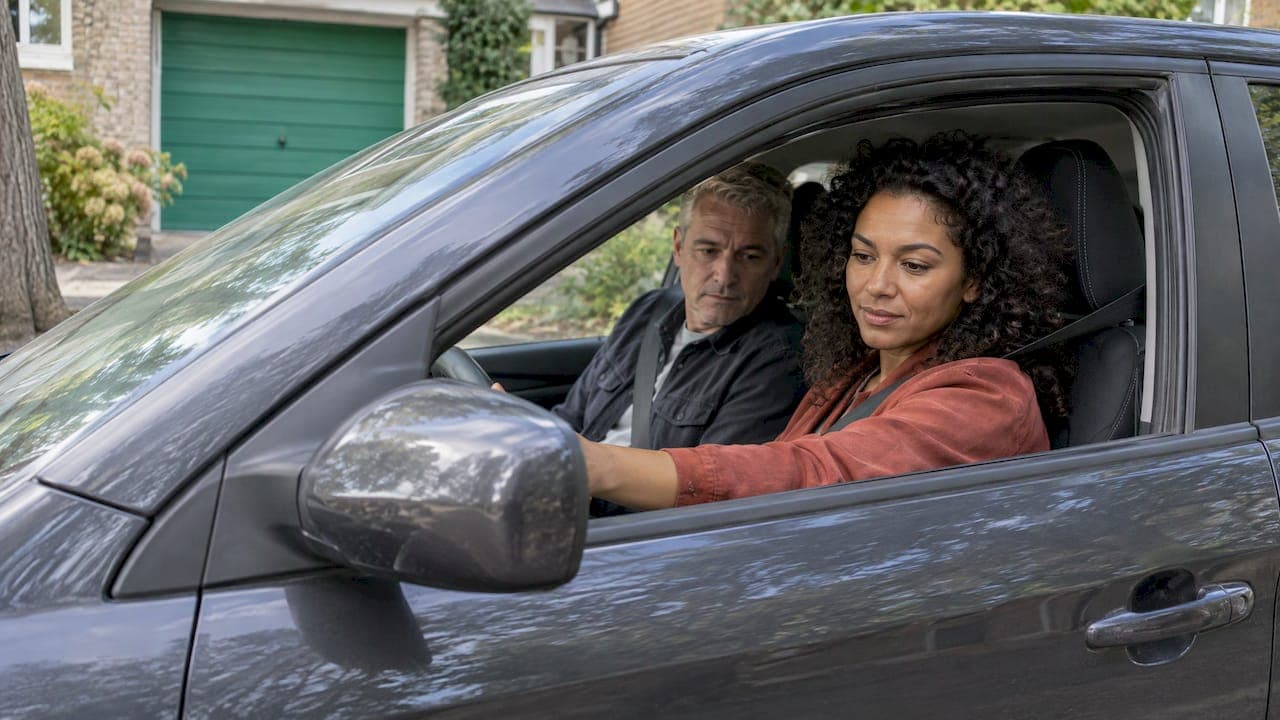
A good test drive takes 15 to 20 minutes, covers several kinds of road, and follows a list so you don't forget anything. Check the car cold, before you drive. Then test the steering, brakes, transmission and suspension on the road. Finish by looking for leaks and warning lights. If you're buying from a private seller, add a few safety steps: meet in a public place, bring someone with you, and confirm the car is insured before you get behind the wheel.
This guide gives you the full checklist in the order you'll use it, plus the private-sale details that dealer-focused guides skip.
TL;DR
- Plan 15 to 20 minutes on a mix of roads: city streets, a bumpy stretch and a highway if you can.
- Start with the car cold, inspect it before driving, and keep the audio off so you can hear the car.
- Test brakes, steering, shifting and suspension separately, and watch for pulling, grinding, vibration and knocks.
- With a private seller, meet somewhere public, bring a friend, and confirm insurance before you drive.
- If anything feels off, or you simply like the car, pay a mechanic for an independent inspection before you hand over money.
Table of Contents
- What to bring to the test drive
- Before you go: set up the meeting
- Test drive safety with a private seller
- Walk-around checklist: inspect before you drive
- On the road: what to check while driving
- After the drive: the last checks
- Red flags that should stop the deal
- Get an independent inspection
- Our perspective
- Find your next car nearby
- Don't let a good car rush you
- FAQ
- Sources
What to bring to the test drive
Showing up prepared tells the seller you're serious, and it saves you from guessing later. Kelley Blue Book starts its list with a valid driver's license, a smartphone and charging cord to test the car's connectivity, and a notepad for your impressions.
ConsumerAffairs adds a few practical items: a flashlight, a tire tread depth gauge, disposable gloves, and a printed checklist. The same page says you shouldn't need to bring proof of insurance, since the vehicle should still be insured by the seller. That leads to the first private-sale rule: ask about it ahead of time (more on this below).
A simple packing list:
- Driver's license
- Phone and charging cable
- Flashlight, for wheel wells, undercarriage and engine bay
- Tread depth gauge
- Gloves and a rag
- Notepad or printed checklist
- A friend, who can watch the car from outside and keep you safe
Before you go: set up the meeting
Most of what makes a test drive useful is decided before you arrive.
Pick the right conditions
Consumer Reports advises planning the inspection for daylight on a dry day. Rain hides paint flaws and dents, and darkness hides almost everything. The same guide suggests asking the seller to park on a level surface and not drive the car for at least an hour beforehand, so you can see how it behaves on a cold start.
A cold start matters. The New Zealand Transport Agency recommends starting the engine cold if possible to catch blue smoke from a worn engine, which a warm engine can hide.

Ask the seller a few questions first
Before you drive across town, send these by message so there are no surprises:
- Is the car registered and insured, and will it be insured while I drive it?
- Does the title match the seller's name and ID?
- Can you bring the service records?
- How long can I drive it, and can I take it on a highway stretch?
- Are you open to an inspection by my mechanic?
TÜV NORD's used-car checklist says to clarify whether the vehicle is registered and insured and how long the test drive may last. It also suggests taking pictures of the car's condition before driving. That's a smart habit anywhere: photograph every panel so any later disagreement about scratches is settled.
Test drive safety with a private seller
A dealership has a lot, staff and insurance. A private sale has a stranger and a car. A few habits make it much safer, and none of them are rude.
- Meet in a public place. NerdWallet advises asking the seller to bring the car to a public place rather than meeting at a secluded address.
- Don't go alone. Bring a friend. If that's impossible, tell someone exactly where you are and when you'll be back.
- Check who you're dealing with. NerdWallet suggests photographing the seller's driver's license and sending it to someone who knows where you are.
- Confirm insurance first. NerdWallet says to ask for proof of insurance on the car before driving it. The NZ Transport Agency warns that you may be liable for damages if you drive an uninsured vehicle. Rules differ by country and state, so confirm what applies where you live.
- Read any agreement before signing. If the seller hands you a test-drive form, TÜV NORD advises reading it carefully first.
For more on scam patterns and safe meetups, see our guides on online classifieds safety and local pickup tips. Payment is its own risk: our article on vehicle payment safety explains why a screenshot of a transfer is never proof of payment.
Walk-around checklist: inspect before you drive
Spend five minutes with the car parked. You're looking for signs of accident repair, neglect and hidden problems.
Exterior
- Body panels and paint. Look along each side for waves, mismatched color and uneven gaps between panels. The NZ Transport Agency lists bubbling paintwork and misaligned doors, hood and trunk as things to check.
- Rust. Look underneath and at structural supports. The same agency says structural corrosion is dangerous and repairs are costly.
- Tires. Check tread depth with your gauge and look for uneven wear, which can point to alignment or suspension trouble. Also check that all four tires are in similar condition.
- Shock absorbers. Push down hard on each corner. A healthy car settles quickly instead of bouncing repeatedly.
- Exhaust. Look for leaks and heavy rust. The NZ agency warns that exhaust fumes entering the cabin could cause carbon monoxide poisoning, so never ignore a leaking or noisy exhaust.
- Lights. Have your friend confirm headlights, turn signals and brake lights all work.
Under the hood
Look for fluid leaks, cracked hoses, corrosion on the battery terminals and fresh splashes of oil. A spotless engine bay on a high-mileage car can mean someone cleaned it to hide leaks, so take a closer look with your flashlight.

Interior and controls
Sit in the car and test everything before you move:
- Dashboard warning lights should come on at startup and go out. New Zealand's Consumer Protection test-drive checklist says to watch for lights that stay on for more than a few seconds.
- Mirrors, wipers, indicators, radio and power windows. Test the audio system, locks, and air conditioning and heater at full blast.
- Seats, seat belts and adjustment controls.
- Plug in your phone to check the infotainment system, as ConsumerAffairs suggests.
- Smell: musty or damp odors can signal water damage, and heavy air freshener may be covering something.
- Interior wear that doesn't fit the odometer, such as a shiny steering wheel or worn pedals on a car showing low miles.
On the road: what to check while driving
Plan on 15 to 20 minutes. CAA-Quebec's private-sale guide says that is generally enough time on different types of roads to properly evaluate a vehicle. Turn the radio off and keep the windows up for the first stretch so you can listen.
Starting and idling
The engine should start promptly and settle into a steady idle. Rough idling, smoke from the tailpipe, or warning lights that stay lit are all worth noting.
Visibility and comfort
Kelley Blue Book recommends checking visibility from the driver's seat, including blind spots, and cabin noise with the audio off. Consumer Reports adds that you should check rear visibility when backing up and the size of the rear blind zone. A backup camera is only part of the picture and shouldn't have to make up for poor sightlines.
If you'll drive this car every day, also check that the seat fits you, you can reach the controls, and you can park it easily.
Steering
NRMA, Australia's motoring organization, advises checking for excessive free play, pulling to one side or vibration. On a straight, quiet road, hold the wheel lightly. The car should track straight without constant correction.
Brakes
Brake in two ways: lightly in traffic and firmly from a moderate speed on a clear road (check your mirrors first). Kelley Blue Book says the car should stop smoothly without pulling, grinding, pulsing or unusual noises. NRMA adds that the pedal should not feel sinking or spongy, and the car should stop strongly and in a straight line.
Transmission and acceleration
On the way up to speed, shifts should be smooth and decisive, according to NRMA. Look for slipping, hesitation, harsh jolts or a sudden jump in engine revs without a matching increase in speed. If it's a manual, check that the clutch engages in the middle of the pedal travel and that every gear, including reverse, goes in easily.
Suspension and noises
Drive over a rough road, a speed bump and a pothole if you safely can. Kelley Blue Book recommends testing ride quality on rough roads and handling on curvy ones. NRMA says to listen for knocks and rattles over bumps and while turning. On front-wheel-drive cars, a knocking noise when turning points to worn CV joints.
In an empty parking lot, turn the wheel to full lock each way and drive slowly in a circle. Clicking, grinding or clunking can point to drive-shaft or suspension problems.
Highway speeds
Try to include a stretch at highway speed. Check for vibration in the steering wheel or seat, wind noise, and whether the car passes with confidence. Many problems only show up above 50 mph.
After the drive: the last checks
Park on a clean, dry spot and leave the engine running for a minute. Then:
- Look under the car for fresh drips.
- Pop the hood again and check for smells, smoke or leaking fluids.
- Review dashboard lights once more.
- Write down your notes while they're fresh, including the noises and the feel of the pedal.
- Ask to see the service records and the title.
Red flags that should stop the deal
Some problems are minor and negotiable. Others mean you walk away or get a professional opinion first.
- The seller won't let you take the car for a drive on varied roads or won't meet in a public place.
- The name on the title doesn't match the seller's ID.
- The VIN plate is missing, damaged or looks tampered with.
- The seller refuses an independent inspection.
- Warning lights stay lit, or a seller says to "just ignore" them.
- Brake pedal feels soft, or the car pulls under braking.
- Signs of flood damage, such as damp carpets, silt in odd places or a musty smell.
- Interior wear that doesn't match the mileage on the odometer.
The VIN deserves special attention, since a history report is one of the cheapest checks you can run. It's worth reading about how a VIN report can protect you from a bad purchase before you decide. Keep in mind that a clean report doesn't guarantee a clean car. Consumer Reports notes that flood damage or mechanical problems may not appear in a history report and may be more visible to a trained eye.
Get an independent inspection
A test drive tells you how the car feels. A mechanic tells you what's wrong with it. Consumer Reports puts a pre-purchase inspection at $100 to $150, and says to find a nearby mechanic in advance. If the seller is reluctant to let you drive the car to a shop, you can offer to follow them there.
NerdWallet points out that checking a private-sale car matters even more because it's unlikely to come with a warranty. Meeting at your mechanic's place of business can save time, and you can ask the seller to bring the service records.
A reasonable seller will usually agree to an inspection. If the car is as good as described, it costs them nothing.
Our perspective
We built Marketplaceapp around the idea that a local deal should feel as safe as it is convenient. A car is the biggest local purchase most people make, which is why we put so much into guides on safe transactions, local meetups and payment safety.
Our view is simple: the test drive is the buyer's right, and a prepared seller benefits from it too. A buyer who has seen the car, driven it and checked the records is far more likely to complete the sale without a dispute. If you're selling, offering a daytime, public-place test drive and having your records ready makes your listing stronger. Our guide on selling your car locally walks through that process.
The same habits apply to everything else you buy nearby, from laptops to TVs. Our guides on testing used electronics and local marketplace etiquette are built on the same principle: inspect first, pay second, and keep the meetup simple.
Marketplace
Find your next car nearby
When your checklist is ready, the next step is finding cars worth driving. Marketplaceapp is a peer-to-peer marketplace for local buying and selling, with a Vehicle category alongside Electronics, Fashion, Pets, Home & Garden and more. You can browse categorized listings, chat directly with sellers, and use location-based search to find what's close to you.
Browse nearby listings in the Vehicle category and more, and bring this checklist to every test drive.
Don't let a good car rush you
The NRMA reminds drivers that after a test drive, it's fine to be unsure, and you're under no obligation to buy. Even if you've fallen in love with a car, it pays to take time and try a few before deciding.
Use your notes to compare. Score each car on the same points: starting, visibility, steering, brakes, shifting, ride and noises. The best car on paper after an inspection is often not the one that felt the most exciting during the first five minutes.
FAQ
What should I check during a test drive?
Check visibility and blind spots, cabin noise with the audio off, acceleration and shifting, braking under light and hard stops, handling on curves and ride quality on rough roads. The car should stop smoothly without pulling, grinding or pulsing. Also check lights, controls and warning lights before you move.
How long should a test drive last?
Aim for 15 to 20 minutes on different types of road, according to CAA-Quebec's guide. Include city streets, a rough patch and a highway stretch if possible. Ask the seller about time limits before you meet.
Is a private-sale test drive safe?
It can be, with a few precautions. Meet in a public place, bring a friend, confirm that the car is insured before you drive it, and tell someone where you are. Pay only after inspecting the car and the title, and never rely on a payment screenshot.
What should I bring to a test drive?
Bring your driver's license, a phone and charger, a flashlight, a tread depth gauge, gloves and a printed checklist. You generally shouldn't need your own proof of insurance when driving a seller's insured car, but ask the seller to confirm coverage first.
Do I need a mechanic if the car drives well?
Yes, it's worth it. Consumer Reports says problems like flood damage may not show in a history report and are easier for a trained eye to spot. An inspection costing $100 to $150 can confirm what the drive suggested.
Sources
- Test-Driving a Car: A Checklist, Kelley Blue Book
- How to Test-Drive a New or Used Car, Consumer Reports
- How to Inspect a Used Car to Avoid Costly Repairs, Consumer Reports
- How To Buy a Used Car From a Private Seller, NerdWallet
- How to Test-Drive a Car, ConsumerAffairs
- How to sell your car privately, CAA-Quebec
- Tips for taking a test drive of a new or used car, NRMA
- Tips for buying a used car, NZ Transport Agency
- Test drive checklist, NZ Consumer Protection
- Buying a Used Car: Tips & Checklist, TÜV NORD