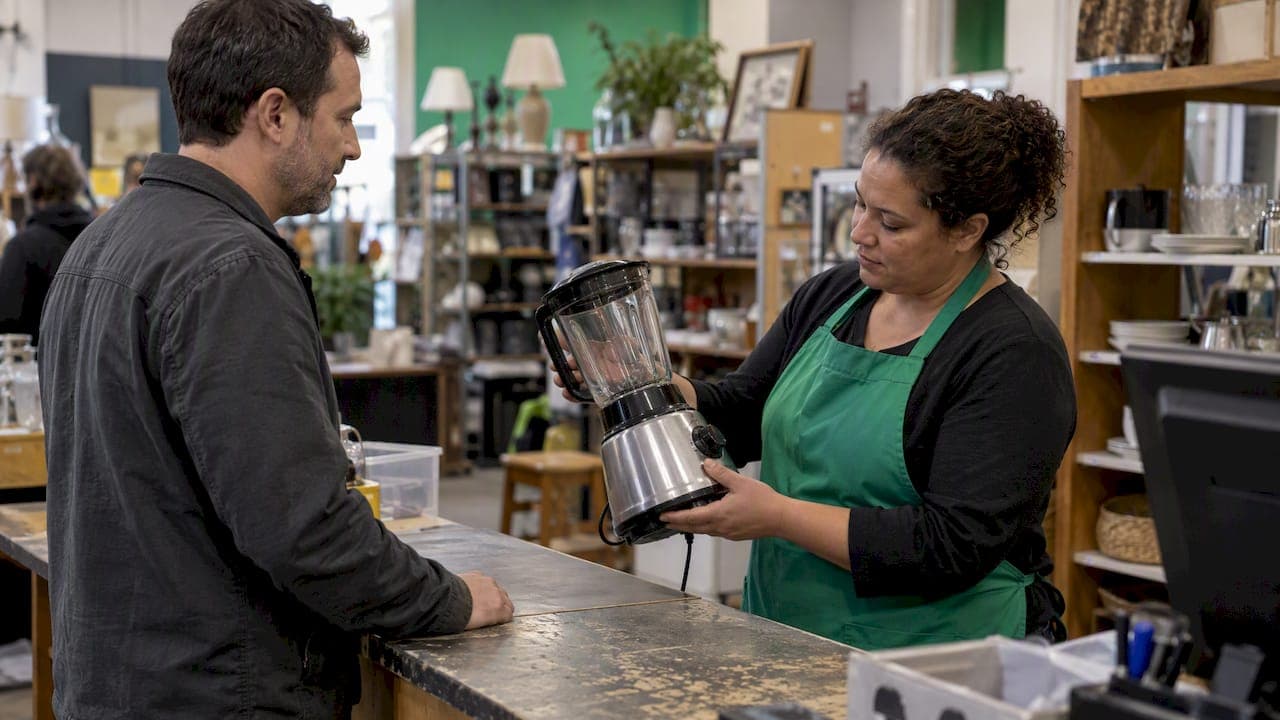
The secondhand economy keeps expanding in 2026, propelled by AI-powered discovery tools, brand-led trade-in programs, and categories well beyond fashion like electronics and furniture. Global recommerce is on track to reach roughly $210.7 billion in 2026, a double-digit jump from prior years. For resale businesses and retailers, the message is simple: the operators who adopt structured trade-in and AI-assisted authentication now will capture the bulk of this growth.
TL;DR:
- About 59% expect to shop resale in 2026, while fashion resale is forecast to grow two to three times faster than new fashion through 2027.
- Fashion drives transaction volume, while electronics, furniture, and appliances gain value faster and need testing, repairs, warranties, or local delivery.
- AI tools work best when listings include consistent photo angles and condition notes, so standardize intake before automating discovery, authentication, or pricing.
- Point of sale trade in offers secure inventory before it reaches open marketplaces, while store credit can encourage customers to return to the brand.
- Track monthly sales within 30 days, category return rates, authentication pass rates, and listing time; delays often expose intake bottlenecks.
Table of Contents
- Market size and 2026 forecasts
- Category shifts: fashion, electronics, furniture, and appliances
- How AI and trade-in programs are removing scale barriers
- Why authentication and grading now decide buyer trust
- Who captures value as retailers and platforms compete
- Actionable checklist for resale businesses and retailers
- Environmental impact and how it shapes buying decisions
- Legal and regulatory trends shaping secondhand sales
- Economic impact on retail and manufacturing
- Payment security for peer-to-peer secondhand transactions
- Rising niches beyond the core secondhand categories
- Marketplace perspective: what this means for local peer-to-peer marketplaces
- A practical way to start selling locally in 2026
- FAQ
- Sources
Market size and 2026 forecasts
Global recommerce is projected to grow about 12.1% in 2026, reaching roughly $210.7 billion, continuing a run of double-digit annual growth that started around 2021. That report also forecasts a compound annual growth rate near 10.2% from 2026 through 2030, suggesting the current pace is not a one-year spike but a sustained shift in how goods change hands.
Fashion remains a bellwether for the broader trend. The secondhand and luxury resale market is forecast to grow two to three times faster than the first-hand market through 2027, and close to 59% of consumers say they are likely to shop resale in 2026. That demand signal matters for every category, not just apparel, because it shows a durable behavior change rather than a passing discount habit.
Global recommerce is expected to reach roughly $210.7 billion in 2026, up 12.1% year over year, a scale that puts resale firmly in the same conversation as mainstream retail categories.
The headline figures worth tracking as you plan the year:
- Global recommerce value near $210.7 billion in 2026.
- Projected 10.2% CAGR from 2026 to 2030 for the sector overall.
- Secondhand and luxury fashion resale growing two to three times faster than new fashion sales through 2027.
Regional breakdowns vary by methodology (some reports count peer-to-peer platforms separately from retailer trade-in programs), so treat cross-report comparisons as directional rather than exact.
Category shifts: fashion, electronics, furniture, and appliances
Fashion drives the most transaction volume in recommerce, while electronics, furniture, and appliances are growing faster in value terms, since a single refurbished item can be worth many apparel transactions combined.
Retailer rollouts illustrate this shift. Furniture and home brands are building circular models into their core business rather than treating resale as a side program, a pattern reflected in circular economy strategies used to cut furniture waste through repair, refurbishment, and durable materials. Electronics chains are expanding trade-in counters and refurbishment lines so a traded-in phone or laptop reenters the market graded and warrantied rather than sold as-is.
Each category carries its own operational demands:
- Fashion needs fast grading and photography workflows to keep listing times short.
- Electronics require functional testing, data wiping, and often a repair step before resale.
- Furniture and appliances demand freight-friendly logistics and, frequently, local delivery or pickup options.
Buyers of used appliances also expect clear condition disclosure and repair history, a bar that our guide to buying used appliances walks through for anyone sourcing or listing in that category. Footwear sits in its own niche too, with its own sizing, authentication, and condition grading needs, covered in our guide for shoe sellers.
How AI and trade-in programs are removing scale barriers
AI is the infrastructure layer making recommerce viable at volume. Industry reporting describes AI-driven discovery, computer vision authentication, and dynamic pricing as the tools solving problems that used to cap resale growth: slow listing times, inconsistent pricing, and unreliable authenticity checks. Practitioner accounts describe AI-enabled discovery and pricing as having measurably reduced the friction that once limited how fast resale wholesalers could move inventory.
The effect compounds when AI pairs with structured intake. Computer vision can verify a brand or model from photos, but only when sellers supply consistent angles and condition notes, which is why disciplined data capture at the point of listing matters as much as the AI model behind it.
Trade-in programs change the economics on the supply side. When a retailer or brand offers trade-in credit at the point of sale, it captures used inventory before it ever reaches an open marketplace, shifting merchandising control and margin capture toward the brand itself. Retailer-led trade-in and refurbishment programs are expanding across markets as a direct result.
Refurbishment and repair capacity is the quiet enabler behind all of this. Higher-value categories like electronics and appliances only scale profitably when a platform or retailer can repair, grade, and warranty what comes in, turning a returned or traded item into a sellable, trusted product rather than a liability.
What this means in practice:
- AI-assisted discovery and pricing cut the time between intake and listing.
- Trade-in programs secure supply before it reaches the open market.
- Refurbishment capacity determines which categories can scale profitably.
Pro Tip: Start AI adoption with one measurable workflow, like photo-based condition grading, before expanding into full pricing automation.
Why authentication and grading now decide buyer trust
Trust infrastructure has moved from a nice-to-have to table stakes. Authentication guarantees and anti-fraud controls are expanding into more categories, a shift the Global Recommerce Market Intelligence Databook ties directly to AI-based verification tools becoming standard across platforms rather than a premium add-on reserved for luxury goods.
For buyers of higher-ticket items, grading and repair-back guarantees are becoming the deciding factor between browsing and buying. A platform that documents condition clearly and backs it with a dispute process reduces the uncertainty that has historically kept cautious buyers away from secondhand goods.
What's shaping buyer confidence this year:
- Expanded authentication programs covering more categories, not just designer handbags or watches.
- Clearer grading standards that spell out cosmetic and functional condition before purchase.
- Stronger dispute handling and repair warranties that reduce returns.
Specialist valuation matters here too. In categories like luxury watches, pricing accuracy affects both buyer trust and seller payout, and getting it wrong by even a small margin can sour a transaction, a gap addressed by specialized valuation services built specifically for that category. Buyers shopping secondhand clothing look for similar signals of trust and condition, which our guide to buying secondhand clothes covers in practical terms.
Who captures value as retailers and platforms compete
Brands increasingly build resale into their own business rather than ceding it to third-party marketplaces, since owning the resale channel supports customer retention and creates a second merchandising touchpoint with the same shopper. A customer who trades in an old item and gets store credit is more likely to return than one who simply sells it elsewhere and keeps the cash.
The operational levers that determine who captures margin are consistent across categories: control over intake and grading, in-house or partnered refurbishment, reliable logistics, and increasingly, seller financing options that make listing easier for casual sellers.
A few patterns stand out:
- Brands that own trade-in intake capture more residual value than those relying on outside resale channels.
- Refurbishment and repair partnerships determine which categories can be resold profitably at scale.
- Logistics and local delivery capability increasingly separate winners in bulky categories like furniture and appliances.
Specialist buyback services also carve out their own niche by focusing on a single category end to end, the way a dedicated service for selling media like DVDs, games, and books for cash handles everything from instant quotes to prepaid shipping for a narrow but well-served category.
Actionable checklist for resale businesses and retailers
Prioritizing the right investments in 2026 comes down to sequencing: technology first where it removes friction, then operations, then commercial programs that lock in supply.
- Pilot AI-assisted discovery and authentication tools on one category before expanding, choosing vendors that support structured photo and condition-data capture.
- Standardize intake workflows with a condition checklist, required photo angles, and consistent grading tiers across your catalog.
- Build or contract repair and refurbishment capacity for any category above a basic price threshold, since buyers expect functional guarantees on higher-ticket goods.
- Design reverse logistics (returns, pickups, local delivery) before scaling into bulky categories like furniture or appliances.
- Embed trade-in offers at the point of sale to capture supply early rather than competing for it later.
- Offer sellers tools and, where feasible, financing or instant-payout options to reduce friction for casual and semi-professional sellers alike; our comparison of reselling apps is a useful reference point for what sellers already expect.
- Segment peer sellers from professional resellers in your merchandising and support flows, since their needs differ sharply.
- Track core KPIs monthly: GMV growth, sell-through rate within 30 days, return rate by category, authentication pass-rate, and time-to-list.
Pro Tip: Treat time-to-list as a leading indicator. If it's climbing, your intake workflow, not your marketing, is usually the bottleneck.
Our guide on deciding when to renew or relist is a practical companion for keeping sell-through healthy once inventory is live.
Environmental impact and how it shapes buying decisions
Buying secondhand extends a product's life and reduces demand for new manufacturing, which is the core sustainability argument driving consumer interest in resale. That argument increasingly shapes purchase decisions directly: shoppers cite reducing waste alongside saving money as reasons to buy secondhand, and retailers are responding by publicizing the resource savings tied to trade-in and refurbishment programs.
Regulatory momentum is following consumer sentiment. Several regions are moving toward extended producer responsibility rules that push manufacturers to design for repairability and support take-back programs, which indirectly fuels the recommerce supply chain by making repair and refurbishment more standard practice rather than exceptional.
For operators, the sustainability angle is also a content and trust opportunity. Buyers who understand the environmental case for secondhand shopping tend to be more forgiving of minor cosmetic wear and more loyal to platforms that are transparent about a product's condition and history. Practical guidance on building sustainable shopping habits, like our piece on thrifting habits that make secondhand shopping work, helps buyers see secondhand purchases as a durable choice rather than a compromise.
Legal and regulatory trends shaping secondhand sales
Data privacy is becoming a bigger consideration in resale, particularly for electronics, where a traded-in phone or laptop can carry personal data if not wiped properly. Platforms and retailers that handle trade-in devices are expected to follow data-wiping protocols before resale, and buyers increasingly ask about this step before completing a purchase.

Resale rights vary by product type and region. Some categories, like certain software licenses or branded goods, carry resale restrictions that sellers may not realize apply to them, which makes clear seller guidance an important part of any platform's trust framework.
Product safety standards also apply to secondhand goods in many jurisdictions, particularly for items like children's products, electrical appliances, and car seats, where safety recalls can affect resale eligibility. Operators selling into regulated categories should verify recall status before listing, since the rules differ by country and category rather than following one universal standard.
Economic impact on retail and manufacturing
The growth of recommerce is reshaping demand patterns for both traditional retailers and manufacturers. As trade-in programs capture more used inventory at the point of sale, that inventory competes directly with new product lines, pushing some retailers to treat resale as a complementary revenue stream rather than a threat to new sales.
Manufacturers face a parallel shift: products designed for durability and repairability hold residual value longer, which is becoming a selling point in its own right rather than just a sustainability footnote. This incentivizes design changes that extend product lifespans, which can moderate replacement-driven demand for some categories over time.
For small and mid-sized retailers without the scale to run in-house trade-in programs, partnering with specialist refurbishers or category-specific buyback services offers a way to participate in this shift without building infrastructure from scratch. The net effect across the sector is a gradual rebalancing of value from pure new-unit sales toward blended new-and-refurbished revenue streams.
Payment security for peer-to-peer secondhand transactions
Peer-to-peer marketplaces are adopting payment safeguards built specifically for one-off, stranger-to-stranger transactions rather than relying on generic e-commerce checkout flows. Escrow-style holds, where payment releases only after a buyer confirms receipt and condition, are becoming more common for higher-value local transactions.
Identity verification tied to payment accounts is also expanding, reducing the anonymity that has historically made peer-to-peer fraud harder to trace. Secure, in-platform payment options additionally reduce the risk that comes with cash transactions for higher-ticket local sales, while still preserving the convenience that draws sellers to local, in-person exchanges.
Rising niches beyond the core secondhand categories
Beyond fashion, electronics, and furniture, several smaller categories are seeing outsized interest. Pet supplies and gear, hobby equipment, and health and beauty tools are all gaining traction as buyers extend secondhand thinking into categories they once bought new by default.
Media buyback is a notable niche with its own dedicated infrastructure, where services built specifically for selling DVDs, games, and books for cash show how a single, well-defined category can support a specialized, end-to-end resale model outside the major marketplaces. Vehicle and outdoor gear categories are also expanding, often driven by the same affordability pressures pushing growth everywhere else in recommerce.
Marketplace perspective: what this means for local peer-to-peer marketplaces
Local marketplaces compete best by doubling down on trust, local logistics, and seller enablement rather than trying to out-scale national retail recommerce programs. Content that teaches safe transactions and verified-seller features matters more than ever. Large retailer-led resale and local peer-to-peer marketplaces aren't rivals; they serve different transactions and can grow together.
— Marketplace
A practical way to start selling locally in 2026
Many of the shifts shaping recommerce this year (trade-in convenience, verified sellers, secure payments, fast listing) are exactly what we built our platform around for local buying and selling. We connect sellers directly with nearby buyers across electronics, fashion, vehicles, pets, home and garden, and more, with secure payment handling, verified seller ratings, and direct buyer-seller messaging built into the experience.
| What you need | How we support it |
|---|---|
| Fast, local listings | Categorized listings with location-based search |
| Buyer trust | Seller ratings and direct messaging |
| Mobile convenience | Push notifications and instant chat in the app |
| Getting started | Seller guides on pricing, decluttering, and safe transactions |
If you're deciding which app fits your selling style, our comparison of marketplace apps by use case is a good next stop. When you're ready, list your first item on MarketplaceAnywhere and start reaching local buyers today.
FAQ
How big is the secondhand economy expected to be in 2026?
Global recommerce is projected to reach roughly $210.7 billion in 2026, a 12.1% increase over the prior year. Growth is expected to continue at a similar pace through 2030.
What role does AI play in secondhand marketplace growth?
AI supports resale through faster product discovery, computer vision authentication, and more consistent pricing, which industry reporting links to reduced operational friction for resale businesses. It is increasingly treated as core infrastructure rather than an optional upgrade.
Which categories are growing fastest in the resale market?
Fashion drives the most transaction volume, but electronics, furniture, and appliances are growing faster in value as retailers expand trade-in and refurbishment programs. Secondhand and luxury fashion itself is forecast to grow two to three times faster than new fashion sales through 2027.
Why are more people shopping secondhand now?
An eBay recommerce survey found that 76% of respondents shopped secondhand in the past year and 47% buy secondhand at least monthly. Saving money remains the top motivation for most shoppers, alongside growing interest in sustainability.
How do I start selling items locally and safely?
Start by listing in a category you know well, using clear photos and honest condition notes, then rely on a platform with verified sellers and secure in-app payments to reduce risk. You can create your first local listing on MarketplaceAnywhere to reach nearby buyers directly.
Sources
- Global Recommerce Market Intelligence Databook (ResearchAndMarkets)
- The state of fashion 2026: resale and secondhand analysis (Business of Fashion)
- How AI is turning resale into fashion's biggest opportunity (FashionUnited)
- Why secondhand shopping is growing in the US (USA TODAY)