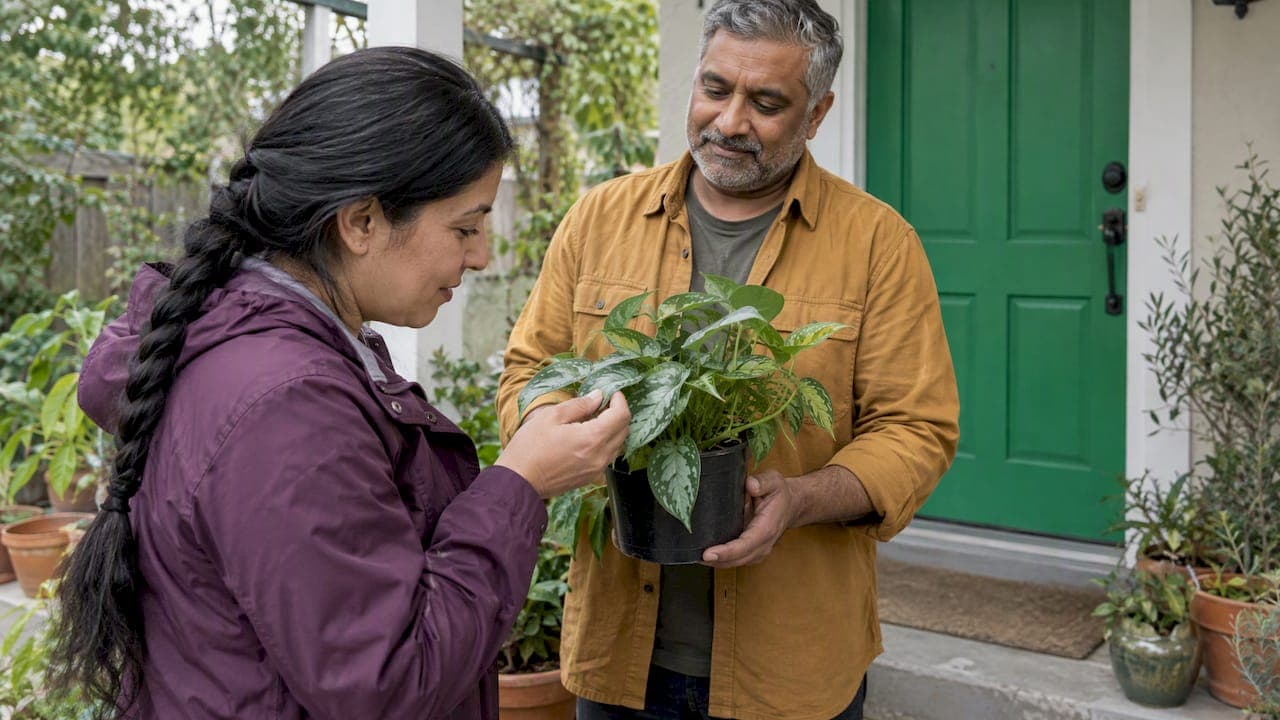
To sell plants locally, list healthy, clearly labeled plants with honest photos on a local marketplace or neighborhood group, price them against what nearby buyers would pay, and arrange a pickup in a public, well-lit spot. Skip shipping. Plants travel badly, and local buyers want to see what they are getting. This guide covers where to sell, how to prepare plants, what to charge, what the law may expect of you, and how to hand plants over safely.
TL;DR
- Local pickup is the simplest way to sell plants: no boxes, no transit damage, no shipping fees, and buyers see the plant before they pay.
- Prepare plants like a small nursery would: clean pots, fresh growing media, clean tools, and plants repotted early enough to look established.
- Price common plants low and volume-friendly. Reserve higher prices for named, harder-to-find varieties.
- Selling rules differ by state. Some states exempt small casual sales, others want a permit. Check with your state department of agriculture before you start.
- Meet in public, confirm details in chat, and keep payment simple and traceable.
Table of Contents
- Why local is the natural home for plant sales
- Where to sell plants to people nearby
- Get your plants ready to sell
- Write a listing that local buyers trust
- How to price plants
- Can you legally sell plants?
- Arrange pickup and payment safely
- Perspective: why we think plants belong in local listings
- List your plants where local buyers are looking
- Seasonal timing and small habits that help sales
- What not to sell
- FAQ
- Sources
Why local is the natural home for plant sales
Plants are alive, heavy with soil and water, and easy to damage. A cutting that looks perfect on your windowsill can arrive at a stranger's door wilted or broken. Local selling removes that problem. The buyer drives ten minutes, looks at the leaves, checks the roots if they like, and carries the pot home upright.
Local selling also suits the way most home growers end up with plants to sell. You propagated a pothos too successfully. Your hostas need dividing. Your tomato seedlings came up thicker than your garden can use. These are small, steady surpluses, not a wholesale operation, and a neighborhood audience is the right size for them.
The tradeoff is reach. A local buyer pool is smaller than a national one, so your photos, description and price have to do more work. We cover shipping versus pickup tradeoffs for sellers in more depth in our guide to shipping versus local pickup.
Where to sell plants to people nearby
You have several realistic channels. Most casual sellers use two or three at once.
Local online marketplaces
A location-based marketplace is the fastest route for a single plant, a handful of cuttings, or a few dozen pots. Buyers search by category and distance, message you directly, and arrange pickup. You can browse our Home & Garden and other categories to see how listings are organized before you post. If you want a broader look at which type of app fits which seller, see our roundup of local-first selling platforms.
Neighborhood buy, sell and trade groups
Community groups are where many plant people already gather. Posts there tend to get fast replies, and members often prefer porch pickup from a neighbor. Groups work best for common plants and cuttings. If you want to understand how they fit with marketplace listings, read our piece on local buy and sell groups.
Plant swaps and plant sale events
Many towns have plant swaps run by garden clubs or enthusiast communities, where you can bring plants to buy, sell or trade. Garden clubs and Master Gardener groups also run seasonal plant sales. As a casual seller, you can often join as a participant or donor, which lets you reach a crowd without running anything yourself.
Farmers markets and roadside stands
If you grow enough to fill a table, a market stall or a stand at the end of your driveway can work. The Washington State Department of Agriculture's handbook for small producers describes farm stands, farmers markets and online sales as direct marketing routes that let small growers connect straight with customers and diversify their income. Markets usually have their own vendor rules and fees, so ask the organizer first.
Crossposting to reach more buyers
You do not have to pick one channel. Write one master listing with good photos and reuse it. Our guide to crossposting with one master listing explains how to keep details consistent and avoid selling the same plant twice.
Get your plants ready to sell
Healthy plants sell faster, earn better reviews and cause fewer disputes. A few habits make the difference.
Start clean
Iowa State's Master Gardener plant sale guidance recommends sterilizing containers and growing media and regularly sanitizing tools and growing space to reduce the risk of spreading plant pests and diseases. For a casual seller, that translates into practical steps:
- Wash reused pots with soap and water, then disinfect them before filling.
- Use fresh potting mix rather than soil scooped from a bed that might hold pests.
- Clean pruners or knives between plants when taking cuttings.
- Inspect leaves, stems and the soil surface for insects, webbing, spots or fungus gnats. Do not sell a plant you would not want to bring into your own collection.
Give plants time to settle
A freshly potted plant often looks tired. A garden club's plant sale guidance asks volunteers to pot or repot at least ten days before the sale so plants look healthy and established. You do not need a sale date to borrow the idea. If you are dividing perennials or rooting cuttings, give them a week or two in their new pots so the buyer gets a plant that has already taken.
Label what you sell
The same Iowa State guidance recommends selling only pest- and disease-free plants and labeling them accurately with common, botanical and cultivar names. A simple tag with the plant name, light needs and a one-line care note helps buyers and protects you from "you said it was something else" conversations. If you do not know the exact variety, say so plainly. "Unnamed pothos cutting, rooted" is honest and still sells.
Write a listing that local buyers trust
Plant buyers cannot touch or smell the plant through a screen, so the listing has to stand in for the inspection.
Photos
Take photos in daylight, against a plain background. Aim for four shots: the whole plant in its pot, a close-up of the leaves (include the undersides if you can), the root system or soil line for cuttings and divisions, and the plant next to something for scale, such as a hand or a ruler. Our guide on starting with four photos covers the habit in more detail for any item.

Title and description
Put the plant name first, then size and condition. A good title reads like "Snake plant, 10-inch pot, healthy and fully rooted." In the description, include:
- The common name and, if you know it, the botanical name or cultivar.
- Pot size and approximate height.
- Whether it is rooted, a cutting, a division or a seedling.
- How long you have grown it and where it lived (bright window, shade garden, greenhouse).
- Any known issues, such as a few brown leaf tips or a recent trim.
- Pickup area and times, and whether the pot is included.
Be honest about condition. Oklahoma's nursery law, for instance, prohibits knowingly or willfully misrepresenting nursery stock's grade, character, variety or quality and lets buyers ask for an invoice stating variety, quality, age or size. That law covers nursery dealers, but the principle is a good standard for any seller: describe what is actually in the pot.
How to price plants
Pricing plants is harder than pricing a used lamp because there is no resale guide. Start with what similar plants sell for near you, then adjust for size, rarity and condition.

A garden club's guidance for its members offers a useful reference point for community plant sales: named specialty plants at about half the commercial rate, common or unnamed varieties around $3, and fast-spreading plants at $2 for small pots, about $3 for medium and up to $4 for large. Those figures come from a 2023 club sale, so treat them as a starting range rather than a rule. Prices in your city may be higher or lower.
A few practical principles:
- Price common plants to move. Spider plants, pothos, hostas and daylilies are plentiful. Buyers expect low prices, and you can sell several in one pickup.
- Price scarce plants higher, but near the market. A named variety that nurseries rarely stock can earn more. Check what local nurseries charge, then undercut by a sensible margin, since you are selling a smaller plant without a warranty.
- Offer bundles. "Three cuttings for a flat price" saves everyone a trip and gets rid of surplus.
- Leave a little room. Local buyers often ask for a discount. A price slightly above your floor lets you say yes without losing money.
- Decide on the pot. If it is a nice ceramic pot, price it separately or keep it. Many sellers use plain nursery pots for sale plants and reserve decorative pots for gifts.
A quick worked example
Say you have divided a mature hosta into six pieces. Pot each in a 1-gallon container with fresh mix, wait ten days for them to settle, and list them as a set. If similar divisions in your area go for around $3 to $4 each, a set price of $15 for all six is attractive to buyers and clears your shelf in one visit. A single buyer taking all six is easier than six separate meetups.
Can you legally sell plants?
This is one of the questions readers ask most, and the honest answer is: it depends on your state and on how much you sell. We are a marketplace, not a legal advisor, so use the rules below as signposts and confirm with the official source.
Washington State shows how a casual-seller exemption can work. The state's agriculture department says selling living plants generally requires a nursery plant seller-installer license or a plant sale permit, but casual or isolated sales that do not exceed $100 a year are exempt, and the permit costs $20. Other states have different thresholds, fees and definitions, and some have none that apply to small sellers.
So before you list:
- Search for your state department of agriculture's page on nursery or plant dealer licensing.
- Look for any exemption for occasional or small sales, and check the dollar limit.
- If you plan to sell regularly, ask whether you need a license, inspection or permit.
- If you sell at a market or event, ask the organizer what paperwork they require.
- Keep records of what you sold, when, and for how much. They help with any license question and with taxes.
Also think about what you are selling. Some plants are restricted or regulated as invasive in certain areas, and your state agency can tell you which. Plants with soil can also be a pest concern. If you are unsure about a particular species, ask your local extension office before listing it.
Arrange pickup and payment safely
Local sales are personal, so a little structure keeps them smooth.
Before you meet
- Confirm the plant, price, time and place in the chat on the platform, not in scattered messages elsewhere. A written record helps if anything is disputed.
- Tell the buyer what to bring: a box, a tray or a bag so pots stay upright in the car.
- Offer a specific window rather than "anytime." Plants left waiting on a porch in summer heat or winter frost suffer.
- Ask whether the buyer wants the pot, tag and care notes.
At the handoff
- Choose a public, well-lit place for most sales: a store parking lot, a garden center lot or a community spot. Bring a friend if you are carrying many pots. Our guide to local pickup tips explains how to set up safer meetups and have orders ready.
- If the buyer comes to your home, keep the plants by the door or on the porch so no one needs to walk through your house.
- Let the buyer look over the plant. Honest listings rarely lose a sale at inspection.
- Do not release the plant until payment is confirmed.
Payment
Use a payment method that leaves a record and that you can verify before handing over the pot. If you use cash, count it at the meetup. For larger orders, such as a trunkful of perennials, consider asking for payment through the platform's secure payment option so both sides are protected. Never accept overpayments with a request to send the difference back.
Perspective: why we think plants belong in local listings
We see plant sales as one of the clearest cases for local commerce. Plants are bulky, perishable and personal. They do better when the buyer and seller are within a short drive, can talk about light and watering in a real conversation, and can settle on a fair price without postage in the way. That is what our marketplace is built for: categorized listings, location-based search, instant chat and secure payments, so a seller with a few extra pots can reach nearby buyers without becoming a business.
Our advice to casual plant sellers is to keep it small and honest. Sell healthy plants, describe them as they are, post clear photos, and meet in a safe place. Reviews and verified seller ratings reward that approach, and returning buyers are more valuable than any one-time premium. If your plant surplus grows into something bigger, check your state's rules and consider adding market stalls or events to your mix.
— Marketplace
List your plants where local buyers are looking
If you are ready to put a few plants up for sale, you can create a listing on Marketplace under Home & Garden. Add your photos, set your price, and let nearby buyers message you. The app sends push notifications when someone replies, so you can arrange pickup without sitting at your phone. For a wider view of apps and what each does best, our guide to the best apps to sell is a good next step.
Seasonal timing and small habits that help sales
Plants have seasons, and your listings should follow them. Spring is the busiest time for vegetable seedlings, perennials and annuals, because gardeners are planning beds and filling containers. Late summer and early fall suit divisions of perennials and bulbs, when plants can be split and replanted. Houseplant cuttings sell all year, though winter buyers often want compact, low-light plants for their living rooms.
A few small habits raise your odds:
- Refresh the listing. If a plant has not sold in a week or two, update the photos, adjust the price slightly and repost.
- Answer quickly. Plant buyers often message several sellers. A fast, friendly reply wins the sale.
- Offer care notes. A short card with light, water and feeding basics sets the buyer up for success and makes them likely to return.
- Do not overpromise. Avoid saying a plant will flower on a particular schedule or survive a certain climate unless you know it will.
- Keep plants shaded while waiting. Direct afternoon sun in a hot garage or car can scorch freshly potted plants before the buyer arrives.
If you run out of ideas for what to sell, walk your garden with a critical eye. Overgrown clumps, volunteer seedlings, runners, seed pods and cuttings from pruning are all candidates. Each one is something you would otherwise compost, and each can become a few dollars for the next project.
What not to sell
Some items are better left out of casual listings. Skip any plant that shows signs of pests or disease, since selling it risks spreading the problem into someone else's garden. Be careful with plants you suspect are invasive in your region, and with anything that is protected or collected from the wild. Edible or medicinal claims are another area to avoid: describe the plant, not a health benefit. And do not sell plants that are toxic to pets or children without saying so, since a one-line warning in the listing is both kind and sensible.
FAQ
What is the best place to sell plants locally?
For most casual sellers, a location-based marketplace and neighborhood groups work best, because buyers search by distance and can message you directly. If you grow a lot, add a plant swap, a garden club sale or a market stall. Start with the channel where you already have a following and expand from there.
Can I legally sell plants from my home?
In many places you can, but rules vary by state. Washington, for example, exempts casual or isolated sales up to $100 a year, while larger sales need a permit or license. Check with your state department of agriculture before you list, especially if you plan to sell regularly.
How much should I charge for plants?
Check what similar plants sell for near you, then price slightly under nursery rates. A garden club's 2023 guidance suggested around $3 for common plants and $2 to $4 for fast-spreading plants depending on pot size. Rarer, named varieties can earn more.
Should I ship plants or sell them locally?
Local pickup is easier and safer for most home growers. You avoid packaging, transit damage and shipping costs, and buyers can inspect the plant first. Shipping may make sense for rare plants with a national audience, but it adds complexity.
How do I stay safe when meeting a plant buyer?
Confirm details in the app chat, meet in a public and well-lit place, and keep payment traceable. Do not hand over the plant until you have confirmed payment, and bring a friend if you are carrying a lot.
Sources
- Plant Sale Best Practices, Iowa State University Extension Master Gardener
- Plant sale potting guidance, Garden club newsletter insert
- Plant sale info for members, garden club, 2023
- Plant Sale Permits, Washington State Department of Agriculture
- Nursery law, Oklahoma Department of Agriculture
- Small Farm & Direct Marketing Handbook, Washington State Department of Agriculture