Some things can't be sold secondhand at all, and others can only be sold under conditions. The core of any prohibited items list for local selling is the same: recalled products, weapons and ammunition, fireworks, alcohol and tobacco, live animals in many settings, counterfeit or stolen goods, hazardous materials, and unsafe children's products. The rules come from three places: federal and state law, the policy of the platform or venue you sell on, and safety guidance. This guide sorts your items by which of those applies.
It is written for people clearing out a garage, a closet or a nursery, and for small-scale sellers who want to avoid a deleted listing or a legal problem. Always check the current rules in the app or on the site where you list. The legal points below are US-based unless a section says otherwise.
TL;DR
- Never sell a recalled product. Under US federal law it is illegal, and "used" or "as is" is no exemption.
- Weapons, ammunition, fireworks, stolen goods and counterfeits are the items most often barred outright. Alcohol, tobacco, animals, medicines and vehicles are restricted or barred depending on the venue and state.
- Nursery gear (cribs, bassinets, car seats, strollers) needs a recall check first. If it is broken or incomplete, don't sell it.
- Rules differ by state and city. A restriction can come from law, from a platform's policy or from a safety recommendation, and each means something different for you.
- An item you can't sell can often be given to a proper collection point or disposed of safely, but you can't pass it along to someone else if it is unsafe.
Table of Contents
- Where a "prohibited" rule comes from
- The core prohibited items list
- Rules change by state and city
- A 5-step check before you post
- Can you give it away instead?
- What to do with items you can't sell
- Buyers: how to avoid the wrong secondhand item
- Perspective
- List what's safe to sell
- FAQ
- Sources
Where a "prohibited" rule comes from
Before the list, one distinction saves a lot of confusion. A rule on a prohibited items list usually falls into one of three buckets.

Law. Federal, state and local rules apply to every seller, whether the item is new or used and whether you sell on an app, at a flea market or from your driveway. Health Canada puts it plainly for its own country: the laws don't distinguish between new and used products, and the same principle underlies US product-safety law.
Platform or venue policy. A marketplace, a flea market or a community board can set rules stricter than the law. The Alemany Flea Market in San Francisco, for example, publishes a "what you can't sell" list that includes alcohol and tobacco, guns and ammunition, fireworks, motor vehicles and auto parts, live animals, weapons (toy weapons too), electronic equipment such as TVs and DVD players, and stolen or counterfeit products. Some of those items are perfectly legal to sell elsewhere. That list is the venue's choice, not a statute.
Safety recommendation. Some guidance is not a legal ban but is strong advice: the Consumer Product Safety Commission (CPSC) tells resellers "When in doubt, throw it out!" about unsafe nursery products. Treat it as a firm rule, because the risk is to a child.
A quick test: if the item is illegal to sell anywhere in your state, it's law. If it's legal but one venue refuses it, it's policy. If nobody forbids it but it could hurt someone, it's a safety call, and you should make it conservatively.
The core prohibited items list
The table below groups the categories that come up most often when people sell locally. Treat it as a starting point, not a full legal list, since state and local rules vary.
| Category | Typical status | What to do |
|---|---|---|
| Recalled products | Illegal to sell under federal law | Check recalls, then repair via the manufacturer's remedy or dispose of it |
| Firearms, ammunition, explosives | Barred on most general venues; heavily regulated by law | Use a licensed channel only |
| Fireworks | Often barred by venues; state laws vary widely | Don't list it |
| Alcohol and tobacco | Usually barred on general listings; licensing rules apply | Don't list it |
| Live animals | Restricted or barred by many venues; local rules differ | Check venue rules and local law before posting |
| Stolen or counterfeit goods | Illegal | Never list; keep proof of purchase for valuable items |
| Hazardous materials (pesticides, solvents, fuels) | Restricted; disposal rules apply | Take to household hazardous waste collection |
| Unsafe or broken children's gear | Illegal if recalled; unsafe if damaged | Don't sell; destroy so no one can use it |
| Prescription medicines | Not for resale | Use a take-back program |
| Vehicles | Legal, but title and registration rules apply | List in the right category with documentation |
Recalled products
This is the one that catches decent people out. CPSC states that it is illegal to sell any recalled product under Section 19 of the Consumer Product Safety Act, and that having recalled products in inventory is itself a violation of federal law. That guide is aimed at resellers, but it is a useful standard for any individual selling on the side.
CPSC also notes that resellers aren't required to test used products, including people selling on auction sites, but they are expected to make sure what they sell meets legal safety requirements. You can't knowingly sell something that doesn't. In practice: search the brand, model name and model number on CPSC's recall list before you post a stroller, space heater, dresser, bike helmet or kids' toy.
Children's and nursery products
This category deserves its own care. CPSC urges resellers not to sell unsafe nursery products, especially cribs and bassinets, because nursery products have caused deaths and been the subject of many recalls.
Its reseller guidance adds practical rules: check for recalls before selling nursery products; don't sell broken, wobbly, unstable or incomplete nursery furniture or durable infant and toddler products; and don't try to fix a broken product with other screws or hardware, per CPSC's reseller guide. Car seats are a special case because of expiry dates and crash history, and we cover that in our car seat resale checklist.

Health Canada, whose guidance is a good model even for US sellers, gives concrete examples of items illegal to sell or give away in Canada: certain baby walkers, infant self-feeding devices, lawn darts with elongated tips, jequirity beans and anything made with them, and polycarbonate baby bottles containing BPA. Those are Canadian rules, not US ones, but they show what kinds of things get banned. If you are in Canada, they apply to you directly.
Weapons, fireworks, alcohol and tobacco
General local marketplaces and flea markets commonly bar these outright, as the San Francisco list above shows. Even where a sale is legal for a licensed dealer, a private seller posting an ad may break venue rules or state law. If you inherited a firearm or a collection of ammunition, don't try to move it through a general classifieds listing. Contact your local law enforcement agency or a licensed dealer for guidance on lawful transfer in your state.
Counterfeit and stolen goods
A fake designer bag is not "used"; it is counterfeit, and selling it is illegal even if you bought it in good faith and didn't know. Stolen goods follow the same logic. Some states regulate people who buy and resell goods as a business. A California Attorney General publication on secondhand dealers states that it is unlawful to act as a secondhand dealer without a license as defined in the code. Occasionally selling your own household items is not the same as running a resale business, but if you start buying items specifically to flip them at volume, look up your state's secondhand dealer rules.
Animals, medicines and health products
Live animal sales are restricted by many venues and by local and state law, covering things like permits, health certificates and species. Prescription medicines should never be resold. Opened cosmetics, personal care devices and similar health and beauty items can pose hygiene risks, so sell only sealed, unexpired, unused products and read the venue's policy first.
Hazardous materials
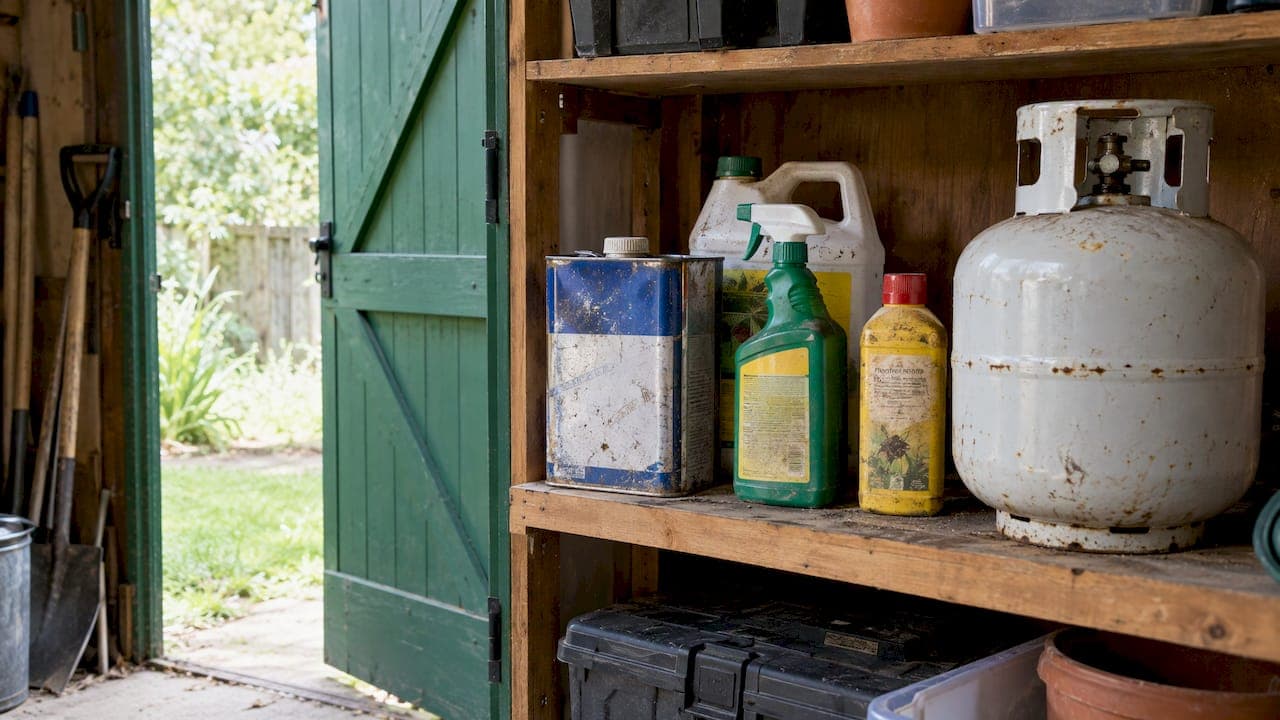
Paint thinner, pesticides, pool chemicals, propane tanks, fuel and similar products often show up in garage clean-outs. Many venues restrict them because of their transport and storage risks, and many states restrict specific products. If a product is leftover and you can't use it up, don't try to move it quickly through a listing. See the disposal section below.
Rules change by state and city
There is no single national prohibited items list for local sales. Restrictions on fireworks, certain chemicals, electronics containing certain substances and many other products are set state by state, and some cities add their own layer. A seller in one state may legally list something a seller across the border can't. The practical approach is to check your state's attorney general or consumer protection website, and your local city or county page, for the category you are selling.
Local pickup helps here, since you know both parties are in the same jurisdiction. If you're weighing whether to ship, note that carriers and destinations bring their own limits too, such as PO box delivery restrictions that affect what can be sent where. Our comparison of shipping versus local pickup walks through the trade-offs.
A 5-step check before you post
- Identify the item exactly. Write down the brand, model and model number. Most recall searches need them.
- Search for recalls. Use the official CPSC recall database for consumer products. For children's items, do this every time, no exceptions.
- Inspect for damage and missing parts. Health Canada's guidance says to make sure a used product isn't recalled or banned, isn't missing essential parts, hasn't been in an accident (for helmets and car seats), and hasn't been damaged, such as a dropped handheld electrical device.
- Read the venue's rules. If the category is restricted on the platform, don't list it, even if it's legal.
- Check state and local law. If the item is regulated where you live (animals, vehicles, chemicals), confirm what you need before you sell.
If you pass all five, write an honest listing: state age, condition, wear and any repairs. Honest descriptions reduce disputes, and our note on what "as is" does and doesn't cover explains why it won't shield you from a fraud claim.
Can you give it away instead?
No, not if the problem is legal or safety-related. The same legal obligations apply to used and new products, and Health Canada states that anyone who sells, distributes or gives away products that don't comply with current law is breaking the law in Canada. In the US, the safe working rule is the same: if you wouldn't sell it, don't hand it to a neighbor, a charity shop or a "free" listing either.
What to do with items you can't sell
For recalled products where the problem can't be corrected, Health Canada's advice is not to sell them but to destroy them so nobody else can use them and throw them away. Check the recall notice first: some recalls offer a free repair kit or refund, which is the better route.
For hazardous household products, Connecticut's environmental agency says not to put them in the trash, flush them or pour them onto the ground or into storm drains, and to bring them to a local household hazardous waste collection instead. Wisconsin's DNR adds that safe storage until then means keeping products in their original container, sealed and away from heat. Search your own county or state name plus "household hazardous waste" to find your collection program. Rules differ, so don't assume another state's instructions apply to you.
Buyers: how to avoid the wrong secondhand item
Buyers can protect themselves with the same checklist. Health Canada advises confirming that a used product is not recalled or banned, meets current safety requirements, has appropriate labels, and, if repaired or refurbished, was serviced by an authorized dealer. Ask about age, use, repairs, accidents and missing parts, and request clear photos when shopping online.
Then handle the meetup well. Our guides on safe meetup locations, local marketplace etiquette and spotting local scams cover the rest. If a return comes up after the sale, see handling returns locally.
Perspective
We built Marketplace around a simple idea: local selling works best when both sides trust the deal. A prohibited items list is part of that trust, because it protects the buyer who will actually use the item and the seller who doesn't want a listing pulled or a legal headache.
What we see again and again is that most problems aren't bad intentions. They are a stroller nobody checked for recalls, or a box of old garage chemicals that someone assumed was fine to list. That's why we pair secure payments, seller ratings and direct chat with guides on safe transactions, decluttering and pricing. A few minutes of checking before you post keeps the whole exchange smoother.
Our advice is to sell what is safe, clean and honestly described, and to sort the rest before it ever reaches a listing. Good items move fast locally, and a trustworthy seller profile is worth more than one risky sale.
Marketplace
List what's safe to sell
Once you've cleared the questionable items, the rest is the fun part. Electronics, fashion, vehicles, pets supplies, home and garden items, hobby gear, health and beauty products and entertainment all have their own categories on Marketplace, where you can post a listing, chat with nearby buyers and keep the whole sale local.
Before posting, run your item through the five-step check above, and use the app's categories to match your listing to the right buyers.
FAQ
Is it illegal to sell used items that are recalled?
Yes, in the US. CPSC says selling any recalled product is illegal under Section 19 of the Consumer Product Safety Act, and that applies to resellers, including people selling through online venues. Look up the model on the CPSC recall list before you post, and follow the recall's remedy instead of selling.
Can I sell things "as is" if they are broken?
Only if they are safe and legal to sell. Wording like "as is" doesn't cover recalled items, unsafe children's gear or misrepresented condition. Broken or incomplete nursery furniture and infant products shouldn't be sold at all, according to CPSC's reseller guidance.
Who decides what's on a prohibited items list?
Three sources: the law (federal, state and local), the policy of the venue you sell on, and safety recommendations from agencies. A venue can ban items that are legal in your state, so read its rules before listing, and check your state's rules for regulated goods.
What should I do with items I can't sell?
For recalled goods, follow the recall notice, and if the problem can't be fixed, destroy the item so no one can use it. For chemicals and other household hazardous products, use a household hazardous waste collection run by your state or county rather than the trash or a drain.
Sources
- Facts for Garage Sale Vendors, Health Canada
- Industry Guide to Second-hand Products, Health Canada
- Buying second-hand products, Health Canada
- What you can sell at the Alemany Flea Market, SF.gov
- Resellers Guide to Selling Safer Products, CPSC
- Resale/Thrift Stores Information Center, CPSC
- Resale/Thrift Stores FAQ, CPSC
- Secondhand Dealer and Pawnbroker Laws, California Attorney General
- What Do I Do With, Connecticut DEEP
- Household Hazardous Waste Management Guide, Wisconsin DNR