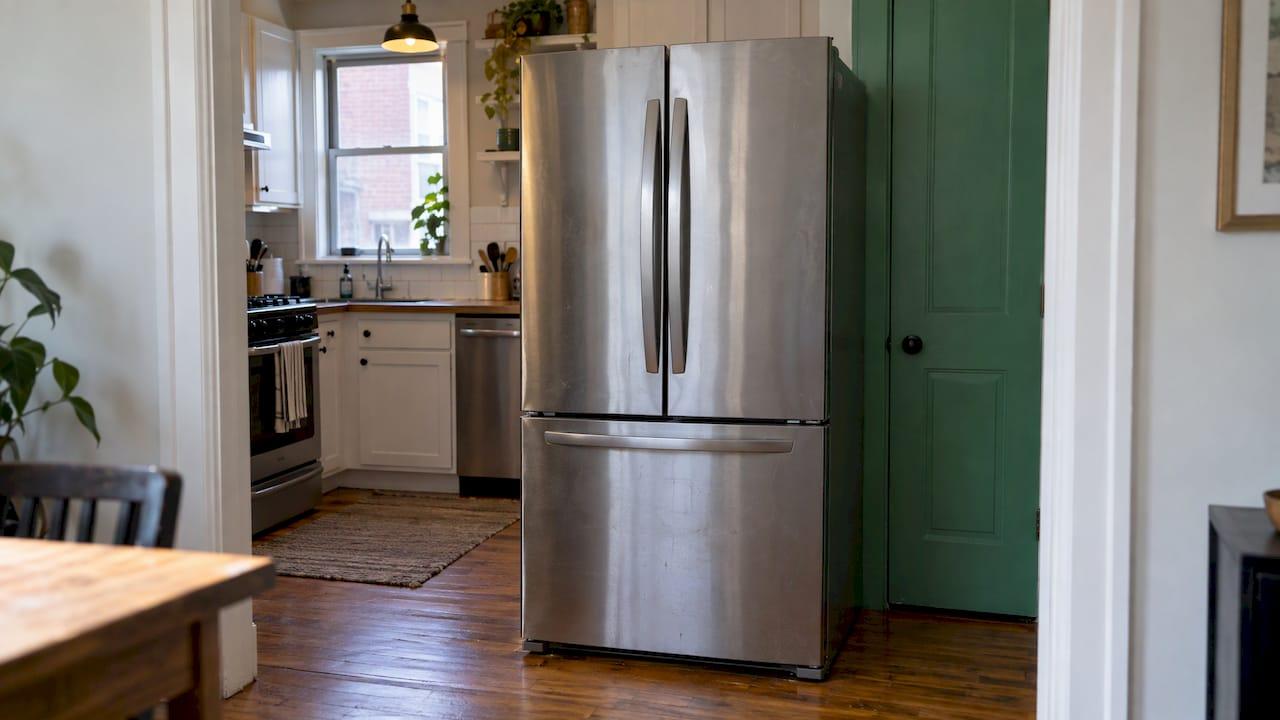
The fastest way to sell a refrigerator is to list it with your local community, price it against what similar units actually sold for, and let the buyer pick it up. Fridges are bulky and heavy, so shipping makes no sense. A nearby buyer with a truck and a free weekend is the person you want. This guide covers where to find that buyer, what to charge, how to write the listing, how to handle payment and pickup safely, and what to do if the fridge no longer works.
TL;DR
- Sell locally, not by shipping: a large appliance moves best to a buyer within a short drive who brings help and a vehicle.
- Price from sold listings, not asking prices. Search for the same brand, size and age, and use what similar units actually sold for.
- Use the platform's payment system. Never accept checks, wire transfers or payment outside the platform.
- Clear the fridge, clean it, and stage it by the front door or in the garage so the buyer does not need to come inside.
- If it is broken, check your city's bulky-waste rules and your electric utility before you put it on the curb.
Table of Contents
- Where to find local buyers for a used refrigerator
- How much can you sell a used refrigerator for?
- Prepare the refrigerator before you list it
- Write a listing that sells
- Arrange payment and pickup safely
- What if the refrigerator doesn't work?
- The same method for washing machines and mattresses
- Our perspective: why local wins for big items
- List your refrigerator on Marketplace
- A quick plan for a one-week sale
- FAQ
- Sources
Where to find local buyers for a used refrigerator
You have four realistic routes. Each suits a different seller.

A local peer-to-peer marketplace. This is the best fit for most people. Buyers search by category and distance, you set the price, and you keep the negotiation in your own hands. BBB advises choosing the right platform for what you are selling, because many marketplaces specialize in certain goods. For a large appliance, pick one built around nearby buyers and in-person pickup. You can list on Marketplace under Home & Garden, with photos, a price and a pickup location, and buyers nearby can message you directly.
Neighborhood groups and community boards. Apartment-building boards, street groups and church or school bulletin boards reach people who can walk over and look at it. They work well for older or lower-priced units.
Local used appliance dealers and liquidators. Some will make a cash offer, usually below what a private buyer pays, but they handle the hauling. This suits you if the move date is close and you want the fridge gone in a day.
Landlords, contractors and flippers. People renovating a rental or a flip often need a working fridge fast and are not fussy about the finish. A short message to a local property manager can produce a buyer in an afternoon.
One route to skip: donation centers. A media summary of Goodwill's stance says it generally does not accept large appliances such as refrigerators, freezers, washers and dryers, and suggests listing them instead or contacting a non-profit that takes working appliances. Call a local charity before you load the truck.
How much can you sell a used refrigerator for?
There is no single number. A ten-year-old top-freezer and a three-year-old stainless French-door model sit in different markets. What you can do is find the real local price in about fifteen minutes.
- Search for the same thing. Note the brand, model number (usually on a sticker inside the fresh-food compartment), width, style and age.
- Look at sold, not asking. BBB's pricing tip is to search for similar items and, on auction sites, use what items actually sold for rather than starting bids. Anyone can ask for $900 on an old fridge. What matters is what a buyer paid.
- Check your own area. Local listings with many views and no messages are overpriced. Listings that vanish within a day were underpriced.
- Set your price with room to move. Buyers of big items almost always negotiate. Add a little headroom so you can accept a lower offer and still land where you wanted.
What moves the price
| Factor | Why buyers care |
|---|---|
| Age and brand | Newer units and well-known brands attract more offers |
| Style | Side-by-side, French-door and counter-depth fit specific kitchens |
| Size | Width and height decide whether it fits the buyer's space |
| Finish | Stainless usually draws more interest than older white or black |
| Working condition | Cooling properly is the baseline for any serious buyer |
| Features | Ice maker, water dispenser and adjustable shelves add appeal |
| Cosmetic wear | Dents, scratches and cloudy shelves lower offers |
| Timing | Move-in season and renovation projects bring more buyers |
Mini fridges and dorm units sell faster and in a different price range, often to students. List them in the late summer, when students are furnishing rooms.
Prepare the refrigerator before you list it
A clean, empty, photographed fridge sells faster and with fewer haggling arguments.
- Empty it completely. Remove all food, shelves and drawers.
- Wash the inside. Warm water and mild dish soap, then dry. Wipe gaskets, where grime hides.
- Defrost if needed. If it has a freezer that frosts up, let it thaw and mop up the water.
- Clean the outside and the coils area you can reach. Fingerprints and dust show in photos.
- Leave the door open for airing so it does not smell when the buyer opens it.
- Find the model and serial number and photograph the label.
- Measure it. Width, depth and height, including the door swing, are the first things a buyer asks.
- Plan the removal path. Check doorways, stairs and tight corners, because the buyer will ask.
If you want to see the condition from the buyer's side, our used appliances buying guide shows what shoppers look at, so you can answer their questions before they ask.
Write a listing that sells
A good listing answers every question in advance. That cuts down on back-and-forth messages and filters out time-wasters.
Title: brand, size or style, color, and the word "working". Example: "Stainless French-door refrigerator, 36 in., works great, pickup only".
Photos: shoot in daylight. Take the front with doors closed, the open fresh-food compartment, the freezer, the model label, and any dents or scratches up close. Showing flaws up front builds trust and prevents arguments at pickup.
Description should include:
- Brand, model, approximate age and why you are selling
- Dimensions and door swing direction
- Whether it is running now and keeping temperature
- Included parts: shelves, drawers, ice bin, water filter
- Known issues, stated plainly
- Pickup location (a general area, not your exact address), pickup window, and that the buyer brings help and a vehicle
- Your price and whether it is firm or negotiable
If the fridge has a problem, say so. A buyer who discovers a surprise at your door will walk away, and you will have wasted both your afternoons.
Know the fees before you list
Platforms differ in how they charge. BBB says to understand platform fees and policies, including percentage versus flat fees and refund and dispute rules, before you list. Our guide to selling app fees for local sellers walks through how to compare them so you keep more of the sale.
Arrange payment and pickup safely
A refrigerator is a high-value item and it is large, which makes the handoff the riskiest part. A few habits cover most of the danger.
Keep payment on the platform. BBB advises using the platform's payment system and warns sellers not to accept checks, wire transfers or payments outside the platform, because these are common scam tools. A buyer who sends a check for more than the price and asks you to refund the difference is running a known scam. Our guide to local selling scams lists the patterns to spot before you release an item, and the broader online classifieds safety guide covers buyers and sellers.
Be careful about where the handoff happens. BBB recommends meeting local buyers in a busy public place. A fridge cannot go in your trunk, so for home pickup BBB suggests moving large items near the front door or into the garage so the buyer does not need to enter your home. Follow that. Roll or slide the fridge to the garage or porch beforehand, and have someone else at home when the buyer arrives.
Confirm the details in writing. Agree on the day, the time window and the price in the chat. Our safe meetup scheduling plan includes message templates, and the local pickup tips cover getting an order ready so pickup takes minutes.
Pickup-day checklist:
- Unplug the fridge several hours earlier, or the day before if it has a freezer, so it is not dripping.
- Tape the doors shut or let the buyer strap them. Do not leave them swinging.
- Confirm payment shows as received in the app before the fridge leaves your property.
- Tell the buyer to transport it upright where possible. Many manufacturers advise keeping fridges upright in transit, and a unit that was laid down often needs to stand before it is plugged in. Check the manufacturer's manual for your model.
- Be ready to explain how the platform handles disputes. Our note on acting within 48 to 72 hours on refunds explains why timing matters if something goes wrong.
What if the refrigerator doesn't work?
An unsellable fridge still has options, and the rules depend on where you live.
Check your utility first. The EPA says you should check with your electric utility for a rebate or turn-in program. Some programs require the appliance to be working, a minimum age or a minimum size, so confirm the requirements before you book a pickup.
Check your city's bulky-waste rules. Refrigerators contain refrigerant, so cities handle them separately from regular trash. Examples show how much local rules differ:
- Concord, North Carolina, collects refrigerators and freezers containing Freon with scrap metal and old appliances and asks you to remove all food.
- Yonkers, New York, says metal bulk pickup covers refrigerators only if the door is removed, and curbside pickup needs an appointment or a trip to the city recycling center. Putting bulk out too early can bring a $1,500 fine.
The pattern is the same everywhere: remove the food, call or check the city website, and follow the schedule. Do not put a refrigerator in a dumpster or leave it at the curb without confirming it is allowed.
Parts or scrap. Someone who repairs appliances may want a broken unit for parts. A listing marked clearly "not working, for parts" with honest photos will attract the right people.
The same method for washing machines and mattresses
People who search for this often have more than a fridge to move. The steps above carry over.
Washing machines
Price from sold listings, clean the drum and detergent drawer, and photograph the model label. State whether it is top-load or front-load, the capacity, and whether hoses are included. Test it before you list and tell buyers the result. Like a fridge, it is heavy, so keep the handoff at the garage or door and keep payment on the platform. Charities often decline these as well, as the Goodwill summary above notes.
Mattresses
Mattresses are different because some states regulate their resale. New Jersey law bars selling a used mattress or box spring unless it is encased in plastic or similar material and has been cleaned and disinfected by an approved process. Connecticut regulates resale under its State Bedding and Upholstered Furniture Act, and in the Las Vegas area the health district requires used mattresses to be sterilized and labeled. Rules apply differently to stores and private sellers, so check your state or county health department before you list one.
Our perspective: why local wins for big items
We built Marketplace around a simple idea: the best home for a bulky item is a few miles away. A refrigerator costs more to ship than most people want to pay, and it can be damaged in transit. A neighbor can look at it, open the doors, hear it hum and carry it home the same day.
That is why the platform centers on location-based search, instant chat and categorized listings. Buyers find what is nearby, and sellers answer questions in minutes instead of days. Push notifications mean you see the offer when it arrives, so a good buyer does not drift off to another listing.
Trust matters more with large items, because the handoff happens at your home. We designed the experience around secure payments, verified seller ratings and direct communication between buyer and seller, and we publish guides on safe meetups, pickup and scam spotting so both sides know what to expect. Our aim is a quick, easy way to turn an unused appliance into cash, and for the buyer a good deal nearby.
If you are clearing a garage, a basement or a kitchen before a move, start with the biggest items. They free up the most space and sell to the buyers who are already looking.
Marketplace
List your refrigerator on Marketplace
Ready to sell? Marketplace lets you list a fridge under Home & Garden, add photos and a price, and chat with nearby buyers in the app. Electronics, fashion, vehicles, pets, hobbies, health and beauty and entertainment items have their own categories too, so a full decluttering weekend fits in one place. Start listing on Marketplace and get your fridge in front of local buyers.
If you want to compare other options first, our overview of alternatives for local sellers can help you pick a platform that fits your items.
A quick plan for a one-week sale
| Day | Task |
|---|---|
| 1 | Find the model number, measure, and search sold listings for similar units |
| 2 | Empty, clean and photograph the fridge in daylight |
| 3 | Write and post the listing with honest condition notes |
| 4 to 5 | Answer messages, schedule viewings in set windows |
| 6 | Unplug, move the fridge to the garage or door, confirm payment in the app |
| 7 | Handoff. If it did not sell, lower the price or relist with new photos |
If you get no messages in the first few days, the cause is almost always price, photos or a thin description. Fix one at a time.
FAQ
How much can you sell a used fridge for?
It depends on brand, age, size, finish and condition, so there is no fixed figure. Search for the same model and look at what similar units actually sold for in your area, not what sellers are asking. Price slightly above your target to leave room for negotiation.
Where can I sell my unwanted appliances?
Start with a local peer-to-peer marketplace, then try neighborhood groups, local used appliance dealers and property managers. Large appliances are generally not accepted at many donation centers, so call a non-profit before dropping one off.
What can I do with a broken refrigerator?
Check whether your electric utility runs a turn-in program, then look at your city's bulky-waste rules for scheduled pickup. You can also list it clearly as non-working for parts. Remove all food first, and do not leave it at the curb unless your city allows it.
Can I throw a small refrigerator in a dumpster?
Not safely or reliably. Refrigerators contain refrigerant, and many cities collect them as separate bulky items with their own rules and schedules. Check your local solid waste office before disposing of one, and ask your landlord or building manager if you rent.
Sources
- BBB Tip: Decluttering? Tips for selling your used items online
- Goodwill donation limits on large appliances
- EPA: Appliance Disposal
- Concord, NC: Bulky Waste
- Yonkers, NY: Refuse and Bulk Removal
- New Jersey Revised Statutes 26:10-20
- Connecticut: Best Practices for Bed Bug Management
- Southern Nevada Health District used mattress regulations